
Amid the FOMC tension and Clarity Act chatter, Bitcoin is trading around $63,900 in the early hours of July 29, 2026, showing limited momentum after a modest recovery from June lows near $58,500–$60,000. The leading cryptocurrency peaked near $66,500 around July 21–22 before pulling back roughly 4% over the past week, with recent daily closes settling in the low-to-mid $63,000s.
Year-to-date, Bitcoin is down approximately 27%, and it has declined about 46% over the past year from levels near $118,000. The 52-week range spans roughly $57,750 to an all-time high of about $126,200 reached in October 2025.
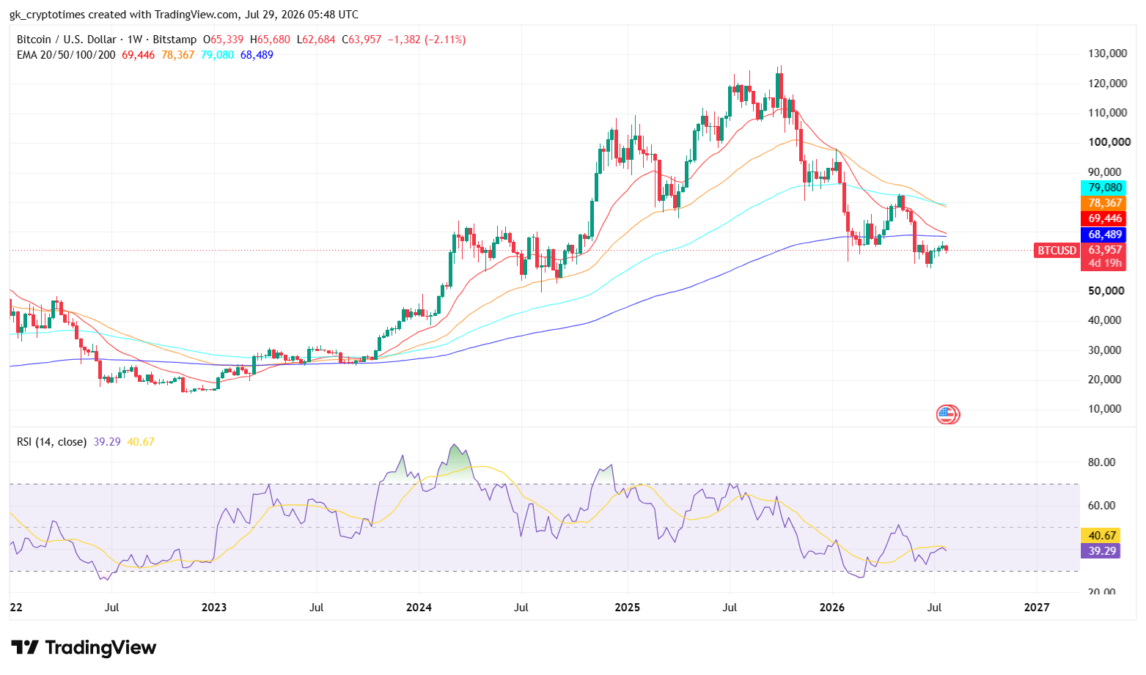
This price trajectory unfolds against a backdrop of sharply diminished trading activity. Bitcoin climbed steadily from sub-$60,000 levels in early July into the mid-$60,000s, briefly testing resistance near $66,500. However, the advance lacked follow-through, and the subsequent retreat has left the asset consolidating in a narrow band.
The current support has held above the June lows, while attempts to reclaim higher levels have faded quickly. The muted moves reflect a market that has recovered from its recent trough yet remains well below last year’s highs, with participants showing little urgency to push prices meaningfully higher or lower in the short term.
Spot Volumes Collapse Signals Deep Market Apathy
According to CryptoQuant data, highlighted by analyst Darkfost, Bitcoin spot trading volumes on major exchanges have collapsed more than 75% from their late-2024 peaks, reaching levels last seen in the final stages of the 2023 bear market.
On Binance, the largest venue, July spot volume exceeded $35 billion, far below the $246 billion recorded in November 2024. Comparable declines appear across other platforms: Bybit volumes fell about 85%, Coinbase about 61%, and OKX about 67%. These figures confirm a prolonged contraction in market participation that has persisted through much of 2026.
The analyst noted that volume collapse reflects broader investor hesitation. Macro headwinds, including the intensifying U.S.-Iran conflict, persistent inflation concerns that keep interest rates elevated, and a rotation of liquidity into traditional equity markets, particularly the technology sector, have dampened appetite for risk assets such as cryptocurrencies.
Historically, such periods of apathy have marked transitional phases. In the 2023 bear market, similarly depressed spot volumes preceded a return of volatility and the eventual resumption of an upward trend once selling pressure exhausted itself.
The current contraction may indicate that the intensity of selling behind Bitcoin’s retracement from 2025 highs is gradually easing. However, a sustained return to a bullish trajectory is widely viewed as conditional on a meaningful shift in the macroeconomic regime and a genuine revival of demand, which is a primary driver capable of restoring trading volumes.
In the near term, Bitcoin remains range-bound near current levels. The combination of a multi-month price recovery that has stalled and volumes at multi-year lows paints a picture of a market in wait-and-see mode. Exchange reserves of Bitcoin have shown signs of shrinking in some analyses, which some interpret as continued quiet accumulation by longer-term holders even as speculative interest fades.
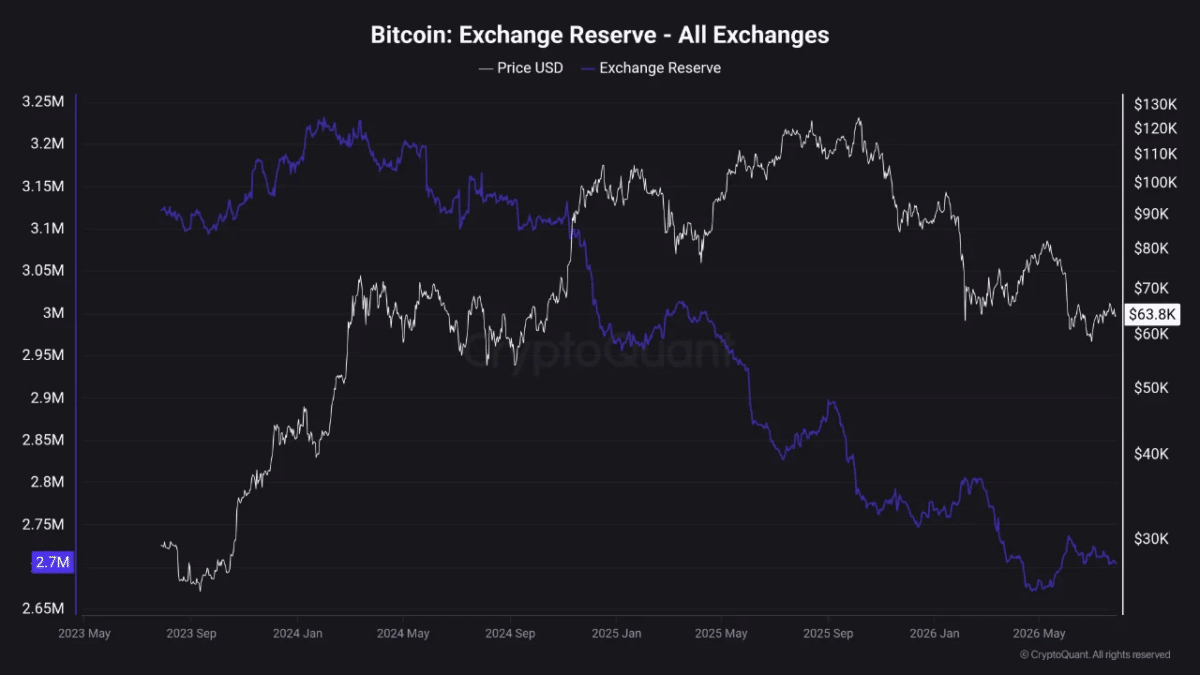
While the low-volume environment can create conditions for abrupt moves once catalysts emerge, it also amplifies the influence of any sudden shifts in macro sentiment or liquidity flows.
As of July 29, Bitcoin continues to trade with subdued energy, reflecting a broader pause in crypto market enthusiasm that has brought activity back to 2023-era troughs. Whether this phase of reduced interest sets the stage for the next leg higher or extends the current consolidation will depend largely on external factors restoring risk appetite and drawing capital back into spot markets.
Also read: Crypto Hacks Cross $1.1B in Record H1 2026 Losses: Blockaid