Key Highlights
- SEC Commissioner Hester Peirce said crypto vaults and onchain lending could fall under US securities laws.
- Moving financial activities onto a blockchain does not automatically remove them from federal securities regulations.
- The SEC is examining how these financial products fit within existing rules, while the CLARITY Act remains pending.
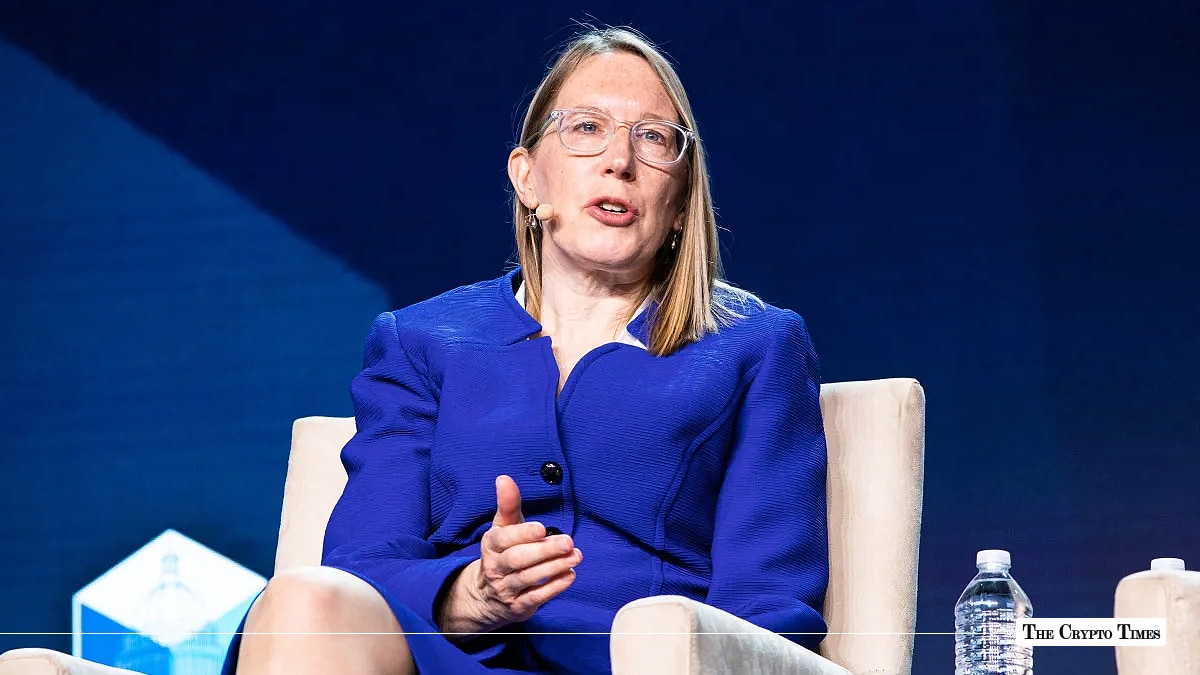
SEC Commissioner Hester Peirce, also known as the “SEC’s Crypto Mom,” said that crypto vaults and onchain lending could come under US securities laws, depending on how they are built and managed.
In a statement published on Wednesday, Peirce warned that simply moving a financial product onto a blockchain may not be enough to keep it outside the reach of federal securities rules.
Peirce said the SEC, its Crypto Task Force, and staff across the agency have spent the past year and a half giving the crypto industry more clarity on when securities laws apply. While many crypto assets and activities may not fall under those laws, she stressed that others still could.
“Moving activities that fall within the scope of the federal securities laws onchain, as a general matter, does not take those activities outside the scope of the laws the Commission administers,” Peirce said.
Why crypto vaults are drawing SEC’s attention
The issue is becoming more notable as crypto projects find new ways to put traditional financial activities on blockchain networks.
The growing use of crypto vaults can be seen as one example. These allow users to put their assets into systems designed to generate yield through activities such as staking and lending.
But Peirce said crypto vaults are not all designed the same way. Some may use smart contracts that automatically decide how assets are deployed, with no person controlling the process. Others may involve individuals or groups making important decisions about where users’ assets should go.
For example, a person or group may choose the activities that generate yield, move assets between different opportunities, or select other people to make those decisions. These management activities could raise questions about whether the vault falls under federal securities laws.
Onchain lending also faces SEC’s scrutiny
Peirce also highlighted the use of onchain lending, which is another area that has developed over several years. These systems allow users to deposit their crypto assets, which are then lent to borrowers for a fee.
The people managing these lending systems may decide the interest rates, choose which assets can be used, set loan-to-value limits, and establish the point at which a borrower’s position can be liquidated.
Depending on how the system works, these activities could also create securities law concerns.
A vault could potentially be viewed as a common enterprise if users put money or assets into it while expecting to earn profits from the work of the vault operator or curator. A vault that holds securities or directs assets into securities investments could also raise questions under investment company rules.
The SEC says each product must be reviewed separately
Peirce said some vaults may be similar to unit investment trusts, which hold a set group of assets, while others may be closer to investment companies that actively manage assets. Some could also resemble separately managed accounts that provide more individual treatment to users.
Moreover, onchain lending may create another regulatory issue. Depending on the parties involved, the reason for the loan, how it is offered, and other factors, some loans could have features similar to notes that are considered securities.
However, Peirce stressed that there is no single answer for every crypto vault or lending strategy. Whether securities laws apply will depend on the specific facts and structure of each product.
She also said the SEC must stay within the limits of its legal authority and protect developers’ free speech rights when examining these activities.
CLARITY Act remains part of the regulatory debate
Meanwhile, the SEC’s approach toward crypto vaults and other onchain financial systems is expected to evolve alongside broader crypto legislation. Moreover, the SEC’s Chairman, Paul Atkins, has repeatedly called for the swift passage of the CLARITY Act, which has yet to reach President Donald Trump’s desk.
“I continue to echo my call for Congress to send the CLARITY Act to President Trump’s desk,” Atkins said in a recent statement.
SEC invites crypto firms to engage with the agency
Peirce encouraged companies building crypto vaults and onchain lending systems to speak with the SEC during product development. She said some projects may not fall under the agency’s authority, while others may need to find a compliant way to operate.
The commissioner also invited feedback on whether existing rules should be changed to support new technologies while protecting investors, keeping markets fair and orderly, and supporting capital formation.
Also Read: Coinbase CEO Brian Armstrong Says Clarity Act Is at the ‘One-Yard Line’