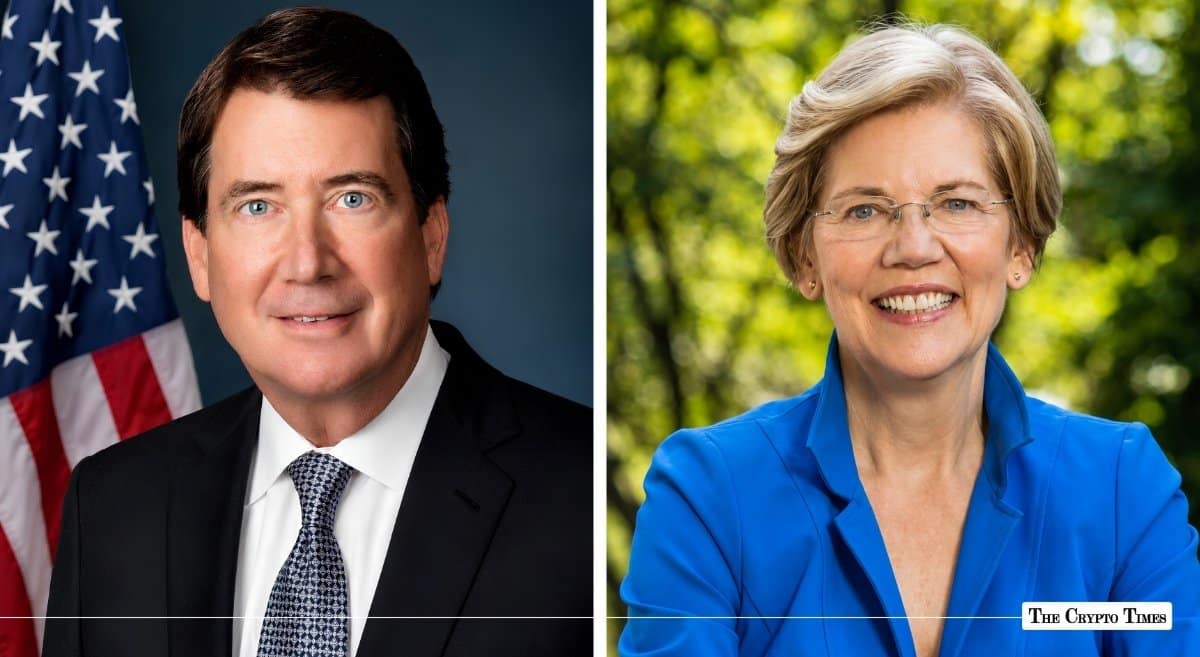
One year after the GENIUS Act became law, Senator Bill Hagerty said the legislative battle over the CLARITY Act is proving different from the stablecoin bill, arguing that political considerations have become a larger obstacle than policy disagreements.
Speaking in an interview with Chief Legal Officer at Jito Labs Rebecca Rettig, Hagerty reflected on the negotiations behind the GENIUS Act and compared them with the Senate’s ongoing effort to finalize the CLARITY Act, which would establish a broader regulatory framework for digital assets.
Hagerty contrasts Warren battle with CLARITY Act negotiations
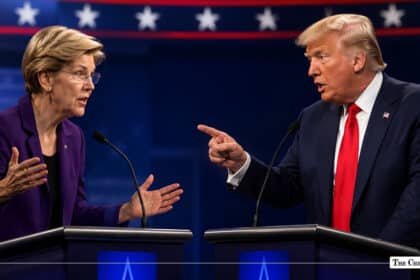
Hagerty said the biggest challenge during the GENIUS Act negotiations came from Senator Elizabeth Warren, who opposed key aspects of the legislation.
According to Hagerty, Warren introduced more than 80 amendments shortly before a Senate Banking Committee hearing, forcing lawmakers to spend hours reviewing and debating each proposal. He described the hearing as one of the longest of his Senate career, saying his staff worked through the night to prepare responses before the committee met.
Despite the amendments, Hagerty said five Democrats ultimately voted with Republicans in committee, producing what he described as the most bipartisan Banking Committee vote on major legislation in more than a decade.
Hagerty says politics now plays a bigger role
While Hagerty characterized the GENIUS Act debate as largely philosophical, he argued the current discussion around the CLARITY Act is being shaped more by the political environment ahead of the midterm elections. He said negotiations have narrowed many of the policy differences and indicated that updated legislative text could be released soon following bipartisan discussions.
However, Hagerty questioned whether some Democrats would support legislation backed by President Donald Trump, who has repeatedly said he wants the United States to become the global leader in digital assets.
According to Hagerty, the current political climate has made advancing bipartisan legislation more difficult than during consideration of the GENIUS Act.
Hagerty points to GENIUS Act implementation
Looking back on the first year of the GENIUS Act, Hagerty said one of its biggest achievements has been the adoption of compliant stablecoins and growing international interest in the U.S. framework. He said Treasury officials are working with foreign jurisdictions that are considering adopting similar regulatory standards, adding that some countries are using language modeled on the U.S. legislation.
Hagerty also said he recently discussed implementation of the law with Federal Reserve Chair Kevin Warsh, noting that several federal agencies are working to finalize the rules required under the statute.
French Hill calls CLARITY Act the missing piece
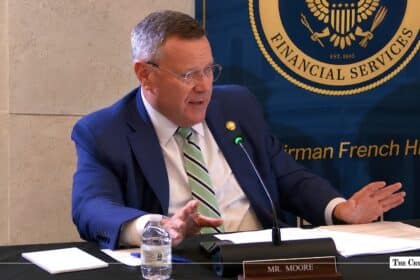
Rep. French Hill echoed the need for swift Senate action on the CLARITY Act, arguing that the GENIUS Act alone cannot deliver a complete regulatory framework for digital assets.
Earlier today, Hill described the CLARITY Act as the companion legislation needed to build the broader market structure supporting stablecoins and other digital assets.
Hill compared the relationship between the two bills to owning a phone without a network. “If you have the GENIUS Act, which authorizes dollar-backed stablecoins, but you don’t have a market structure bill, it’s like being authorized to own a cell phone without an ecosystem to support it,” he added.
He said the CLARITY Act would establish the regulatory framework governing digital asset markets, complementing the stablecoin rules introduced under the GENIUS Act and completing the broader U.S. crypto framework.
CLARITY Act remains Senate’s next crypto priority
The CLARITY Act is expected to establish the regulatory framework for digital asset markets by defining oversight responsibilities, disclosure requirements, and rules governing crypto trading platforms.
If passed, the legislation would complement the GENIUS Act by creating a broader market structure for digital assets, completing what Republican lawmakers have described as the next phase of U.S. crypto regulation.
Also Read: CLARITY Act Live: July 17 House Financial Services Committee Hearing