One of the cryptocurrency industry’s most critical legislative protections has gained a prominent Democratic defender at a make-or-break moment in Washington.
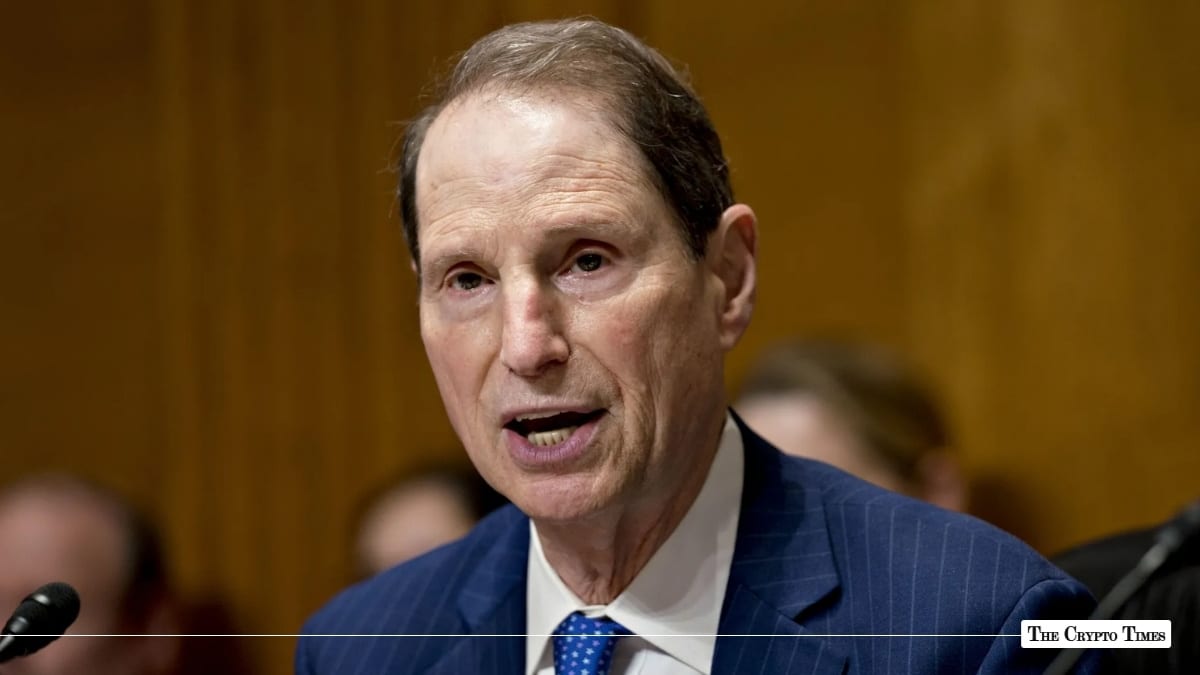
Senator Ron Wyden (D-OR) has sent a formal letter to Senate Majority Leader John Thune and Democratic Leader Chuck Schumer, urging them to preserve Section 604 of the CLARITY Act, a provision known as the Blockchain Regulatory Certainty Act (BRCA). Wyden’s demand is simple: keep the provision exactly as advanced by the Senate Banking Committee, shielding software developers from being treated as financial institutions.
The letter, dated July 7 and first reported by Fox Business journalist Eleanor Terrett, lands as the survival of this specific provision has become the most bitterly contested fight hanging over the entire digital asset market-structure bill.
With an August recess deadline looming and prediction markets hovering around coin-flip odds for the CLARITY Act passing in 2026, Wyden’s intervention provides essential political cover for a crypto industry desperate to keep DeFi development legal in the United States.
What Wyden is asking for
At its core, the BRCA would create a legal safe harbor ensuring that developers of non-custodial blockchain software, code that never holds or controls user funds, are not classified as money transmitters under the Bank Secrecy Act, a designation that carries licensing, know-your-customer, and anti-money-laundering obligations.
Wyden argued the provision simply codifies existing federal policy, clarifying that developers should not be treated as money transmitters “solely because they create or publish software,” particularly where they do not control user assets. That position, he wrote, reflects established guidance from the Financial Crimes Enforcement Network (FinCEN), is consistent with emerging case law, and provides essential legal certainty for open-source and non-custodial development. Without it, he warned, blockchain innovation risks migrating offshore to jurisdictions with clearer rules.
Rebutting the anti-money-laundering critique
The most pointed part of Wyden’s letter takes aim at the provision’s critics. He stated plainly that any digital-asset market-structure legislation must include robust anti-money-laundering and counter-terrorism-financing safeguards, but argued that claims the BRCA would weaken those protections are “inaccurate.” The provision, he contended, codifies FinCEN and DOJ policy, ensures law enforcement resources stay focused on criminals rather than neutral coders, and preserves existing rules for genuine money-transmitting businesses.
Crucially, Wyden pointed to a built-in exception: any non-custodial developer found to be transferring or using funds originating from illicit activity would not be protected, so bad actors can still be held accountable while neutral software developers are not mistreated as financial intermediaries. “Smart policy,” he wrote, “can let law enforcement do its job while also promoting innovation.”
Why the BRCA is contested
That framing is a direct response to a fight that has become one of the CLARITY Act’s defining battles. Four major law-enforcement coalitions — the National District Attorneys Association, the National Association of Assistant United States Attorneys, the International Association of Chiefs of Police, and the National Sheriffs’ Association — have opposed Section 604, warning that its exemptions could create oversight gaps that shield mixers, tumblers, and some DeFi services from KYC and AML requirements, complicating investigations into money laundering, trafficking, and other crimes.
The crypto industry sees it in precisely the opposite terms. More than 60 executives, including leaders from Coinbase and Kraken, signed a June letter urging the BRCA’s preservation, and the Blockchain Association has lobbied more than half the Senate on the issue. For the DeFi sector, the provision is widely regarded as the single most practically significant part of the bill — the clause that determines whether building decentralized software in the US carries defined legal status or open-ended liability.
The political math
Wyden’s letter supplies something the provision’s backers have needed: Democratic cover. It complements a rare boost from the other side of the debate earlier this month, when the National Organization of Black Law Enforcement Executives became the first major law-enforcement group to endorse the CLARITY Act, countering the coalitions arrayed against Section 604. Together, the two interventions chip away at the argument that the BRCA is opposed across both law enforcement and the political left.
Significant uncertainty remains, however. It is still unclear whether the objecting law-enforcement groups will accept the current BRCA language or demand changes, and whether other Democratic senators, Terrett named Catherine Cortez Masto and Mark Warner, can be won over. With 53 Republican seats, the bill needs roughly seven Democratic crossovers to clear the 60-vote cloture threshold, and a separate fight over ethics guardrails covering officials with crypto interests remains the other major unresolved sticking point.
The clock is ticking
The timing amplifies the stakes. The CLARITY Act passed the House 294-134 in July 2025, cleared the Senate Banking Committee 15-9 on May 14, and was placed on the Senate calendar as lawmakers race an August recess deadline. Floor time is scarce, with the bill competing against priorities like a FISA Section 702 reauthorization and the annual defense authorization, and two pro-crypto voices — Lummis, who is not seeking reelection, and departing SEC Commissioner Hester Peirce — are on their way out. Prediction markets have hovered around coin-flip odds for the bill becoming law in 2026.
Why it matters for crypto
This is not just a fight over legal definitions; this is a battle over the fundamental architecture of the future internet.
For the $100 billion decentralized finance sector, the BRCA is not a nice-to-have policy, it is an existential necessity. The crypto lobby, backed by millions in campaign contributions from industry heavyweights, is fighting fiercely for this provision because applying Bank Secrecy Act requirements to autonomous smart contracts is functionally impossible.
If Section 604 is stripped from the CLARITY Act to appease law enforcement, the U.S. government will be establishing a precedent that publishing open-source financial code is a regulated financial activity. The immediate result would be a mass exodus of blockchain innovation, draining capital and developer talent to offshore jurisdictions with clearer safe harbors.
Wyden’s letter, representing a rare Democratic endorsement of the industry’s stance, proves that the debate over privacy, code-as-speech, and financial surveillance is far from settled as the Senate races against the August clock.
Also Read: CFTC Chief Selig Urges Congress to Pass CLARITY Act Quickly