Key Highlights
- UNDP and the Stellar Development Foundation have extended their partnership through 2027.
- The initiative follows blockchain payment research across 17 countries and pilots in five nations.
- UNDP plans to integrate blockchain payments into regular programme delivery rather than standalone experiments.
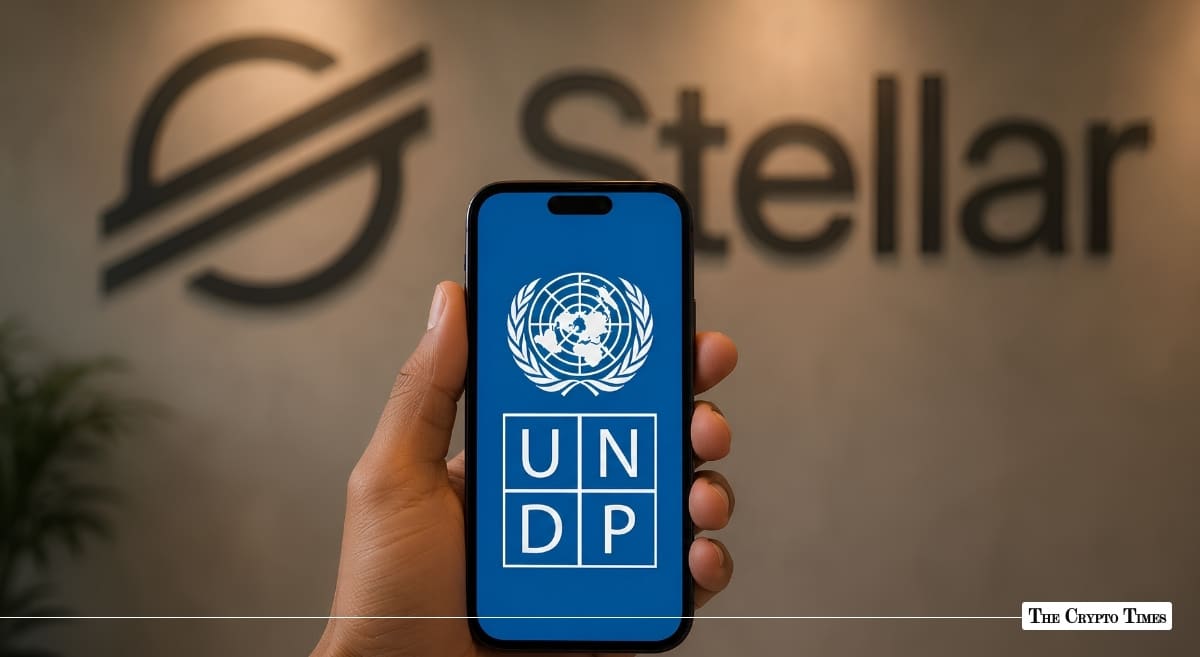
The United Nations Development Programme (UNDP) has expanded its partnership with the Stellar Development Foundation (SDF), the non-profit organization supporting the Stellar blockchain, to build long-term blockchain payment infrastructure for development and humanitarian programmes worldwide.
The announcement was made at the Hamburg Sustainability Conference 2026 on Monday. Under the new agreement, the partnership will shift from testing blockchain payments in individual projects to making the technology available as a standard tool for UNDP country offices. The initiative is being coordinated through UNDP’s Alternative Finance Lab (AltFinLab) at its Istanbul Regional Hub and will run through 2027.
Partnership follows trials across 17 countries
The expanded partnership follows roughly 16 months of research and pilot programmes conducted jointly by UNDP and SDF. According to the organizations, the programme evaluated blockchain-based payment systems across 17 countries. Live pilots were completed in Haiti, Syria, Kenya, Guatemala, and the Gambia, while additional solutions were developed into working prototypes for Colombia and Papua New Guinea.
Alongside the field trials, UNDP’s Sustainable Development Goals Blockchain Accelerator worked with developers building on the Stellar network to test payment solutions for real development challenges.
What the pilots showed
UNDP said the pilot programmes produced measurable operational results. In Aleppo, Syria, blockchain-based cash transfers for a Cash for Work programme reduced payment distribution costs from approximately 10% under conventional methods to around 2%, while all participants received and redeemed their payments.
Meanwhile, a pilot in Haiti continued processing payments with a 100% success rate even after cellular connectivity failed during testing. Across the pilot programmes, blockchain technology also created an on-chain record showing where programme funds were distributed.
Why UNDP is expanding it
Rather than launching additional isolated pilots, the next phase will focus on building governance, compliance procedures, and operational standards needed for wider deployment.
Under the agreement, UNDP plans to:
- Establish governance and onboarding frameworks for blockchain payments,
- Integrate existing payment solutions into country programmes,
- Expand blockchain payments across humanitarian assistance, financial inclusion, and social protection initiatives, and
- Develop operational guidance for future implementation.
While Stellar Development Foundation will provide technical advisory support and coordinate with ecosystem developers, UNDP will remain responsible for programme implementation.
How blockchain fix into aid
Robert Pasicko of UNDP’s Alternative Finance Lab said the organization is now focused on making blockchain-based digital payments a standard operational tool for country offices, building on successful pilots rather than treating each deployment as an experiment.
Candace Kelly, Chief Legal and Policy Officer at the Stellar Development Foundation, said the next phase aims to build on the results achieved during the pilot programmes. She added, “We are proud to continue this work with UNDP and to help turn a set of successful pilots into a durable part of how development and humanitarian finance is delivered.”
Why the partnership matters
The expanded partnership reflects a broader shift of blockchain technology moving from experimental pilots to operational payment infrastructure across both the public and private sectors.
In April, South Korea’s POSCO, Hana Financial Group, and Dunamu announced plans to develop blockchain-based cross-border payment infrastructure for global trade, while Coinbase and Spiko introduced 24/7 access to tokenized Treasury funds using stablecoins.
Unlike those commercial initiatives, UNDP’s initiative focuses on humanitarian aid, financial inclusion, and development finance. Earlier this year, the organization also highlighted blockchain’s potential in its report, New Tech, New Partners: Transforming Development in the Digital Era, which explored how digital payments could improve remittances and aid delivery in fragile regions.
By the end of the partnership in 2027, UNDP and the Stellar Development Foundation aim to deliver a governance framework, implementation playbook, and operational guidance to help blockchain-based payments become a standard capability across UNDP programmes worldwide.
Also Read: Ripple Joins Call of Duty Endowment to Support Veterans