Key Highlights
- Crypto firms led corporate political spending, contributing $189 million during the 2026 U.S. midterm election cycle.
- Fairshake received $82 million from crypto companies, while Ripple Labs, Coinbase, and Andreessen Horowitz were among the largest donors.
- The crypto industry is increasing its political influence as it pushes for clearer cryptocurrency regulations, including support for the CLARITY Act.
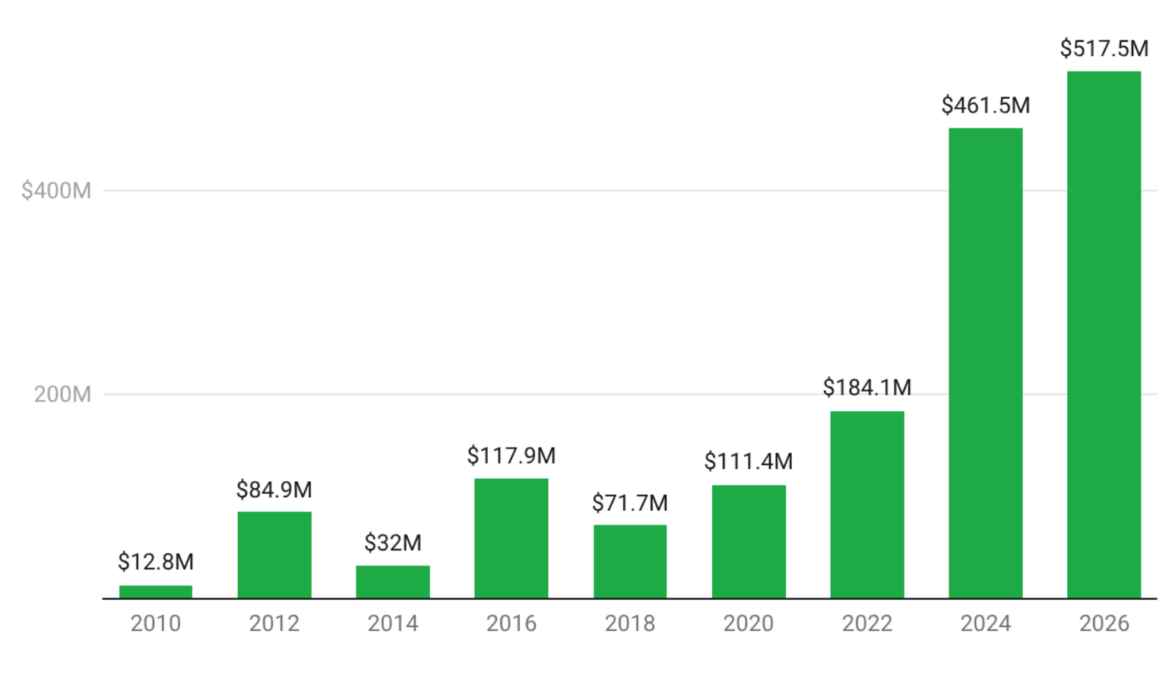
Cryptocurrency companies have become the largest corporate political spenders in the 2026 U.S. midterm elections, helping push total corporate election spending to $517 million.
According to a report published today by consumer advocacy group Public Citizen, crypto firms alone spent $189 million to influence this year’s elections through political action committees (PACs) and super PACs.
The report found that the crypto industry is the largest corporate political spender so far this election cycle, as companies support candidates and policies they believe will benefit the digital asset industry.
Crypto becomes biggest political spender
According to the report, crypto companies are responsible for more than one-third of all corporate money spent in the 2026 election cycle. That is more than the estimated $170 million the industry spent during the 2024 elections. The report said this increase highlights that crypto companies are becoming more active in politics as lawmakers continue to debate new rules for digital assets.
At the same time, companies in artificial intelligence, technology, and online betting have also increased their political spending. Together with crypto firms, these industries have spent $294 million so far, making up more than half of all corporate election spending this year.
Where the crypto money is going
According to the report, much of this funding from the crypto space went to Fairshake, a super PAC that supports candidates who back cryptocurrency and blockchain innovation.
Public Citizen researcher Rick Claypool said Fairshake has received $82 million during the current election cycle. Unlike regular political committees, super PACs can raise and spend unlimited amounts of money as long as they do not directly coordinate with candidates. Most of these funds came from Venture capital firm Andreessen Horowitz, which invests heavily in crypto and AI companies, making it one of the largest donors.
Other leading contributors included Ripple Labs, Crypto.com-affiliated Foris DAX, and Coinbase. These companies have directed millions of dollars to political groups that support policies seen as friendly to the crypto industry.
Crypto companies also featured prominently among the largest corporate donors to MAGA Inc., one of the biggest super PACs in the current election cycle. Foris DAX, which operates under Crypto.com, contributed $35 million, making it the largest corporate donor to the committee.
Blockchain.com donated $5 million, Gemini Trust Company contributed $4.4 million, and Ondo Finance added $2.1 million. The report found that just 36 corporations giving at least $1 million each provided $113 million, or about 94% of all corporate funding received by MAGA Inc.
Why crypto companies are spending more
In recent weeks, crypto-backed political action committees (PACs) have increased their support for candidates in competitive Republican primary races ahead of the November midterm elections. One of the latest examples came in Texas, where crypto-backed candidates won several important primary runoff races. According to a recent report, industry-backed candidates finished with a 6-for-6 record.
Among the most notable victories was Texas Attorney General Ken Paxton’s win over longtime Senator John Cornyn in the Republican Senate primary. Fellowship PAC, which is reportedly backed by Tether, spent about $500,000 on advertising supporting Paxton’s campaign.
Crypto-funded groups have also become major players in Alabama’s Republican Senate primary runoff. Fairshake reportedly spent more than $12 million supporting Representative Barry Moore, while Fellowship PAC and the Blockchain Leadership Fund also invested heavily in the race.
The election cycle has become one of the clearest examples of how crypto-backed organizations are putting significant money into key congressional contests as they seek greater influence over future cryptocurrency legislation, including the proposed CLARITY Act, which remains under debate in the Senate.
Also Read: Magic Eden Sued Over $ME Token by the Firm Behind the Pump.fun Cases