Key Highlights
- The White House is meeting with law enforcement groups over the CLARITY Act’s illicit finance provisions.
- The dispute centers on protections for DeFi developers under Section 604, known as the Blockchain Regulatory Certainty Act (BRCA).
- White House crypto adviser Patrick Witt is leading efforts to build support for the bill.
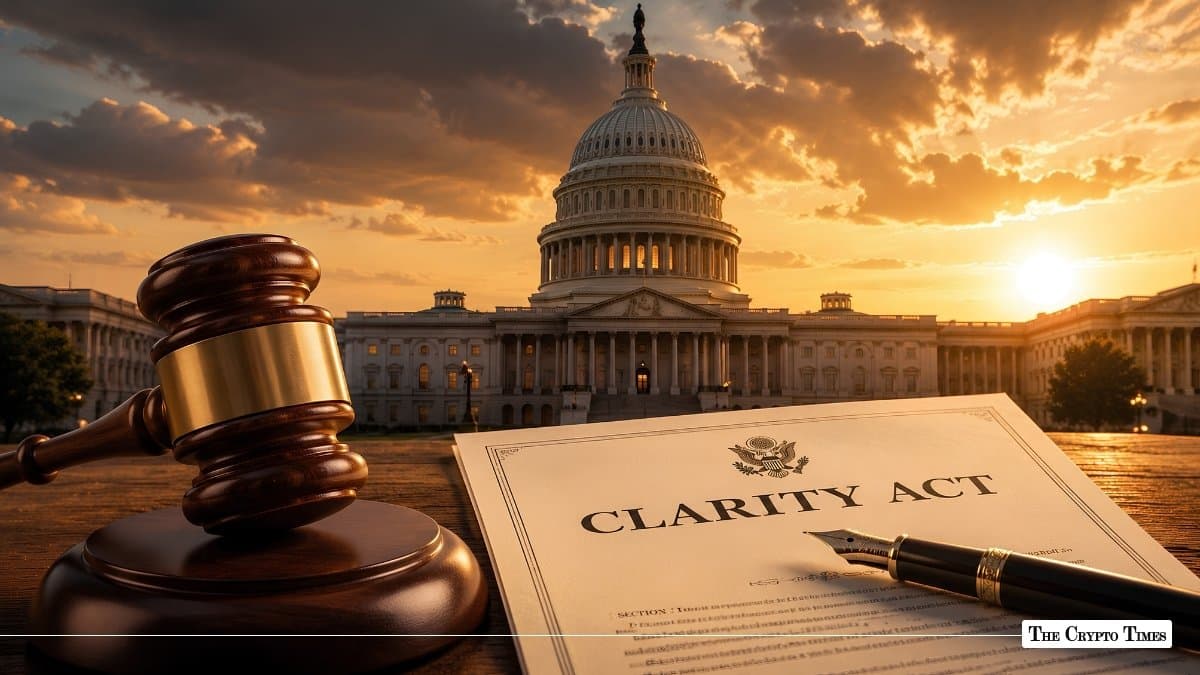
The White House is reportedly stepping up efforts to keep the Digital Asset Market Clarity Act (CLARITY Act) on track by holding discussions with law enforcement organizations that have raised concerns about the bill’s anti-money laundering provisions.
According to a report, administration officials invited representatives from several law enforcement groups to meet on Monday as negotiations continue over one of the legislation’s most debated Section 604, commonly referred to as the Blockchain Regulatory Certainty Act (BRCA).
The meeting comes at a critical time as Senate Republicans push to bring the landmark crypto market structure bill to the Senate floor before Congress begins its August recess.
White House seeks common ground
The White House has been working behind the scenes to address objections from law enforcement agencies, banking groups, and lawmakers to preserve bipartisan support for the legislation.
Leading those discussions is White House crypto adviser Patrick Witt, who has held multiple meetings with stakeholders as the administration attempts to advance the bill.
The latest talks are expected to focus on concerns that the BRCA could weaken regulators’ ability to combat money laundering and illicit finance involving decentralized finance (DeFi) platforms.
DeFi developer protections spark debate
Section 604 seeks to clarify that developers who create decentralized software without controlling users’ assets should not automatically be classified as money transmitters under U.S. law. Supporters argue that the provision provides essential legal certainty for blockchain developers building decentralized applications.
However, several law enforcement organizations remain unconvinced. In a letter sent to Senate Banking Committee leaders in May, the National Sheriffs’ Association warned that the current language could unintentionally shield bad actors.
“No good reason supports giving mixers, tumblers, and DeFi a blanket exemption,” the organization wrote.
The group added that while some software developers may fall outside money transmission rules, “plenty of others are” engaged in activities that should remain subject to anti-money laundering regulations.
Industry defends the bill
Crypto industry organizations have pushed back against those criticisms, arguing that the CLARITY Act would strengthen enforcement by creating clearer regulatory standards. The Blockchain Association has maintained that the legislation introduces new enforcement powers while reducing legal uncertainty across the digital asset industry.
Speaking at an industry event earlier this month, Patrick Witt defended the bill’s approach.
“We’re putting real regulatory constraints on businesses and actors that currently live in a state of uncertainty.”
Addressing law enforcement officials directly, Witt added, “You should be the biggest cheerleaders for this bill, because this is really what is missing.”
Democrats continue raising concerns
Despite ongoing negotiations, Democratic lawmakers continue to express concerns over the bill’s approach to illicit finance.
Senator Elizabeth Warren has repeatedly argued that cryptocurrencies remain widely used by criminal organizations, drug traffickers, and human trafficking networks, making stronger safeguards necessary before expanding regulatory clarity for the industry.
The illicit finance debate remains one of several unresolved issues that lawmakers hope to settle before the bill reaches the Senate floor.
July vote remains the goal
Senate Republican leaders continue to target a July vote on the legislation.
Senate Majority Leader John Thune is reportedly preparing to bring the CLARITY Act to the floor in the coming weeks, while Senate Banking Committee Chairman Tim Scott recently stated that the Senate “should vote on crypto market structure legislation in July.”
Because the bill requires 60 votes to advance, Republicans will need Democratic support. Negotiations remain ongoing over both the BRCA and proposed ethics rules that would bar senior government officials, including the President, from holding personal crypto assets, as well as efforts to fully staff the CFTC.
With only a few weeks of Senate floor time remaining before lawmakers leave for the August recess, the coming weeks are widely viewed as decisive for the future of the CLARITY Act.
If negotiators can bridge remaining differences on illicit finance, ethics, and regulatory oversight, the legislation could receive its first full Senate vote as early as July, marking one of the most significant moments yet in U.S. crypto regulation.
Also read: OKX CEO Star Xu Takes Aim at Binance’s MiCA ‘Loss for Europe’ Spin