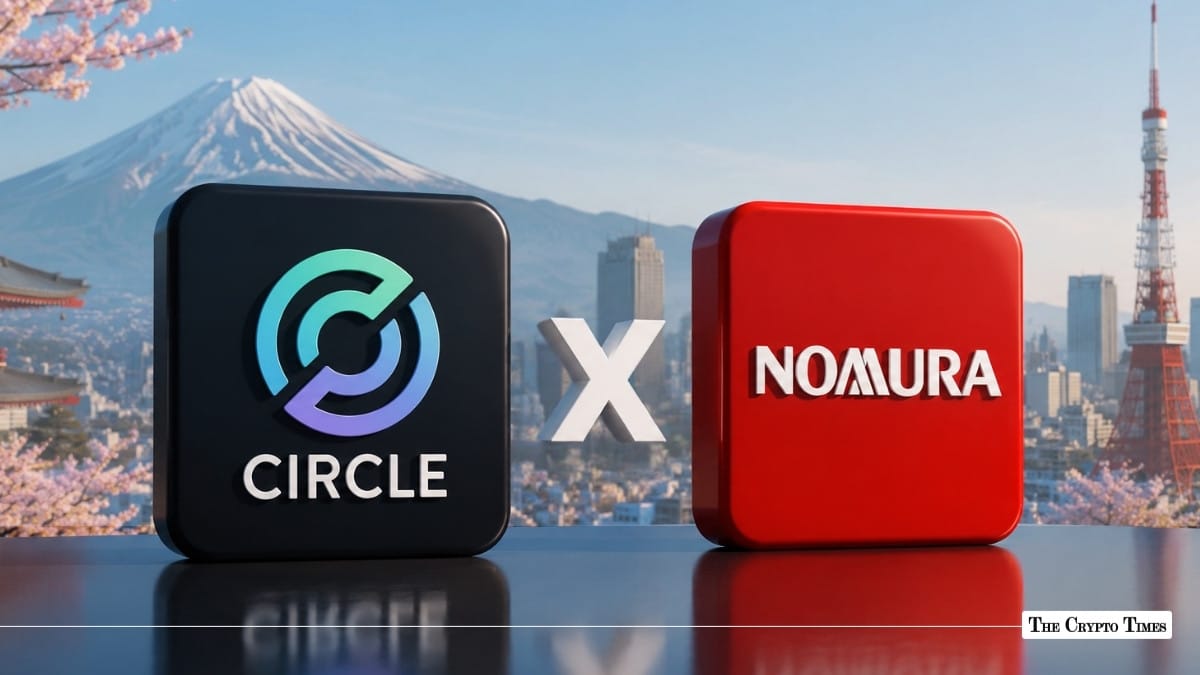
Circle, the issuer of the USDC stablecoin, is moving to integrate digital dollar infrastructure directly into Japan’s institutional trade layout. According to a Nikkei report published on Thursday, June 25, 2026, the company is partnering with Nomura Securities to roll out a specialized, real-time foreign exchange (FX) settlement platform tailored for Japanese enterprises by 2027.
The initiative aims to address delays that often slow international payments. Large foreign currency transfers can take time to process because they pass through multiple banking systems and time zones. By using blockchain-based settlement, companies could gain faster access to funds and move money across borders more quickly.
Faster settlements could reduce idle cash
With USDC’s global circulating footprint firmly established as a dominant liquidity layer, the service offers an alternative framework for corporate treasury management. Currently, international corporations are forced to lock up substantial amounts of capital in low-yield, dollar-denominated bank accounts simply to protect against localized payment processing volatility or unexpected invoice demands.
By providing on-demand access to digital dollars, the Circle-Nomura pipeline diminishes the structural requirement for passive cash reserves. Beyond pure commercial trade, the infrastructure carries notable optimization pathways for institutional collateral flow.
Commercial banking institutions frequently secure dollar funding lines by pledging Japanese Government Bonds (JGBs). Utilizing tokenized rails to facilitate the settlement side of these repo positions could significantly optimize liquidity management over traditional centralized systems.
Consulting firm McKinsey estimates that stablecoins facilitate about $390 billion in annual real-world payments.
Competition expands across global markets
The planned Japan initiative comes as Circle expands its stablecoin business in other markets. Recently, the company partnered with Bahrain-based fintech firm INFINIOS to support digital payments, treasury services, and cross-border transactions across the Middle East.
Circle has also expanded the reach of its stablecoins through new blockchain integrations. The company recently brought USDC, EURC, and its Cross-Chain Transfer Protocol to the Cronos network. In an X post, Cronos said, “Native @USDC by @circle is coming to Cronos app. Soon you’ll deposit dollars and trade tokenized stocks, crypto, prediction markets all from one account.”
Japan’s stablecoin market has also attracted other global issuers. On June 24, Ripple launched its U.S. dollar-backed RLUSD stablecoin in Japan through SBI VC Trade after securing approval from the Japan Financial Services Agency.
The launch followed a broader push by financial firms to introduce regulated stablecoin products in Japan as interest in blockchain-based payments and settlement services continues to expand.
Also Read: MemeCore Just Lost 75%—And ZachXBT Says the Red Flags Never Left