Key Highlights
- USDT in Venezuela’s P2P market rose about 16% in 30 days, crossing 800 bolivars and showing strong demand for digital dollars.
- Limited access to US dollars and strict banking caps pushed people toward Binance P2P as an alternative way to protect their money.
- Venezuela’s growing money supply and inflation pressures are weakening the bolivar, making crypto and remittances a key financial lifeline.
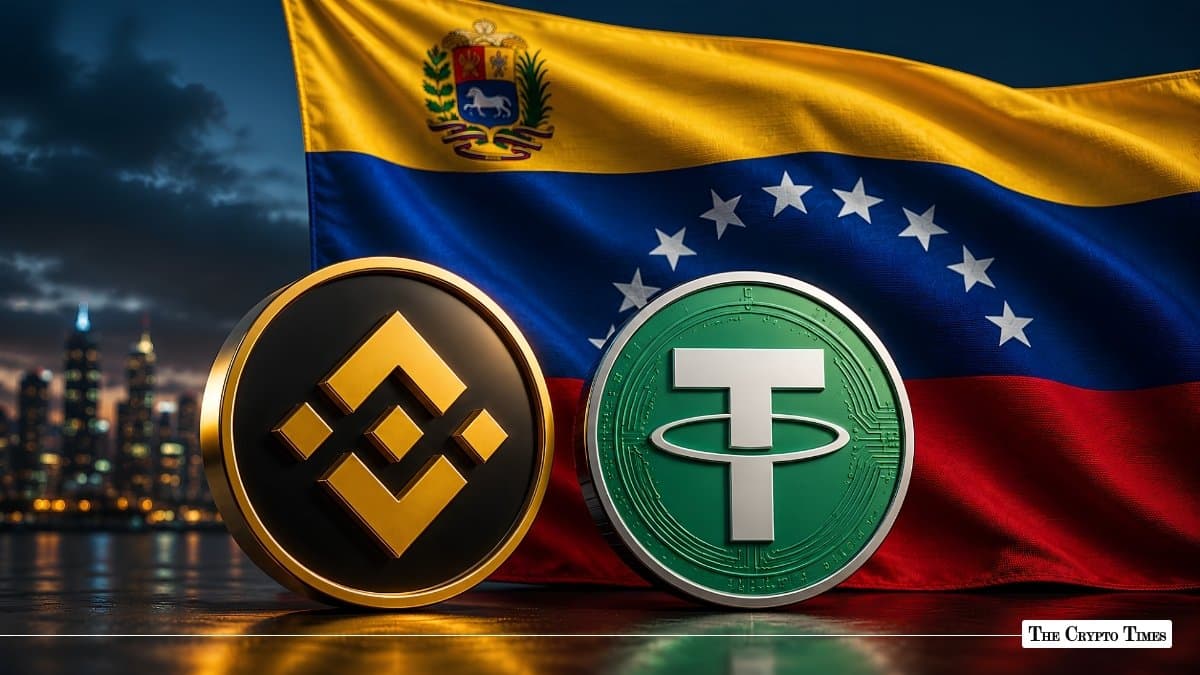
Venezuelans are increasingly turning to Binance’s peer-to-peer (P2P) market to buy USDT as the stablecoin climbs above the 800 bolivar mark in local trading.
According to a local report, this activity was recorded between mid-May and mid-June 2026, as citizens try to protect the value of their money while the local currency continues to weaken.
USDT surges in local market
In the past 30 days, USDT has gone up by about 16% in Venezuela’s P2P market. It started near 690 bolivars and later crossed the 800 level, even touching around 810 before falling slightly to about 794 on Binance.
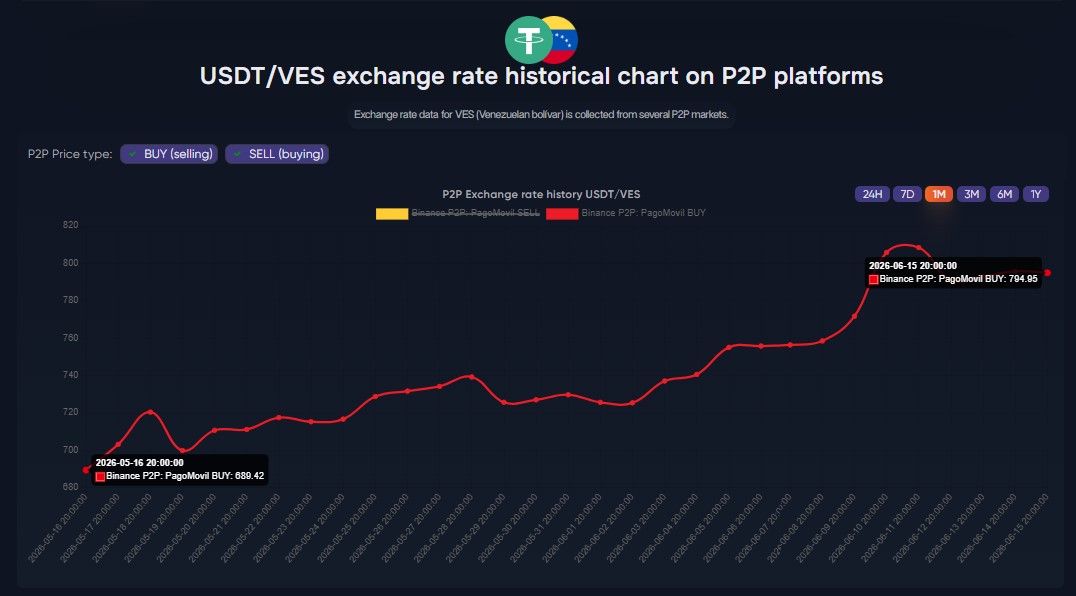
Binance remains the country’s largest P2P platform, making its pricing a key reference for local traders and businesses.
The main reason for this adoption is the rapid increase in the amount of bolivars in circulation. Data from the Central Bank of Venezuela show that the total money supply rose by more than 23% in just one month and by more than 131% since the start of 2026.
When more money is printed or quickly enters the system, it often reduces the value of that money over time.
Access to dollars becomes limited
At the same time, people are finding it harder to get US dollars through regular banks. Many banks run out of their dollar limits quickly, and once they reach their quota, they stop selling.
On top of that, individuals are limited to about 1,000 dollars per month and around 12,000 dollars per year in official purchases. This makes it difficult for many people and businesses to access foreign currency through normal channels.
Because of these limits, many users have moved to P2P platforms like Binance. Here, people buy and sell directly with each other instead of going through banks. The price of USDT is not controlled by the government rate, but by what people are willing to pay. So when more people want USDT, and there is not enough supply, the price goes up quickly.
In short, the stablecoin is now used in many ways beyond trading. People use it to save money, pay for goods, and even set prices in shops. It has become a “stand-in” for the US dollar in daily life, especially in informal markets where prices change very fast.
In some parts of Caracas, like La Hoyada, Catia, and El Cementerio, traders have been seen using different exchange rates depending on the situation. Some rates have gone as high as 1,200 bolivars per dollar in local trade, showing how unstable pricing has become in some areas.
Crypto remains an important financial tool
Venezuela has been using cryptocurrencies for years. Crypto has already been part of the country’s financial system for years. By 2023, crypto remittances reached about 9% of the country’s $5.4 billion in total remittances, equal to roughly $461 million.
These transfers are often sent by Venezuelans living abroad to support families back home. Many prefer crypto because it is faster, cheaper, and easier than traditional money transfer services, which often charge high fees or face delays.
Moreover, some Venezuelan political leaders have recently explored the potential role of digital assets. For instance, early this year, María Corina Machado, a major political leader in Venezuela, publicly proposed that Venezuela could sell part of its oil reserves in Bitcoin instead of only using US dollars.
The idea is based on Venezuela’s large oil reserves, estimated at around 300 billion barrels, which remain one of the biggest in the world.
Also Read: Chainlink Expands Its Stablecoin Push With KRWQ Integration