Key Highlights
- María Corina Machado has suggested that Venezuela could build Bitcoin reserves using oil revenue.
- Venezuela has huge oil reserves of about 300 billion barrels that could generate significant Bitcoin if sold.
- Using Bitcoin could attract foreign investors and make international payments easier for the country.
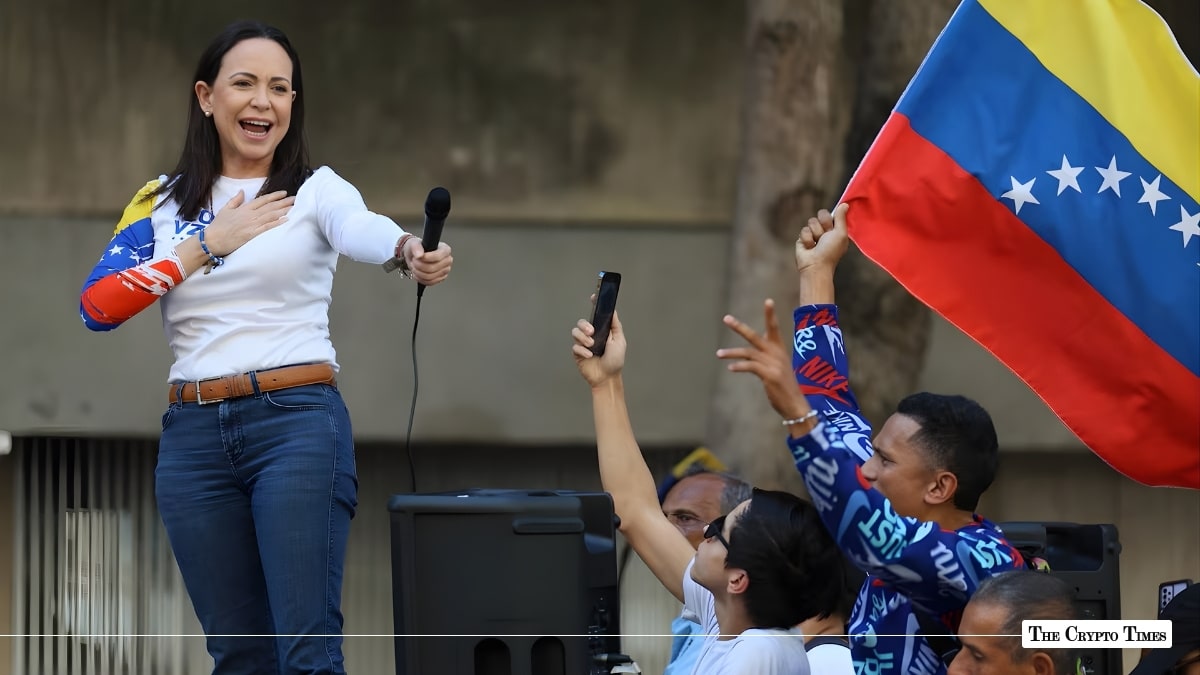
María Corina Machado, a position leader and major political figure in Venezuela, shared a new economic idea explaining how the country could sell part of its oil for Bitcoin to rebuild its finances.
In a video clip shared online, she said this plan could reduce inflation and attract investors into the country.
Venezuela’s oil as a new Bitcoin source
Machado’s plan is based on Venezuela’s huge oil reserves, which are estimated to be about 300 billion barrels. Instead of accepting only the U.S. dollar for oil sales, she proposed that some buyers could pay in Bitcoin.
The government would then keep that Bitcoin as a national reserve, similar to how countries store gold or foreign currencies. Those who support this believe this could help the country protect its wealth if the local currency loses value again.
Some estimates suggest that, over time, oil sales connected to crypto could bring in more billions in digital assets if exports grow and the crypto market stays strong.
Make the trade and payment easy
This idea could also make international payments a lot easier. Since Venezuela has faced restrictions in global banking, moving money across borders has often been slow and difficult. However, Bitcoin transactions can happen directly between buyers and sellers without relying fully on traditional banks.
Supporters say this could open new trade opportunities and attract companies that already work with digital currencies.
The challenges with this idea
The country is still dealing with international sanctions, which have affected its oil exports. In addition, any major economic change would need approval from lawmakers and support from investors.
Public opinion is mixed, as many citizens are careful about new reform after years of financial instability. For this proposal to move forward, it would require strong cooperation from authorities and clear economic planning.
Moreover, a similar path has already been taken by El Salvador, which made Bitcoin legal tender in 2021 and later created its own Bitcoin reserve. That move brought in global attention to Bitcoin and started discussions about using digital assets in government finances.
Previous look into digital assets
Venezuela had previously explored digital assets during Nicolás Maduro’s leadership. The government tried to use cryptocurrencies to bypass financial restrictions.
In 2018, the country issued a token called the Petro, which later failed and was discontinued in 2024.
Analysts say Venezuela may still hold other cryptocurrencies besides Bitcoin, including stablecoins, but Bitcoin is likely the main choice because it is not tied to the U.S. dollar. However, the exact amount is unknown because the digital wallets are private.
Also Read: U.S. Supreme Court Blocks Trump Tariffs, Bitcoin Hovers Near $67,000