A group of pro-crypto U.S. senators has urged federal banking regulators to develop a new capital framework for digital assets, arguing that existing international standards effectively prevent banks from holding cryptocurrencies such as Bitcoin on their balance sheets.
According to an official release shared on Thursday, in a letter sent to the Federal Reserve, the Federal Deposit Insurance Corporation (FDIC), and the Office of the Comptroller of the Currency (OCC), the lawmakers called for a capital regime that reflects the actual risks of digital assets rather than applying what they described as punitive blanket requirements.
The request comes as Congress considers broader digital asset legislation that could expand banks’ role in crypto markets, raising questions about whether current capital standards remain compatible with emerging regulatory frameworks.
Senators target Basel’s 1,250% risk weight
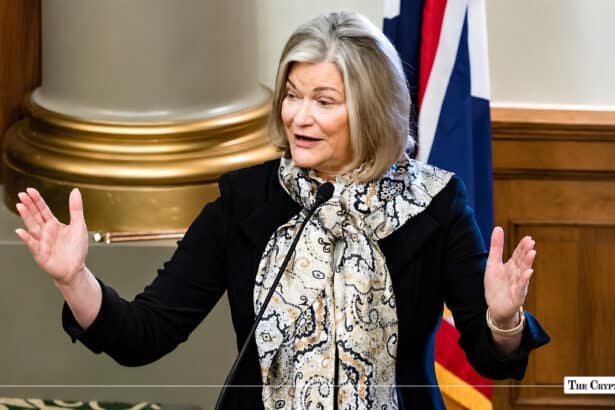
The letter, signed by Senators Bill Hagerty, Dan Sullivan, Cynthia Lummis, Bernie Moreno, Jon Husted, and Ted Budd, seemingly criticized the 2022 crypto capital framework issued by the Basel Committee on Banking Supervision.
Under the framework, certain cryptocurrencies, such as Bitcoin, receive a 1,250% risk weight for capital purposes. The senators argued that the requirement effectively forces banks to hold capital equal to the full value of their crypto exposure, making participation in the asset class economically impractical. According to the lawmakers, the framework functions as a “de facto ban” on banks holding digital assets rather than a calibrated assessment of risk.
Lawmakers cite tokenized securities guidance
The senators pointed to joint guidance issued by U.S. banking regulators in March 2026 regarding tokenized securities. That guidance clarified that the capital treatment of a tokenized asset should be based on the characteristics of the underlying security rather than the technology used to record ownership.
The lawmakers argued that the same technology-neutral principle should apply across digital asset markets. They said capital requirements should reflect the risks and opportunities associated with specific assets rather than impose restrictions based solely on whether an asset uses blockchain technology.
Pressure builds as crypto legislation advances
The push arrives as lawmakers debate the proposed Digital Asset Market Clarity Act, which would establish a broader regulatory framework for digital assets and authorize banks to engage in a wider range of crypto-related activities.
The senators warned that if banks are permitted to participate more actively in digital asset markets, regulators will need capital standards that allow those activities to occur within a clear prudential framework. They encouraged regulators to begin developing rules for on-balance-sheet digital asset exposures before new legislation takes effect.
Regulators and global authorities reconsider standards
The letter also highlighted growing criticism of the Basel framework among regulators and industry participants. The senators noted that Federal Reserve Vice Chair for Supervision Miki Bowman previously questioned the practicality of Basel’s crypto risk weights. They also cited reports that the Bank of England has declined to implement the standards in their current form.
In addition, banking industry groups have urged Basel officials to revisit the framework, while the Basel Committee itself announced in late 2025 that it would accelerate a targeted review of its crypto asset standards.
Call for a risk-based approach
While acknowledging risks such as volatility and operational complexity, the senators argued that digital assets should be assessed using existing risk-management tools already embedded within banking capital frameworks. They contended that applying the highest possible risk weight to an entire asset class overlooks differences in liquidity, transparency, and market structure among digital assets.
The lawmakers concluded by urging regulators to craft a capital framework that is technology-neutral, risk-based, and capable of supporting bank participation in digital asset markets while maintaining financial stability.
Also Read: US Lawmakers Urge FTC to Investigate Kalshi & Polymarket’s Practices