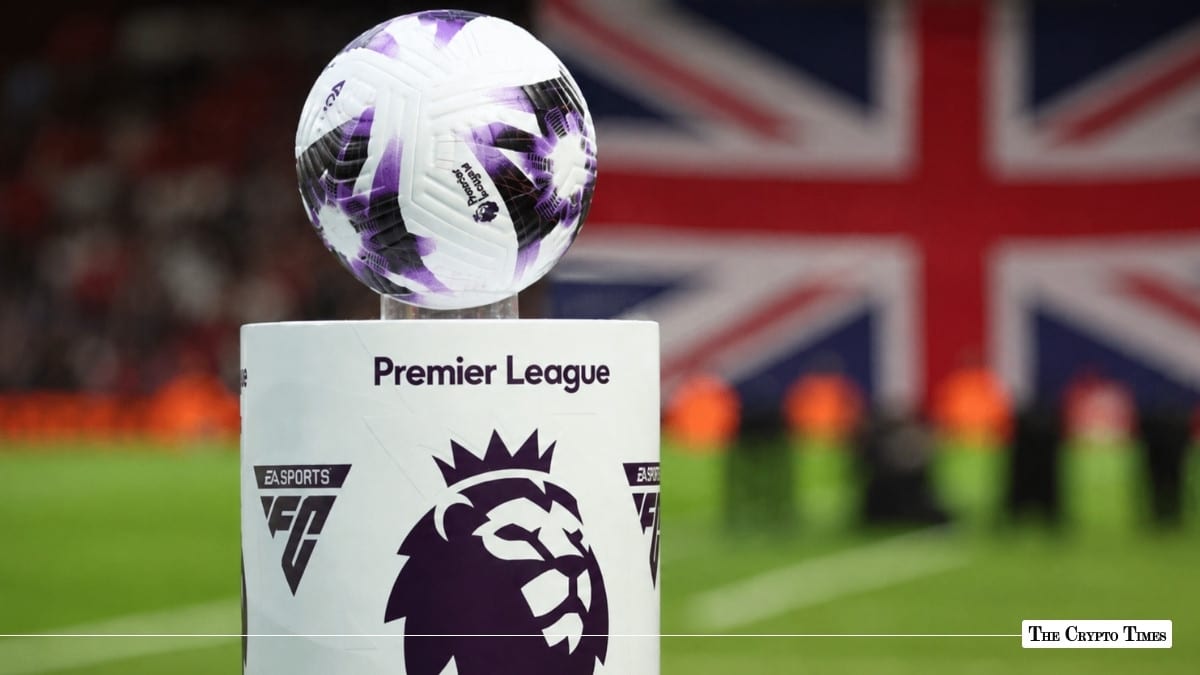
The United Kingdom’s Financial Conduct Authority (FCA) has issued a stern warning to football clubs, primarily those in the Premier League, cautioning that sponsorship deals with unauthorised crypto firms and trading platforms could expose them to legal liability, money laundering risks, and serious reputational damage.
In a letter sent directly to clubs on Wednesday, the regulator flagged growing concerns over a rising number of partnerships between football teams and financial firms that are not authorised to operate in the UK.
As per a Reuters report, the FCA stated that several unauthorised firms, including crypto businesses and trading platforms, appear to be using high-profile club sponsorships as a vehicle to promote their products to millions of football fans, potentially breaching UK financial promotion rules.
Lucy Castledine, the FCA’s Director of Consumer Investments, did not mince words. She said that millions of fans place trust in their club’s badge, and clubs should not allow unauthorised financial firms to exploit that loyalty by putting potentially risky products in front of their supporters.
She added that a logo on a shirt simply means the firm paid for it, and urged fans to verify any sponsoring firm through the FCA’s Firm Checker tool before engaging with their financial products.
The regulator confirmed it has already reached out to specific clubs where it identified concerns and warned that it would take enforcement action where necessary. Fans dealing with unregulated firms, the FCA stressed, risk losing all their money and would have no access to regulatory protections.
UK Sports Minister Stephanie Peacock backed the FCA’s stance, noting that while sponsorship income remains vital for the football industry, fans deserve assurance that the companies associated with their clubs are responsible, accountable, and safe to deal with.
Why this matters now
The warning comes at a particularly sensitive time for Premier League finances. From the 2026-27 season, clubs will no longer be allowed to display gambling brands on the front of matchday shirts, following a voluntary agreement reached in April 2023. That ban is expected to leave an estimated £80 million gap in club budgets, and crypto firms have been aggressively moving to fill that void.
According to a study by Investigate Europe, a significant number of Premier League clubs in the 2025-26 season were sponsored by crypto and investment firms that are not approved by the FCA.
Notable examples include Newcastle United’s partnership with VT Markets, a CFD broker that sits on the FCA’s warning list with no UK licence, as well as Chelsea’s deal with BingX and Manchester City’s arrangement with OKX, both of which have been flagged as absent from the FCA register.
The issue is not new to football. Leeds United dropped its sponsor FXVC in 2023 after the FCA revoked the firm’s licence, while Atletico Madrid ended up in litigation with crypto exchange WhaleFin after the platform reportedly defaulted on a deal worth €20 million per season.
According to Deloitte, sponsorship and commercial revenue have now overtaken broadcasting as the dominant source of income for top clubs, with Manchester City alone generating €408 million ($475 million) from commercial deals in 2025, surpassing its broadcast revenue of €332 million.
Broader regulatory context
The FCA’s crackdown on football sponsorship ties into the UK’s wider push to regulate the crypto industry. The regulator is currently finalising a comprehensive regulatory framework for cryptoassets, with crypto firms set to begin applying for FCA authorisation from September 2026 and full regulation expected to take effect by October 2027.
Until that framework is in place, crypto remains largely unregulated in the UK except for financial promotions and anti-money laundering requirements, making the current sponsorship landscape a grey area that the FCA is now actively working to tighten.
The FCA said it is coordinating with the UK government and the incoming football regulator to address the issue and ensure fans are protected from firms operating outside the law.
Also Read: US Directs ‘Economic Fury’ at Iran’s Crypto Lifeline via Nobitex Sanctions