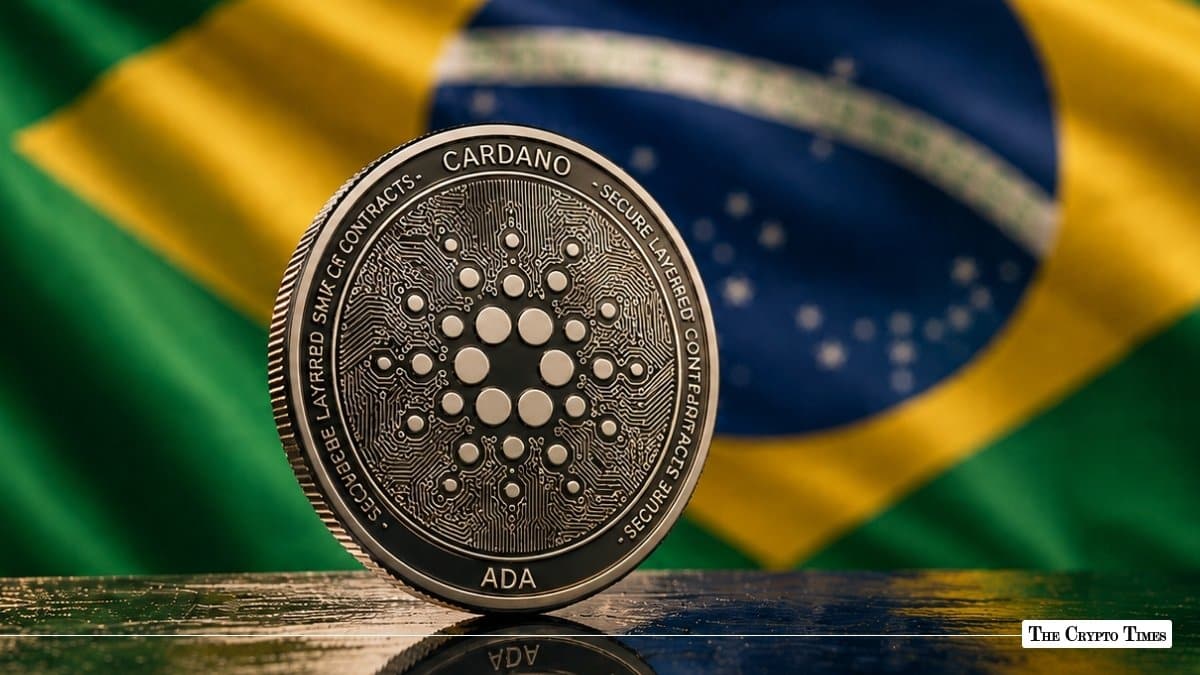
The Cardano Foundation has finalized a major enterprise partnership with the Brazilian Olympic Committee (COB), bringing public ledger infrastructure into the heart of South America’s largest athletic ecosystem.
According to the official announcement, the two organizations have committed to a comprehensive three-year technical roadmap. The goal of the collaboration is to modernize sports administration throughout Brazil, optimizing internal data security, equipment tracking pipelines, and institutional governance mechanisms.
The initiative kicked off with a closed-door executive workshop in Rio de Janeiro, with structural pilot programs scheduled to launch across regional training facilities later this summer.
Building a blockchain-based sports framework
For the Brazilian Olympic Committee, the partnership extends beyond testing new technology. The organization plans to use the initiative to introduce its community to blockchain while exploring new ways to manage records and services across the sports ecosystem.
Speaking at the signing ceremony, COB Director General Emanuel Rego said, “The signing of this memorandum of understanding with the Cardano Foundation marks a step towards the future of sports management in Brazil.”
Under the agreement, the committee plans to develop digital identities for athletes and coaches, alongside certifications that can be verified digitally. It also wants to create permanent records for key processes involving sports management and funding programs. The organizations say these tools could help improve record keeping and increase transparency across the Olympic system.
Marcelo Santos, COB’s Technology Manager, said the partnership forms part of the committee’s wider digital transformation efforts. He said, “We are very excited about the partnership with the Cardano Foundation, which positions the COB at the forefront of digital transformation.”
Cardano’s Broadening Institutional Push
The COB partnership directly mirrors a sequence of recent operational wins for Cardano as it transitions from a peer-reviewed research network into a live enterprise execution layer.
Cardano recently closed an data-pipeline agreement with institutional reporting platform Token Terminal. The integration provides developers and institutional analysts with a single, highly vetted source for verifying on-chain financial metrics and transaction velocities.
In March, the network integrated with Archax’s tokenization platform, allowing regulated real-world assets to be issued on Cardano through Archax’s infrastructure. The move gave institutional investors access to a regulated framework for using the blockchain.
Decentralization in Action: The Governance Factor
The foundation’s success in onboarding the Brazilian Olympic Committee comes on the heels of a historic showcase of on-chain community governance.
In a recent network-wide decentralized treasury vote, the Cardano community officially rejected a funding proposal intended to sponsor the Cardano Summit 2026. Demonstrating strict adherence to decentralized architecture, the Cardano Foundation immediately canceled the event, respecting the community’s sovereign decision.
These developments show Cardano expanding its activity beyond cryptocurrency transactions. The network has recently focused on projects tied to asset tokenization, transparency, digital identity, and other practical uses of blockchain technology.
Also Read: MoneyGram Enters Stablecoin Race With MGUSD Launch on Stellar