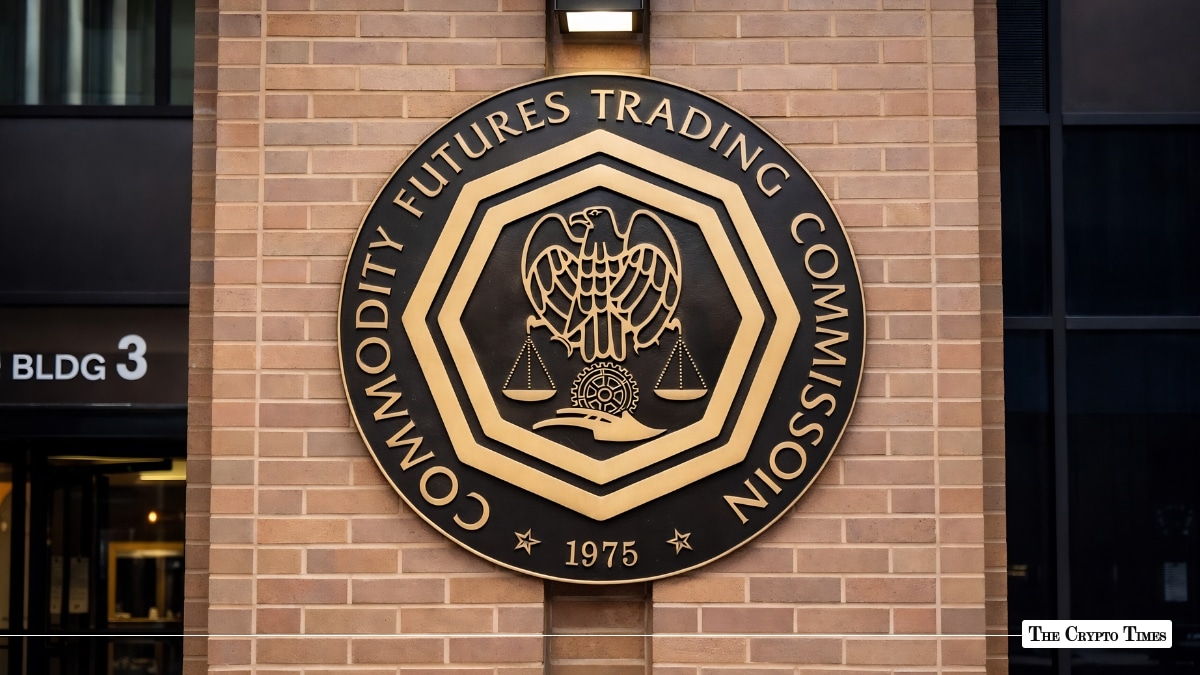
The U.S. Commodity Futures Trading Commission (CFTC) today filed a federal lawsuit against the state of Minnesota, seeking to block a new law that would make operating or assisting in the operation of certain prediction markets a criminal felony.
According to the official announcement, the agency is asking the court to issue a preliminary injunction before the law takes effect on Aug. 1, 2026, arguing that the state measure conflicts with the CFTC’s exclusive authority over federally regulated event contracts.
The lawsuit marks the latest step in the regulator’s campaign to challenge state efforts to restrict prediction markets that are listed on CFTC-regulated exchanges.
Minnesota law targets prediction markets
The Minnesota statute, signed by Governor Tim Walz, would impose criminal penalties on entities that operate or facilitate prediction markets within the state.
According to the CFTC, the law is broader than similar measures adopted elsewhere and could apply to markets tied to weather, agriculture, and other events that have long been used for hedging and risk management. The agency said the legislation threatens to criminalize activity that Congress placed under federal oversight through the Commodity Exchange Act.
CFTC says federal law preempts state restrictions
In a statement accompanying the lawsuit, CFTC Chairman Michael S. Selig said the Minnesota law would effectively turn participants in lawful prediction markets into felons. The commission also noted that Minnesota is a major agricultural state where farmers and agribusinesses rely on weather and crop-related contracts to manage risk.
Selig said, “This Minnesota law turns lawful operators and participants in prediction markets into felons overnight. Minnesota farmers have relied on critical hedging products on weather and crop-related events for decades to mitigate their risks. Governor Walz chose to put special interests first and American farmers and innovators last.”
The CFTC argues that allowing states to ban these markets would undermine the uniform national regulatory framework established more than five decades ago.
Part of a broader litigation strategy
The Minnesota case follows a preliminary injunction issued by a federal court in Arizona, which blocked that state from applying its gambling laws to prosecute prediction market operators while litigation continues. The CFTC has also filed lawsuits against Connecticut, Illinois, and New York over similar issues.
In addition, the agency has submitted amicus briefs in cases before the U.S. Courts of Appeals for the Sixth and Ninth Circuits and the Supreme Judicial Court of Massachusetts.
Wisconsin suit broadens the federal-state dispute
In a separate complaint filed in the U.S. District Court for the Eastern District of Wisconsin in April 2026, the CFTC asked the court to block the state from enforcing gambling laws against platforms offering event-based contracts.
The dispute follows civil enforcement actions filed by Wisconsin on April 23 against Kalshi, Polymarket, Crypto.com, Robinhood, and Coinbase.
Wisconsin alleged that the companies were facilitating illegal sports betting within the state. The CFTC argues that those actions interfere with a national framework established by Congress for regulating derivatives and event contracts.
Growing debate over prediction market regulation
The dispute reflects a broader debate over whether prediction markets should be regulated exclusively as derivatives products or restricted under state gaming laws. Platforms such as Kalshi and Polymarket have brought event contracts into the mainstream, covering elections, economic data, and corporate milestones.
The CFTC’s legal actions suggest the agency intends to defend federal jurisdiction as states attempt to impose their own restrictions on these markets.
Also Read: Polymarket Taps Nasdaq Data for Private Company Predictions