Key Highlights
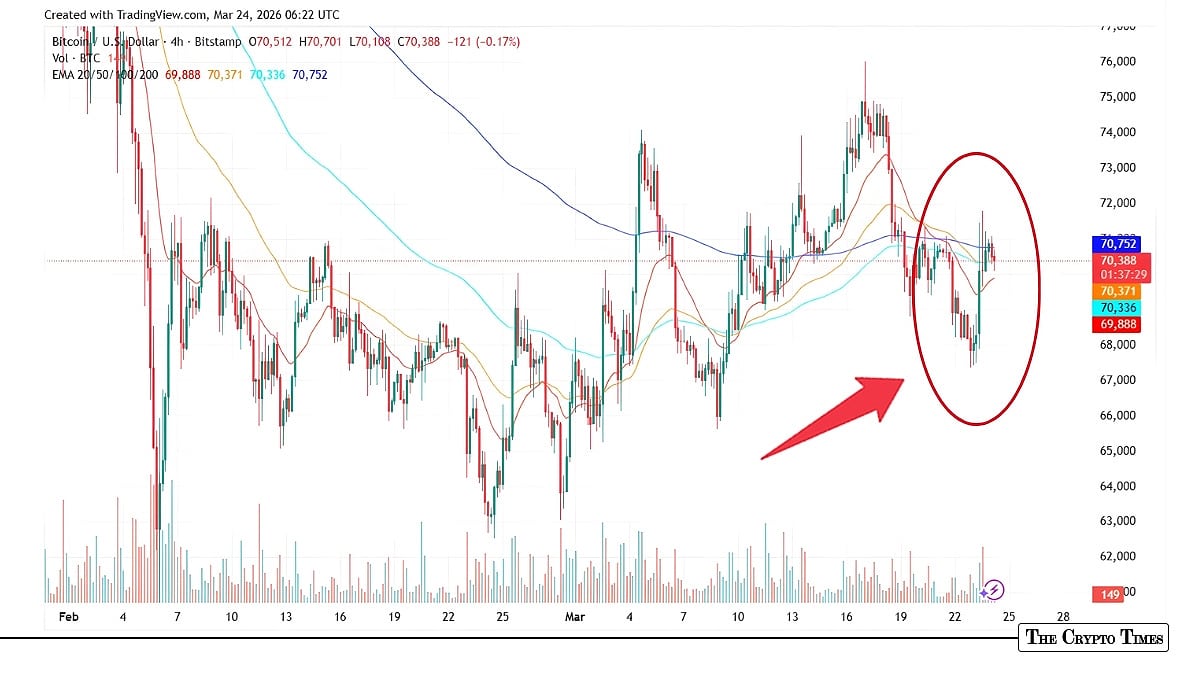
- Bitcoin holds steady near $70,500 after a 2.43% 24-hour gain, defending key support levels amid ongoing 2026 consolidation that has kept prices trapped between $60,000 and $79,000 since January’s brief rally.
- Exchange reserves hit multi-year lows at approximately 2.708 million BTC, less than 6% of total supply; signaling long-term holders are moving coins to cold storage and reducing immediate selling pressure.
- U.S. spot Bitcoin ETFs stage a March comeback with roughly $1.4 billion in inflows so far, led by BlackRock’s IBIT, as institutional demand returns and helps absorb supply despite occasional daily outflows.
Bitcoin hovers near $70,500 early Tuesday, clawing back some ground after a choppy few weeks that have left traders bruised but not broken. The world’s largest cryptocurrency rose about 2.43% in the past 24 hours to trade around $70,300—as per data from CoinMarketCap.
The modest bounce comes amid lingering geopolitical jitters and macro uncertainty, yet it masks a quieter story playing out beneath the surface: supply is tightening while big money keeps showing up.
A brutal consolidation year
After peaking near $126,198 in October last year, Bitcoin (BTC) has spent 2026 in a bruising consolidation. It flirted with $93,000–$96,000 in January before sliding into a range mostly between and within $60,000—following modest demand.
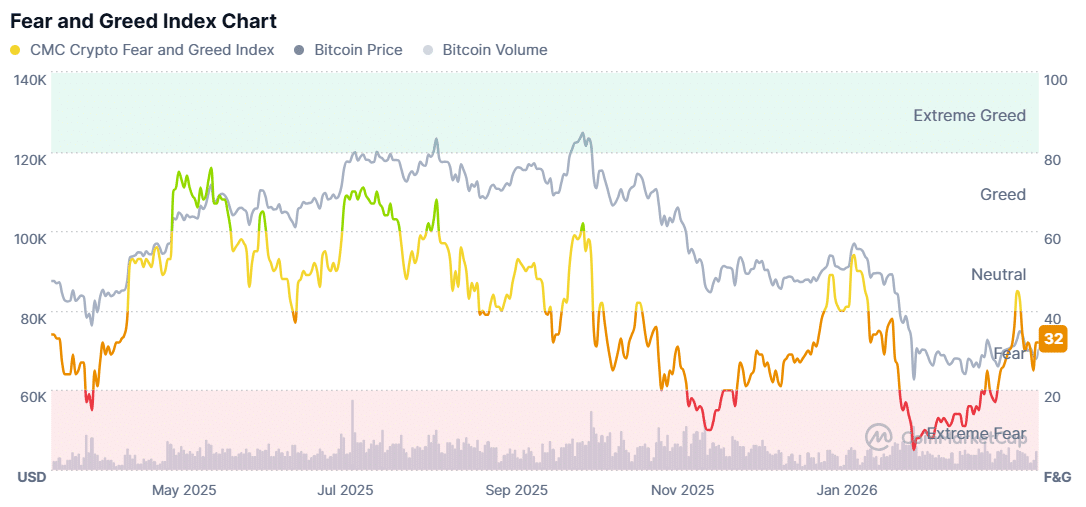
March has been no different as repeated tests of the $74,000–$79,000 zone met resistance, while support around $68,000–$71,000 has so far held. The Fear & Greed Index sits deep in “extreme fear” territory, a level that in past cycles has sometimes marked capitulation and set the stage for rebounds.
Shrinking exchange reserves signal holder resolve
What stands out right now is the behavior of actual Bitcoin holders. Onchain data from CryptoQuant show exchange reserves hovering near multi-year lows, recently around 2.708 million BTC. That equates to less than 6% of total supply sitting on centralized platforms, down sharply from earlier years.
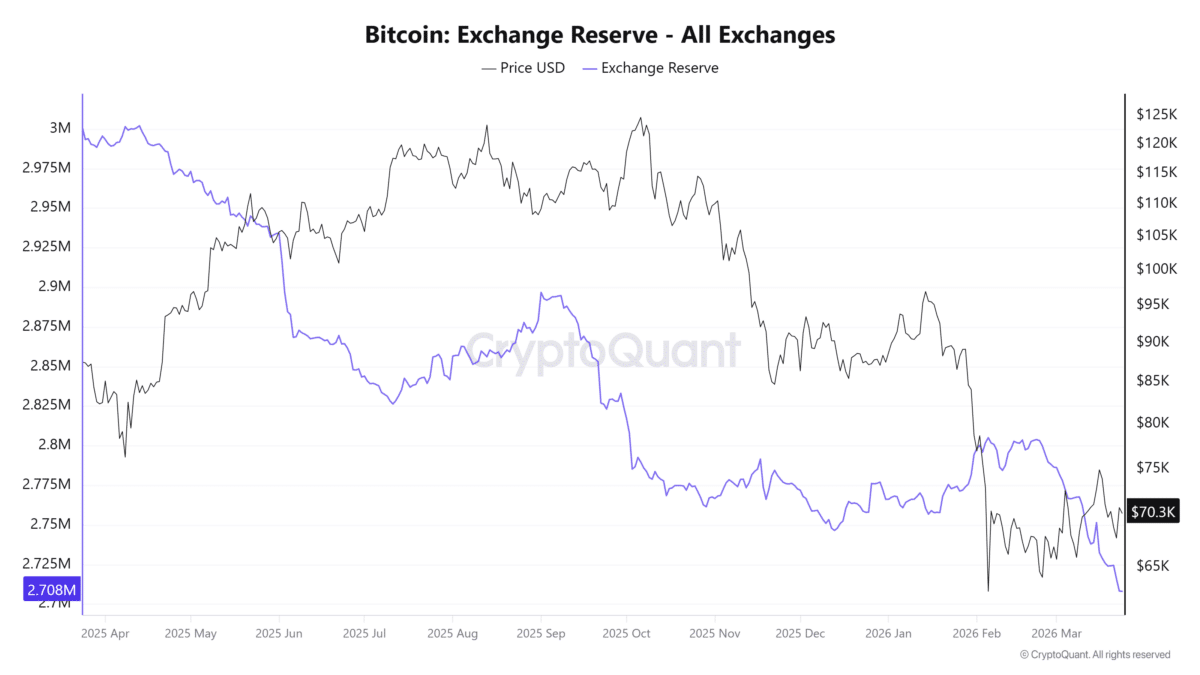
When coins leave exchanges for cold storage, it typically signals long-term holders are in no rush to sell. Recent netflows have been mixed, with occasional small inflows of a few thousand BTC on volatile days, but the broader trend remains net outflows over weeks and months.
Analysts note that sustained low reserves reduce the pool of coins available for immediate selling, creating a potential supply squeeze if demand picks up. Whale activity has ticked higher at times, but not in a way that suggests panic distribution. Instead, the data point to accumulation during dips.
Institutional demand returns via ETFs
Even more telling is the institutional side. U.S. spot Bitcoin ETFs have staged a clear turnaround in March after heavy outflows earlier in the year. The funds recorded their longest inflow streak of 2026 so far, multiple weeks totaling roughly $1.4 billion—as per SoSoValue data.
Among all ETFs, BlackRock’s iShares Bitcoin Trust (IBIT) has dominated, pulling in the lion’s share and now boasting cumulative inflows exceeding $56 billion since launch. Its daily figures have swung between outflows of $50 million on weaker days and strong positive inflows topping $100–500 million on better ones, though occasional red days remind everyone that flows can reverse quickly.
Notably, past three sessions of the last week recorded outflows but his week started with positive netflows, amassing $167.23 million in total on Monday, March 24, 2026.
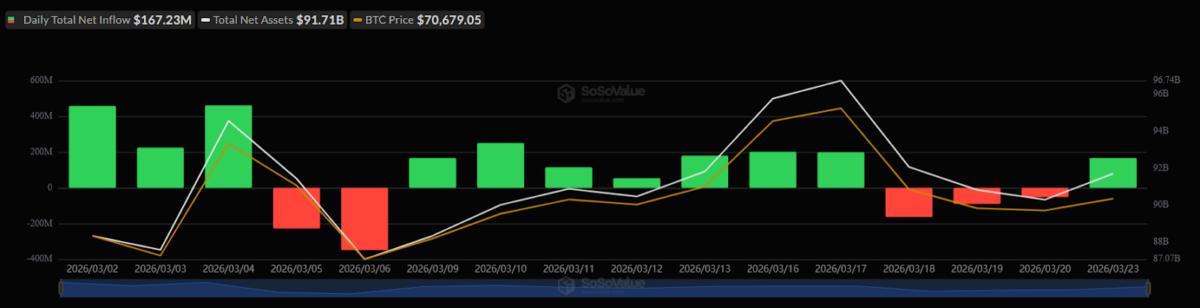
These ETF purchases represent direct, regulated demand that ultimately has to be met in the spot market. When combined with shrinking exchange balances, the picture is one of steady absorption rather than aggressive distribution. Spot market order flow on platforms like Binance and Coinbase has also shown signs of shifting back toward net buying after earlier sell-side pressure.
Technical tightrope ahead
Technically, Bitcoin sits in a make-or-break zone. Immediate support clusters between $68,000 and $71,800, with deeper floors near $61,000–$64,000. A clean hold here keeps the door open for a push toward $74,500–$79,000 resistance.
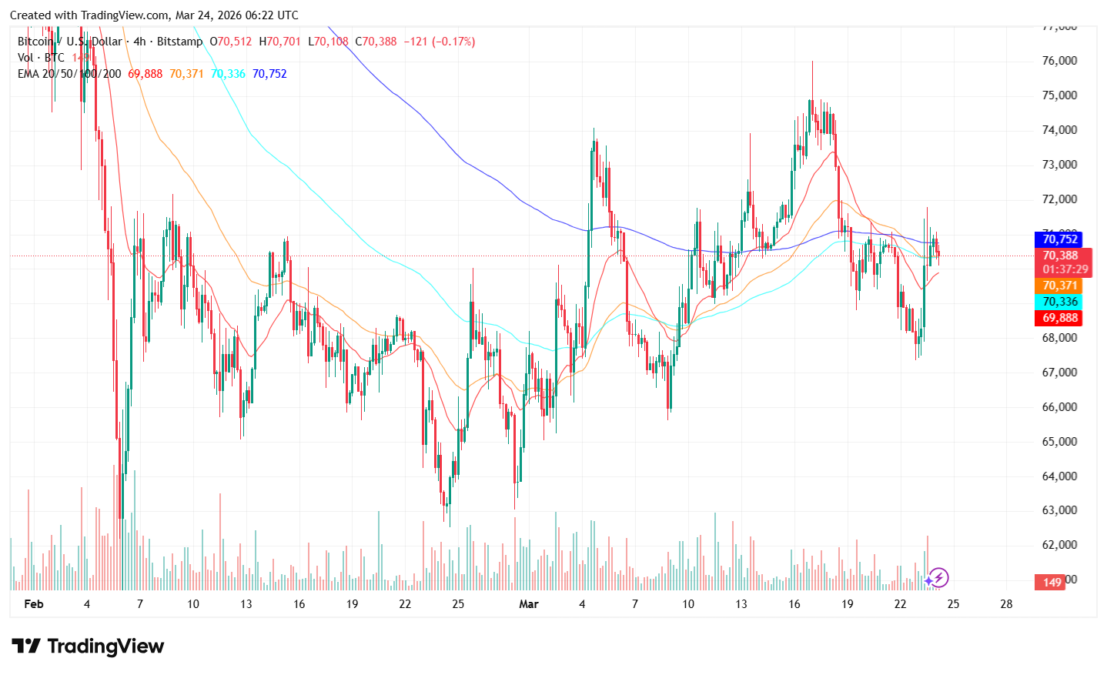
However, failure below $68,000 could open the path to deeper tests. Longer-term forecasts for the rest of 2026 still span a wide range—bullish voices eye $110,000–$170,000 if macro conditions improve and ETF momentum continues, while skeptics warn of further consolidation or even tests toward $50,000 in a prolonged risk-off environment.
For now, the inflows tell a story of resilience. Retail and long-term holders are tucking coins away, while institutions keep adding on weakness. That dynamic has helped Bitcoin defend the $68,000–$70,000 band despite headlines that would have rattled the market in earlier cycles.
Whether it’s enough to spark a sustained breakout remains to be seen—geopolitics, Fed policy, and broader liquidity will have the final say. But the underlying supply metrics suggest the ground beneath $70,000 is firmer than the price action alone implies.
Also read: Sweden’s H100 Group Eyes 3,500 BTC Treasury Stretch in Strategic Push