
Key Highlights
- Bitcoin mining difficulty fell 7.76% to 133.79T (block 941,472, March 21, 2026), the second-largest downward adjustment of 2026, as global hashrate retreated to ~943 EH/s.
- Squeezed margins (BTC ~$70,600 post-halving), higher energy costs from geopolitical tensions, and some miners shifting to AI hosting triggered the hashrate drop, mirroring past clean-up phases (2021 China ban, 2022 bear market).
- Lower difficulty boosts revenue per hash for surviving miners; next adjustment (mid-April) expected to dip another ~0.7%. Historically, such resets often signal stabilization is near.
Bitcoin’s mining network underwent a significant recalibration over the weekend, with difficulty dropping 7.76% to 133.79 trillion at block 941,472, according to data tracked by CloverPool.
The pullback comes as miners grapple with squeezed margins. As per latest market data, Bitcoin traded near $70,600 in recent sessions, a level that has left many operations struggling to stay profitable after last year’s post-halving economics.
The adjustment, confirmed early Saturday, marks the second-largest downward shift in 2026 and reflects a noticeable retreat in global hashrate, now hovering around 942.83 EH/s.
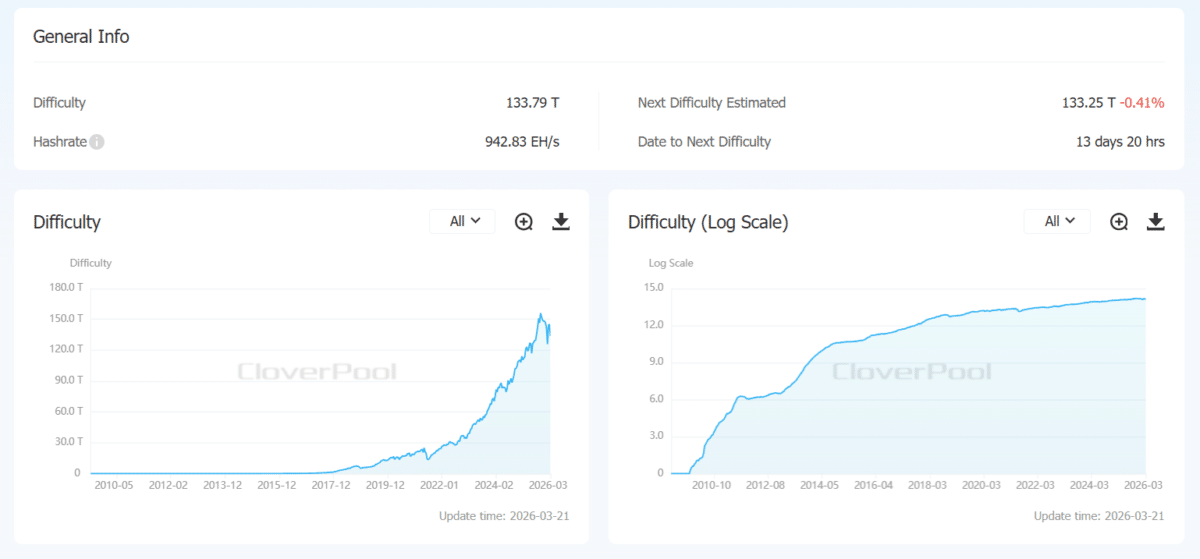
As per the data, average block times stretched beyond the protocol’s 10-minute target in the prior epoch, triggering the automatic downward revision to restore equilibrium. Based on the current situation, estimations point to another modest decline of roughly 0.7% in the next cycle around mid-April.
Historical drops in Bitcoin mining difficulty
The latest event is not unfamiliar as sharp difficulty drops have historically signaled miner capitulation phases. In mid-2021, a multi-month cascade followed China’s sweeping mining ban, slashing hashrate by over 50% before a slow rebuild.
A year later, the 2022 bear market delivered repeated negative adjustments as prices cratered below $20,000, purging inefficient rigs and eventually setting the stage for recovery when capital returned. This latest drop echoes those periods of a “clean-up,” as some industry observers describe it, where weaker players exit and the network sheds excess capacity.
Another key factor in the latest downside adjustment is geopolitical tensions, including disruptions tied to Middle East conflicts, that have lifted energy prices and contributed to hashrate softness in March.
Some large miners have pivoted portions of infrastructure toward AI hosting deals, accelerating the exodus of marginal operations. For remaining miners, the lower difficulty offers immediate breathing room—each unit of computing power now solves blocks more readily, lifting revenue per hash until the market responds.
Whether this marks the bottom of the current capitulation wave or merely a pause remains unclear. History suggests these resets often precede stabilization, especially when Bitcoin supply pressure tightens in the wake of halvings. The network, as designed, keeps marching forward.
Also read: DDC Expands Bitcoin Treasury With Latest 200 BTC Purchase