The cryptocurrency market experienced mild consolidation with downward pressure in the past 24 hours with hotter-than-expected U.S. Producer Price Index (PPI) data—rising 6.0% YoY against forecasts of around 4.9%—rekindled inflation fears, boosted rate-hike expectations, and triggered over $400 million in liquidations.
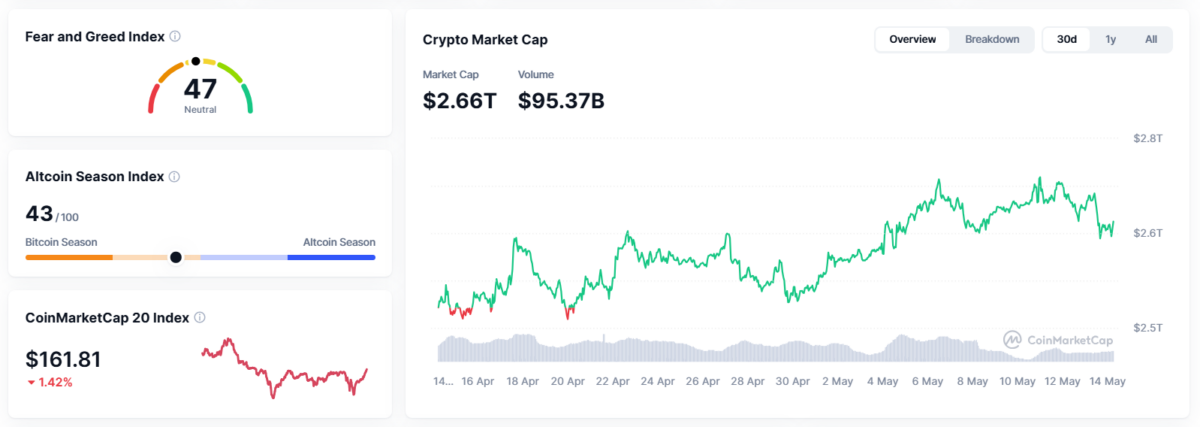
The total crypto market capitalization dipped to $2.66 trillion, down roughly 1% in the period, while trading volumes remained solid amid macro uncertainty. Despite the short-term volatility, regulatory optimism and institutional developments provided underlying support.
Market Overview
Bitcoin faced renewed pressure following the release of stronger-than-expected U.S. PPI figures, which heightened concerns over persistent inflation and potential delays in Federal Reserve rate cuts. The data sparked a wave of risk-off sentiment across markets, pushing BTC below the psychologically important $80,000 level.
While the move triggered significant liquidations, it also reinforced Bitcoin’s appeal as an inflation hedge in the eyes of long-term holders. The asset traded in the $79,000–$81,000 range during the period, reflecting a cautious standoff between macro headwinds and crypto-specific tailwinds.
Ethereum followed a similar pattern, trading around $2,250–$2,300 with modest declines. The broader altcoins market showed mixed performance, with some resilience in tokens like XRP on regional exchange volumes, while broader meme and mid-cap segments cooled off.
Overall market sentiment remained in a consolidation phase near recent highs, vulnerable to further macro releases but buoyed by policy developments.
Key Highlights of the Day
Below are the key highlights on what happened in the crypto market in past 24 hours (as of 11:30 AM IST — May 14, 2026):
ETF & Institutional Flows
Bitcoin ETFs recorded notable outflows totaling $635 million over the recent period—the largest in weeks—with BlackRock’s IBIT alone seeing approximately $285 million in withdrawals. This reflects short-term caution among investors amid the inflation data, even as longer-term institutional interest in digital assets persists.
In contrast, broader crypto funds continued to attract inflows on a weekly basis, highlighting diverging short- and medium-term views.
Regulatory Progress
The U.S. Senate Banking Committee released the full 309-page text of the CLARITY Act ahead of its scheduled markup today (on May 14). The bill, aimed at providing comprehensive market structure for cryptocurrencies, faces dozens of proposed amendments—including over 40 from Sen. Elizabeth Warren and others targeting stablecoin rules and bank involvement.
Despite pushback from parts of the banking lobby and certain Democrats, industry participants remain optimistic that the process will advance regulatory clarity and foster responsible innovation in the sector.
Read: CLARITY Act Talks Collapse: Sen. Lummis Says 99% is Settled Before Senate Markup
Broader Corporate, Adoptions, and Developments
On the institutional front, Charles Schwab made a significant move by opening spot Bitcoin and Ethereum trading directly to its retail clients. The rollout allows users seamless in-platform access, potentially reducing friction and bringing more traditional investors into crypto without relying on external exchanges.
Japanese firm Metaplanet, often dubbed “Asia’s MicroStrategy,” reported a 251% jump in Q1 revenue despite recording Bitcoin-linked losses in its treasury operations. The company continues aggressively expanding its BTC holdings, now exceeding 40,000 BTC in recent accumulations, signaling strong corporate conviction in Bitcoin as a reserve asset.
In blockchain infrastructure, the Ronin network completed its full migration and deeper integration with Ethereum, enhancing interoperability for the popular gaming and DeFi chain.
Regional Developments
Japan’s Blockchain Foundation announced plans to launch the EJPY stablecoin on Ethereum and the Japan Open Chain, further embedding stablecoins into the country’s digital finance ecosystem.
Meanwhile, Vietnam set its sights on launching its first regulated crypto market in Q3 2026, marking a notable step toward formal oversight and mainstream adoption in Southeast Asia.
Security Incident
In DeFi, ShapeShift’s FOX Colony—a community governance initiative for FOX token holders—suffered a smart contract exploit on Arbitrum, resulting in losses of approximately $132K in USDC and FOX tokens. Blockchain security firm Blockaid attributed the attack to a vulnerability in the executeMetaTransaction function and warned that other Colony Network deployments using similar architecture could be at risk.
Another exploit on the same day was on the DeFi protocol Transit Finance, which lost $1.88 million in DAI stablecoin, drained to a fresh Ethereum wallet. PeckShieldAlert reported the incident, linked to a vulnerability in the protocol’s cross-chain infrastructure.
Outlook
The crypto market finds itself at a crossroads as macroeconomic data is introducing volatility and testing near-term supports, yet regulatory advancements like the CLARITY Act, institutional products continue expanding, and gradual corporate accumulation paint a constructive longer-term picture.
Bitcoin’s ability to hold key levels amid inflation surprises will be closely watched, as will the outcome of today’s Senate markup.
Also read: Bitcoin Holder Says Claude AI Helped Recover 5 BTC Lost for 11 Years