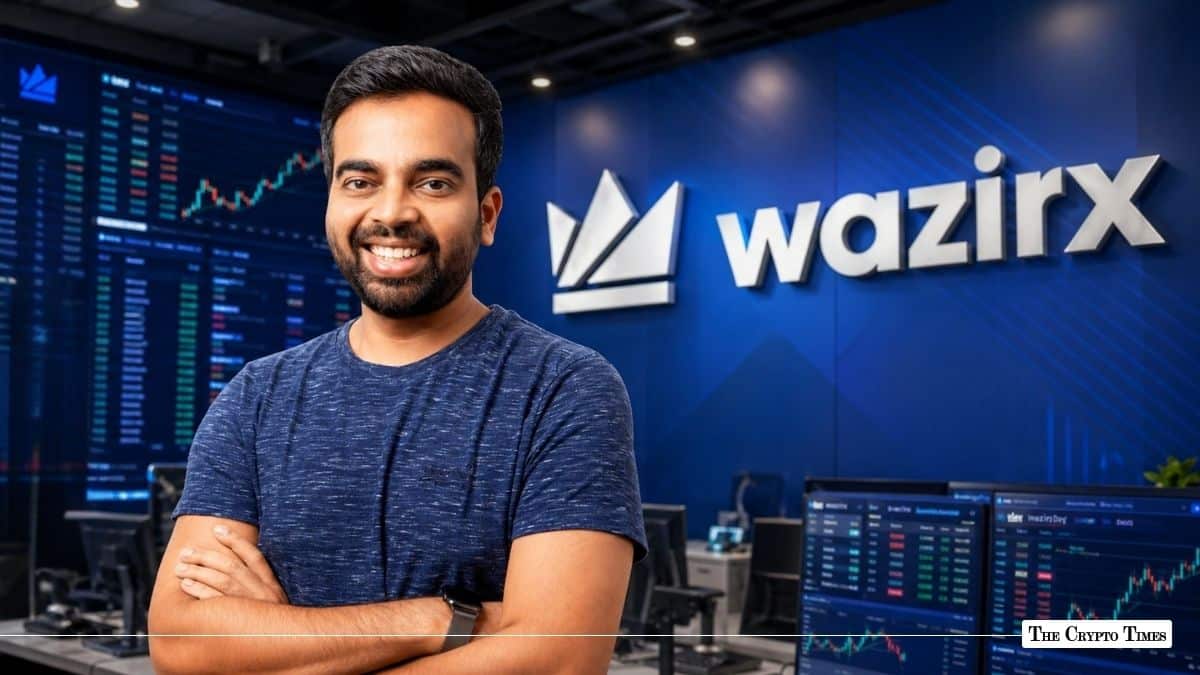
WazirX, India’s largest cryptocurrency exchange by registered users, has officially launched futures trading — offering INR-settled perpetual contracts with what it claims are the lowest trading fees in the Indian crypto market.
The platform went live on May 13, featuring maker fees of 0.02% and taker fees of 0.04%, with no minimum volume thresholds required. The official blog announcement does not specify a maximum leverage tier, though promotional materials on X reference up to 10x leverage on BTC/INR and ETH/INR perpetual contracts — a notable reduction from the 20x leverage offered during the March 2026 early access phase. Additional pairs are planned in phases depending on liquidity, risk management measures, and user readiness.
All positions are open and settled in Indian Rupees, meaning traders do not need to hold or convert crypto collateral—a structural difference from USDT-settled perpetual contracts offered by offshore exchanges. The exchange is fully registered with India’s Financial Intelligence Unit (FIU-IND).
“Futures trading in India has meant high fees unless you are a large-volume institutional trader. We have changed that baseline. A trader starting out on WazirX Futures gets the same fee rate as an institutional trader on most other platforms. The aim is to provide a robust platform with low fees for futures traders,” said Nischal Shetty, founder of WazirX.
INR Perpetuals: The Product Design
WazirX’s futures product is designed around INR-denominated perpetual contracts — a format that eliminates the friction of buying stablecoins before trading derivatives, a pain point for Indian retail traders navigating the country’s 1% TDS on crypto transfers and 30% capital gains tax.
The platform uses a funding rate mechanism to keep perpetual contract prices anchored to spot, with real-time P&L tracking, one-tap trading, and a mandatory knowledge quiz covering leverage, margin, and liquidation that users must complete before placing their first futures trade. The UI features advanced TradingView charting, live order books, and clear LONG/SHORT positioning with margin details. WazirX said it is also investing in user education initiatives to help a broader base of traders understand futures products.
WazirX claims the fee structure undercuts every Indian competitor without requiring users to hit volume-based tier thresholds — a dig at exchanges like CoinDCX and Giottus that launched their own perpetual futures products in 2025 with higher base-tier fees.
Revenue Pledged to Recovery Token Buybacks
The most consequential element of the announcement is not the product itself but where the revenue goes. WazirX’s official blog states explicitly: “Futures trading will generate further profits from platform operations and directed toward additional recoveries for eligible creditors who hold Recovery Tokens. This is on top of the 85% fund distribution already completed.”
This matters because 15% of user funds remain locked in non-tradable, non-withdrawable Recovery Tokens (RTs) issued in January 2026 under the court-approved restructuring plan. Those tokens are not tradable on any exchange. Their value is entirely tied to WazirX generating at least $10 million in recoverable value per quarter through profits or asset recovery — a threshold the exchange has not publicly confirmed hitting in any quarter since the restructuring began.
The implicit argument: higher trading volume from competitive fees generates more revenue, which flows into the recovery pool faster.
The $230M Shadow
The futures launch cannot be separated from the event that defines WazirX’s current trajectory. In July 2024, the exchange was hit by a cyberattack attributed to North Korea’s Lazarus Group that drained approximately $230 million from its multisignature wallet—wiping out nearly 45% of reserves and freezing funds for 4.4 million users. The platform was shut down for 16 months.
Trading resumed on October 24, 2025, after the Singapore High Court sanctioned a restructuring scheme. Users received roughly 85% of their pre-hack balances. The remaining 15% was converted into Recovery Tokens.
Of the $230 million stolen, approximately $3 million has been frozen. No Recovery Token buyback has been publicly reported. The promised DEX meant to generate additional revenue for creditors has not launched.
The decision to scale back from 20x to what appears to be 10x leverage between the March early access and today’s public launch suggests WazirX may have recalibrated its risk appetite—a notable shift given TCT’s March reporting that the 20x leverage drew criticism from users who argued the exchange should prioritize repaying hack-affected users over launching high-risk products.
Trust Questions Persist
The launch follows a pattern of aggressive product expansion that has drawn scrutiny from both users and industry observers. In November 2025, WazirX launched its WazirX ZERO subscription model, offering unlimited trading for ₹99/month — a move that drew immediate backlash from users who argued the exchange should focus on recovering locked funds rather than launching new revenue products.
In February 2026, it listed Shardeum’s SHM token — a project founded by Shetty — and ran a 52.9 million SHM trading contest. In March, it announced a partnership with Sikka.fun, a memecoin launchpad also built on Shardeum.
Just last week, WazirX launched Guardians of Trust, a security and transparency hub — a move described as raising the question of whether it represents a genuine security pivot or a distraction from the unresolved 15% debt.
The WRX token, WazirX’s native exchange token, currently trades at approximately $0.02 — down 99.64% from its April 2021 all-time high of $5.94, with daily trading volume below $20,000.
India’s Crypto Futures Landscape
WazirX enters a futures market that has seen several Indian entrants in the past year. Giottus launched perpetual futures in August 2025 with a zero-fee promotional window. CoinDCX, WazirX’s primary domestic competitor, has offered derivative products since 2024. Cryptoforce India launched its own perpetual futures platform in July 2025.
None of these platforms operate under a dedicated derivatives regulatory framework. Crypto futures in India sit outside SEBI’s regulatory perimeter — there are no circuit breakers, no settlement guarantees, and no investor protection fund for crypto derivatives. FIU-IND registration covers anti-money laundering compliance, not market conduct in leveraged products. The Finance Ministry is reportedly in discussions with SEBI and the Reserve Bank of India to build a comprehensive framework.
Also Read: 2 Years of the ₹2,000 Cr WazirX Hack: The Money Never Came Back. Neither Did the Founder