Key Highlights
- Reform UK raised £5.5 million in Q4 2024 — more than Labour (£1.7m) and the Conservatives (£2.3m) combined.
- Thailand-based cryptocurrency investor Christopher Harborne contributed £3 million of that total—following a record £9 million donation in Q3.
For the second quarter running, Reform UK has stormed to the top of Britain’s political fundraising rankings, propelled by the generosity of a single crypto billionaire who appears determined to reshape the country’s political landscape from a villa in Bangkok.
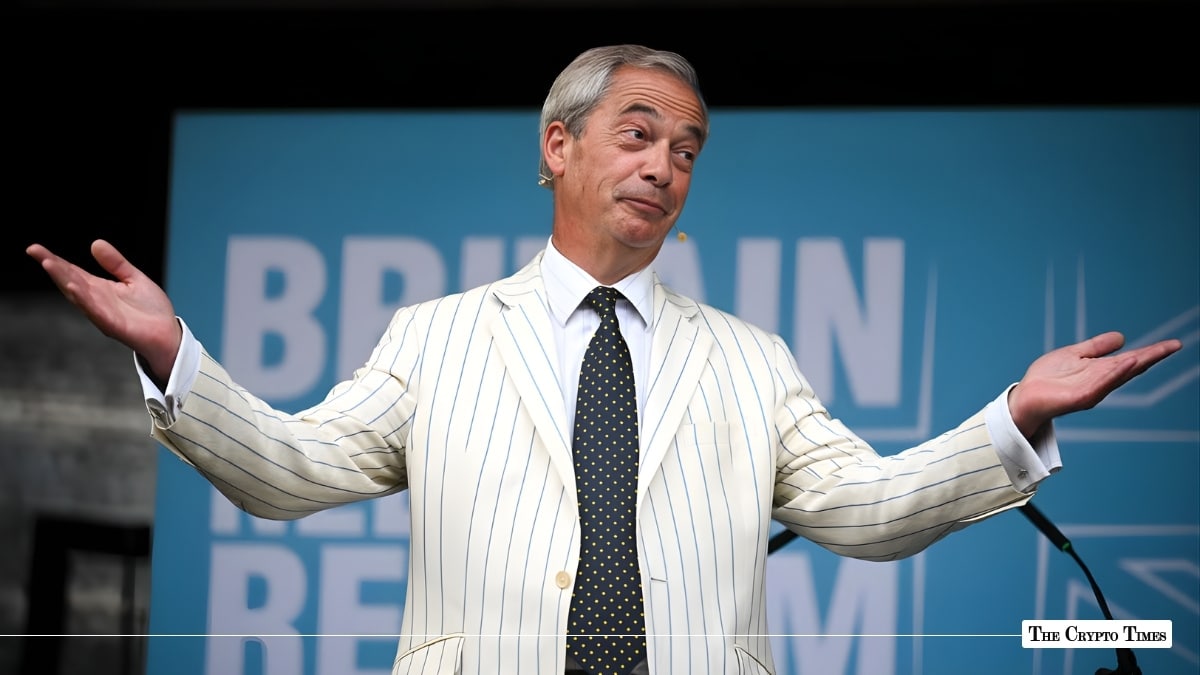
The populist party led by Nigel Farage raised £5.5 million (~$7.3 million) between October and December 2024, dwarfing its established rivals and raising urgent questions about the growing influence of cryptocurrency wealth on democratic politics—not just in Britain, but across the Western world.
The man behind the money
At the center of the story is Christopher Harborne, a British-born entrepreneur and longtime cryptocurrency investor who has made his fortune in digital assets and now lives in Thailand. In the fourth quarter alone, he handed Reform UK £3 million (~$4 million), a staggering sum that alone exceeded the entire Q4 fundraising totals of multiple rival parties.
That donation was, by Harborne’s own recent standards, relatively modest. In the third quarter of 2024, he donated a massive £9 million (~$11.94 million) to Reform, the largest single political donation to any UK party in recent memory, propelling the party to a record quarter. Cumulatively across 2024, Harborne has emerged as not just Reform’s biggest backer but arguably the most consequential political donor in modern British electoral history.
Harborne, who is also known by his Thai name Chakrit Sakunkrit, first came to wider attention in British politics through smaller donations and an interest in libertarian causes. His deep ties to the cryptocurrency sector have allowed him to accumulate the kind of wealth that can write £9 million (~$11.94 million) cheques to political parties without blinking.
A fundraising landscape transformed
The Electoral Commission’s fourth-quarter 2024 data, published in early 2025, reveals a political financing landscape in Britain that has been fundamentally reordered. Reform UK’s £5.5 million (~$7.3 million) haul compares with just £2.3 million (~$3.05 million) raised by the opposition Conservative Party and a mere £1.7 million (~$2.26 million) for Keir Starmer’s ruling Labour Party, excluding public funds.
Put simply, a party that did not exist a decade ago, led by a politician who failed to win a seat in Parliament seven times before finally succeeding in 2024, is now outspending and out-fundraising both of the parties that have governed Britain for the past century.
Unlike the Conservatives, who have historically relied on a wide base of City financiers, property developers, and business executives, or Labour, which draws on trade unions and progressive donors, Reform’s finances are unusually top-heavy.
Reform’s political ambitions drive the fundraising machine
Reform UK is engaged in what its leadership describes as a fundamental transformation from a pressure group into a full-scale political party capable of governing. That ambition requires money—to hire regional organizers, develop policy, fund advertising, and sustain a professional operation across hundreds of parliamentary constituencies.
Nigel Farage, who finally won a seat in Parliament at the 2024 election representing Clacton in Essex, has made clear that he views the next general election—which must be held by January 2029 — as Reform’s first genuine opportunity to break through at Westminster. Polling has periodically placed Reform competitive with or even ahead of the Conservatives, suggesting a potential realignment of the British right.
For donors like Harborne, the investment thesis is clear: a Reform-influenced government, or even a strong Reform parliamentary presence, could shift British policy in directions favorable to cryptocurrency interests, deregulation, lower taxes, and a more skeptical stance toward international institutions—all positions broadly aligned with the libertarian worldview that tends to animate the crypto community.
Crypto cash and the new political donor class
The phenomenon of cryptocurrency investors becoming major political donors is not unique to Britain. Across the Atlantic, the 2024 US presidential and congressional election cycle saw an unprecedented influx of crypto money into politics. The crypto industry, through super PACs and direct donations, spent an estimated $119 million on US federal elections—making it one of the largest single-industry spending blocs in American political history.
Prominent crypto investors, including Elon Musk, who backed Donald Trump’s successful 2024 presidential campaign, and the founders of exchanges and blockchain companies funneled hundreds of millions into races seen as pivotal to the regulatory future of digital assets. The result was a Congress and administration broadly sympathetic to the crypto sector’s desire for lighter-touch regulation.
In Britain, the regulatory environment for cryptocurrency remains a live political issue. The Financial Conduct Authority (FCA) has been developing a framework for digital asset regulation, and the industry has lobbied heavily for rules that would allow the UK to become a global crypto hub.
A party like Reform, with its deregulatory instincts and its largest donor embedded in the crypto world, would likely pursue policies congenial to that agenda. Beyond the UK and US, similar patterns are visible across Europe and Australia, where individuals who made fortunes in Bitcoin and other digital assets have begun channeling resources into political parties and campaigns—particularly those on the populist right that share the crypto community’s skepticism of central banks, government surveillance of financial transactions, and international regulatory coordination.
Democracy in the age of crypto donors
The surge of cryptocurrency money into politics has prompted growing concern among electoral watchdogs, academics, and some politicians across the political spectrum. Critics point out that the pseudo-anonymous nature of crypto wealth, combined with the ease of moving assets across borders, creates transparency challenges that existing political finance laws were not designed to address.
In Britain, the Electoral Commission requires the disclosure of donations above a certain threshold, and Harborne’s contributions have been fully declared. But campaigners argue that the sheer scale of individual donations—particularly from a single source—poses risks to the integrity of the democratic process, potentially allowing one person’s policy preferences to exercise disproportionate influence over a major political party.
Reform has defended its financing arrangements, arguing that its fundraising reflects genuine public support and that there is nothing improper about wealthy individuals donating to political causes they believe in. The party points out that Labour has historically relied heavily on trade union funding, representing another form of concentrated financial interest.
The debate is unlikely to be resolved soon. What is clear is that Britain’s political financing landscape has been transformed by the arrival of cryptocurrency-derived wealth—and that Reform UK, under Nigel Farage, has become the primary beneficiary of that transformation, at least for now.
Also Read: Trump Says Banks Are Threatening GENIUS Act as Coinbase Visits White House