Key Highlights
- Vitalik Buterin criticized big companies controlling AI and limiting access to advanced models like Claude.
- Anthropic reported large-scale “distillation attacks” by DeepSeek, Moonshot, and MiniMax to copy Claude’s capabilities without permission.
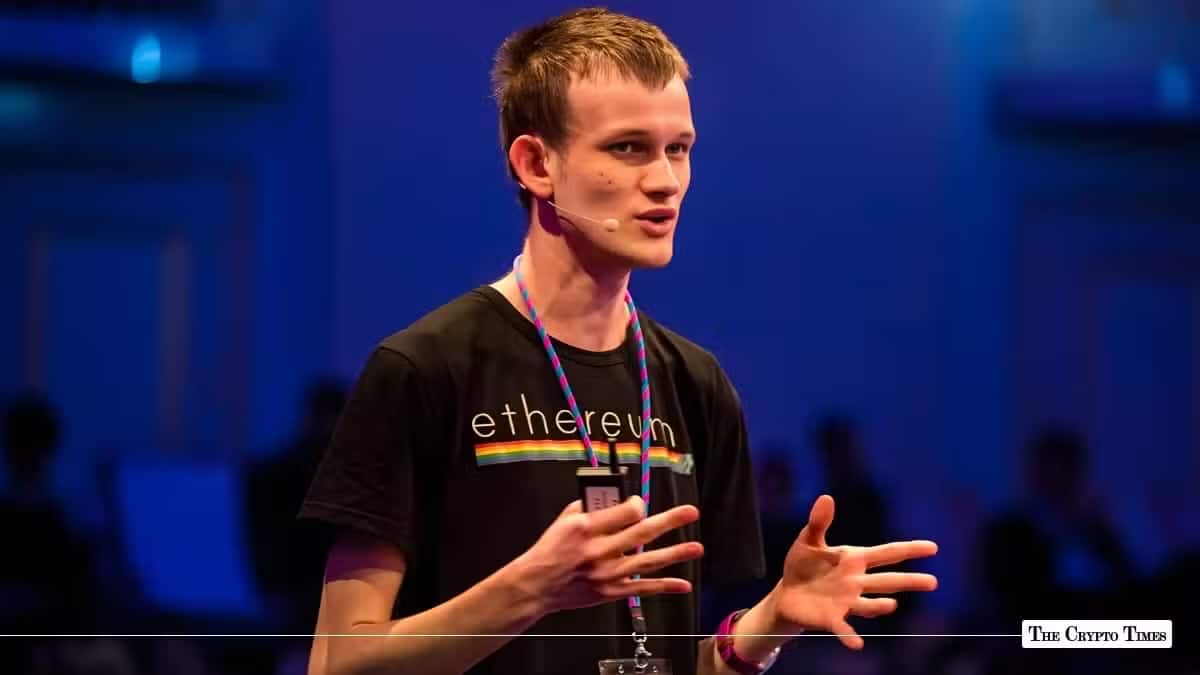
Ethereum co-founder Vitalik Buterin addressed claims by Anthropic AI that three labs attempted to copy Claude AI using distillation. He raised concerns about corporate control over artificial intelligence and questioned policies that limit access to advanced AI tools.
In an X post on Tuesday, Buterin highlighted concerns about intellectual property, saying that most people do not support this or the idea that only a few “self-appointed Good Guys” should have the best AI too.
“At least on the socials, there is pretty much zero public support for (i) corporate intellectual property [especially in this case, given how basically all the models were trained] (ii) the vision of ‘let’s protect against Authoritarian Bad Guys by making sure that the self-appointed Good Guys are the only ones with the best toys,” he wrote.
Anthropic reports distillation attacks
Buterin’s comments were in response to a blog post from Anthropic, the creator of Claude AI. The AI firm reported that three AI labs, including DeepSeek, Moonshot, and MiniMax, had tried to copy Claude’s abilities without its permission using a method called “distillation.”
This method takes the output of a large AI model and trains a smaller model from it. Normally, this is safe and used to make smaller or cheaper AI systems, but these labs did it on a very large scale to get advanced skills quickly.
Anthropic reported that DeepSeek made over 150,000 exchanges with Claude, Moonshot created more than 3.4 million, and MiniMax around 13 million. The labs reportedly tried to take advanced AI abilities like reasoning, coding, tool use, computer vision, and other special skills.
Anthropic accused them of using thousands of fake accounts and proxy services to get the rules that restrict access in some countries, like China. The labs claimed to send repeated tasks to Claude, such as explaining reasoning step by step, which could be used to train their own AI model.
“Distillation attacks undermine those controls by allowing foreign labs, including those subject to the control of the Chinese Communist Party, to close the competitive advantage that export controls are designed to preserve through other means,” Anthropic reported.
Buterin’s perspective
Buterin seems to disagree with Anthropic’s view. He pointed out that most AI models, like Claude, are trained on public data, so limiting access or enforcing strict rules may block progress instead of keeping AI safe.
To stop these attacks, Anthropic reports that it is deploying a new system to detect unusual activity, as well as sharing information with other AI labs. It said that it will also take checking of accounts more seriously and add safety measures to its AI products.
Also Read: Bitcoin Stuck Below $70K—Is AI or Global Trade to Blame?