Key Highlights
- The Reserve Bank of India’s Governor dampened expectations of a rapid shift to a cashless economy.
- He explicitly stated that CBDC is currently intended as a complement to, rather than a replacement for, physical banknotes.
- While Bitcoin faces a “leverage snap” below $65,000, traditional safe havens have surged significantly.
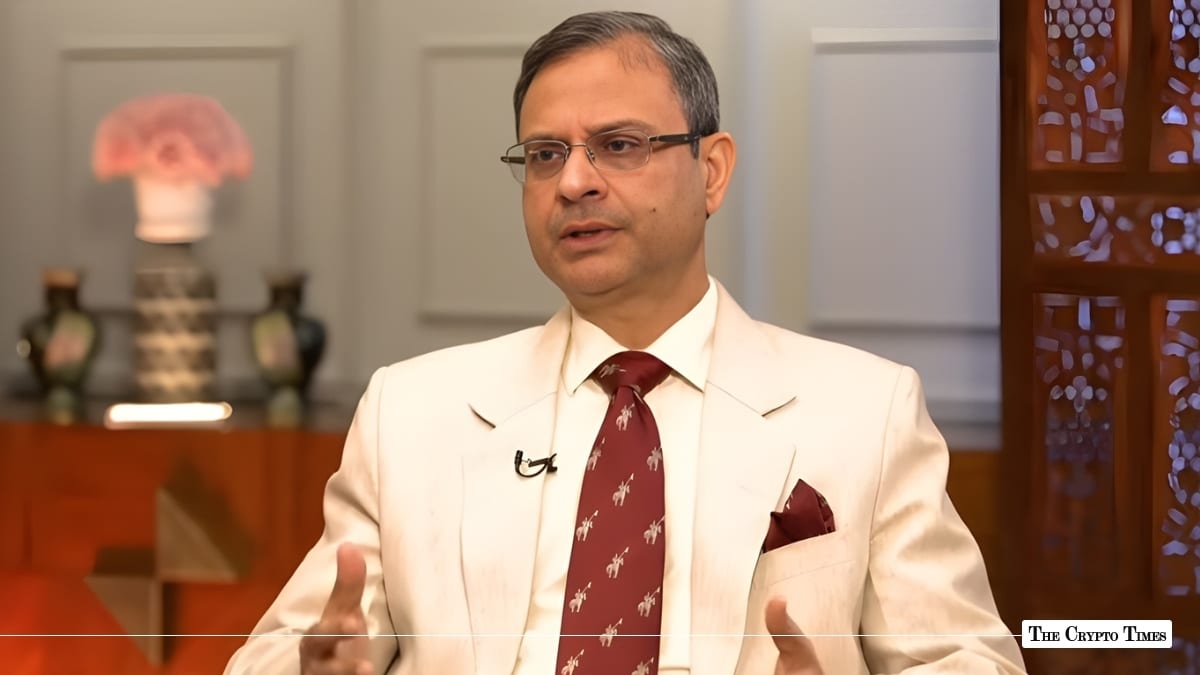
Following the customary post-Budget meeting with the Reserve Bank of India’s (RBI) Central Board of Directors in New Delhi on Monday, Governor Sanjay Malhotra provided a sobering reality check on the trajectory of India’s digital currency. Amidst global interest in sovereign digital assets, Malhotra clarified that the e-Rupee, which is India’s Central Bank Digital Currency (CBDC), is not currently positioned to displace traditional cash.
The briefing, held alongside Union Finance Minister Nirmala Sitharaman, served as a comprehensive review of the nation’s fiscal health.
While the government continues to push for digital transformation, the RBI’s stance suggests a cautious, phased approach that prioritizes the “sovereign trust” inherent in physical cash while the CBDC remains in its pilot and refinement stages.
Monetary policy and the CBDC dilemma
Governor Malhotra’s comments on the CBDC come at a time when many expected the digital rupee to take a more aggressive stance against physical currency to reduce printing and distribution costs.
However, the Governor noted that the transition is complex. “CBDC is not a substitute for cash at the moment,” he remarked, signaling that the RBI is prioritizing technical robustness and user behavior over a forced migration.
The Reserve Bank is currently prioritizing the perfection of the CBDC’s technical and operational framework, with a specific focus on developing offline payment capabilities.
According to Governor Sanjay Malhotra, a wide-scale national launch is not yet on the horizon, as the bank believes it would be premature to move beyond the pilot stage until the infrastructure is fully optimized and seamless.
This cautious approach aligns with the Governor’s broader view on inflation and growth. He noted that the Monetary Policy Committee (MPC) remains data-dependent, focusing on the latest CPI (Consumer Price Index) figures.
Interestingly, he hinted at a potential shift in strategy for the upcoming April policy, stating that if the methodology for calculating CPI changes, the RBI will adjust its monetary framework accordingly to maintain accuracy in its growth projections of 6.8–7.2% for FY27.
Fiscal stability: Gold volatility and liquidity
Finance Minister Nirmala Sitharaman addressed the “matter of concern” regarding surging gold and silver prices. She attributed the spike to aggressive purchasing by various global central banks and noted that because all gold in the Indian market is imported, the economy is particularly sensitive to these global shifts.
This “macro hedging” demand is reflected in global markets, where gold recently climbed 1.9% to a three-week high of $5,188.1/oz, while silver jumped 5.6% to $86.9/oz.
In a sharp “store of value divergence,” Bitcoin (BTC) has failed to act as a hedge, recently breaking down below the $65,000 support level to hit lows of $64,350. While metals rose, Bitcoin fell due to a violent “leverage unwind,” totaling $419 million in liquidations, and a surge in whale-led exchange deposits.
This volatility reinforces the RBI’s cautious stance on digital assets; while gold and silver trade as traditional hedges, Bitcoin currently behaves like a high-risk leveraged asset, complicating its narrative as “digital gold.”
A five-year safety net for Indian banks
Perhaps the most reassuring takeaway for investors was the Governor’s assessment of the banking sector’s “fortress balance sheets.” With a capital adequacy ratio of 17%, Malhotra stated that Indian banks are so well-capitalized that they would not require fresh capital for the next five years, even under sustained growth scenarios.
Regarding specific risks, such as the condition of IDFC or the reduction in US securities holdings, the Governor was dismissive of systemic threats. He clarified that the drop in US securities was a result of dollar valuation changes rather than a strategic sell-off and that IDFC’s situation is being monitored but is not a “systemic issue.”
Future outlook: The April pivot
As the briefing concluded, the focus shifted to the April policy announcement. With the RBI governor promising adjustments to align with any new CPI methodologies and the Finance Minister keeping a watchful eye on the India-US trade deal’s impact, the message was clear: stability is the priority.
The e-Rupee will continue to evolve, but for the Indian citizen, the security of physical cash remains the bedrock of the economy for the foreseeable future.
Also Read: India Risks Becoming Web3’s Back Office as US Takes the Lead With CLARITY Act