Key Highlights
- Bankman-Fried challenged the claim that FTX was insolvent or that $8 billion in customer funds disappeared.
- He shared that FTX could have repaid users in kind rather than through asset liquidation.
- He also denied the existence of any secret “backdoor” for Alameda Research.
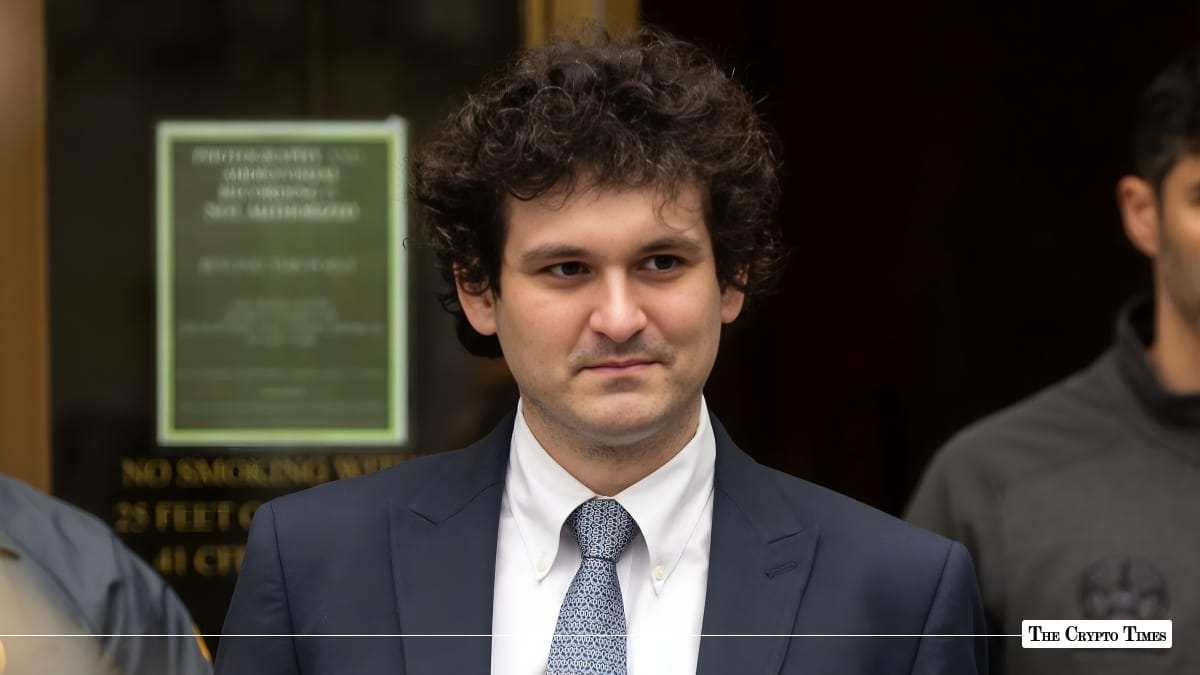
Former FTX CEO Sam Bankman-Fried took to X to shed light on what he called “10 myths” about himself and the collapse of FTX.
In a string of X posts on Friday, he talked about the exchange’s failure, the bankruptcy process, and his criminal trial as a series of misunderstandings or distortions.
Disputing the insolvency claim
Bankman-Fried challenged the claim that FTX was insolvent or that $8 billion in customer funds disappeared. He argued that the exchange was balance-sheet solvent at the time of its collapse and pointed to ongoing bankruptcy repayments, which he says will return between 119% and 143% of customer claims.
He contended that FTX could have repaid users in kind rather than through asset liquidation. According to him, decisions made during bankruptcy proceedings, along with roughly $1 billion in professional fees, led to a different recovery path.
Liquidity crisis vs. bankruptcy
Addressing the events of November 2022, Bankman-Fried disputed the notion that he was unable to raise capital. He claimed that within days of the withdrawal surge, external offers were available to cover the liquidity gap and that withdrawals had begun stabilizing. Despite this, he said legal advisers proceeded with filing for Chapter 11 protection.
He also argued that a liquidity crisis, poor risk management, or bankruptcy itself should not be conflated with criminal conduct. According to him, the collapse was a failed business event rather than a fraudulent scheme.
Margin mechanics and the ‘backdoor’ claim
Another focus of the thread was FTX’s margin system. Bankman-Fried rejected the idea that the exchange should have maintained 100% liquidity at all times, stating that margin platforms inherently involve pooled collateral and borrowing. He maintained that most assets were in lending programs and that the platform had sufficient liquidity outside those arrangements.
On the allegation that he created a secret “backdoor” for Alameda Research, he denied the existence of any covert mechanism. He said the account features in question had legitimate operational purposes and were not used to allow Alameda to borrow beyond what was permitted under the exchange’s terms.
Trial conduct and judicial rulings
Bankman-Fried also addressed his criminal proceedings, arguing that the trial was unfair. He criticized rulings by Judge Lewis Kaplan, including restrictions on his public statements, his pretrial detention, and limits on certain lines of evidence.
He stated that key defense arguments, such as claims of solvency and advice of counsel, were restricted. He further noted that former executives who testified against him faced significant potential prison sentences but ultimately received lighter outcomes after cooperating with prosecutors.
Political donations and personal life
Bankman-Fried also denied rumors of ‘polycule’ relationships or lavish partying, saying he neither took vacations nor funded wealthy lifestyles with customer money.
He also added political contributions, stating that while his public donations leaned left earlier in his career, by late 2022, he identified as a Republican and directed more contributions to conservative candidates.
Broader context
Sam Bankman-Fried has been quite vocal about his FTX trial in recent weeks, making a series of public claims about how the case was handled. His latest post does not introduce new evidence but instead reiterates his position that the narrative surrounding FTX’s collapse, and his role in it, has been flawed.
Also Read: FTX Was Never Bankrupt: Sam Bankman-Fried Reveals Explosive Allegations