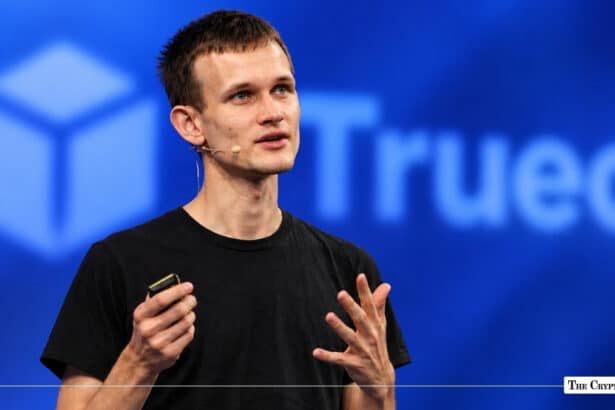
Ten years on, Ethereum was just a theoretical concept discussed between Vitalik Buterin and some developers on Reddit. Today, July 30, 2025, marks a significant milestone as Ethereum celebrates its tenth anniversary, having evolved into one of the most groundbreaking forces in contemporary technology and finance.

Dreams Turned Into Reality
Founded in 2013 by Buterin and a pioneering team, Ethereum’s ambitious vision was to transcend Bitcoin’s capabilities by introducing programmable smart contracts. Early proponents, including Gavin Wood, author of the seminal Ethereum Yellow Paper, were instrumental in propagating and realizing this revolutionary idea.
In mid-2014, the Ethereum Foundation held a public presale, successfully raising over 31,000 BTC, equivalent to more than $18.3 million at the time, by selling 60 million ETH. This crucial early funding provided the impetus for the network’s development and expansion, laying the groundwork for the decentralized applications that would define its future.
A Decade of Milestones
Since it was created in block on July 30, 2015, Ethereum has become the second-largest blockchain in the world by market cap. It has enabled pioneering developments along the way such as decentralized finance (DeFi), NFTs, DAOs, Layer-2 scaling, and zero-knowledge proofs.
Did not blink an eyelid amidst major setbacks such as the DAO debacle and follow-up hard fork, and behemoth upgrades such as The Merge, which allowed Ethereum to change its consensus mechanism from proof-of-work to proof-of-stake.
Joseph Lubin, co-founder of Ethereum and CEO of Consensys, refers to the network as “the definition of antifragile,” having run with “non-stop uptime” and having become a secure digital platform that is today utilized by big institutions such as BlackRock, JPMorgan, and Visa.
The Next Ten Years: AI, Robotics, and Beyond
In the future, Ethereum Foundation Co-Executive Director Tomasz Stańczak foresees Ethereum as the bedrock for emerging technologies like artificial intelligence, robotics, and decentralized infrastructure. “Privacy, censorship resistance, and security aren’t just features they’re values,” he added.
Hsiao-Wei Wang, the Foundation’s second Co-Executive Director, views Ethereum as evolving into a “global computer” organically built into daily life, but warns that to achieve this will mean scaling out while preserving accessibility and affordability and still having decentralization.
A Historic Milestone
To celebrate the 10-year milestone, the Ethereum community is hosting the “Ten Years of Ethereum” livestream, featuring Vitalik Buterin, Tim Beiko, Joseph Lubin, and other prominent members.
Developer Lefteris Karapetsas celebrated the milestone with a look back to the start, when a group of hackers in Berlin introduced a network that would revolutionize everything about how value is exchanged online. “What will you build?” he asks the next generation of coders.
As Ethereum embarks on its second decade, it transcends mere technology; it represents a testament to hardiness, a robust economic infrastructure, and a profound cultural transformation. From the early “ICO madness” to the sophisticated Layer-2 solutions addressing scalability, Ethereum’s journey has been undeniably nonlinear, a truth few would dispute. Yet, its transformative impact remains beyond doubt.
Also Read: eToro to Launch Tokenized Stocks on Ethereum in August