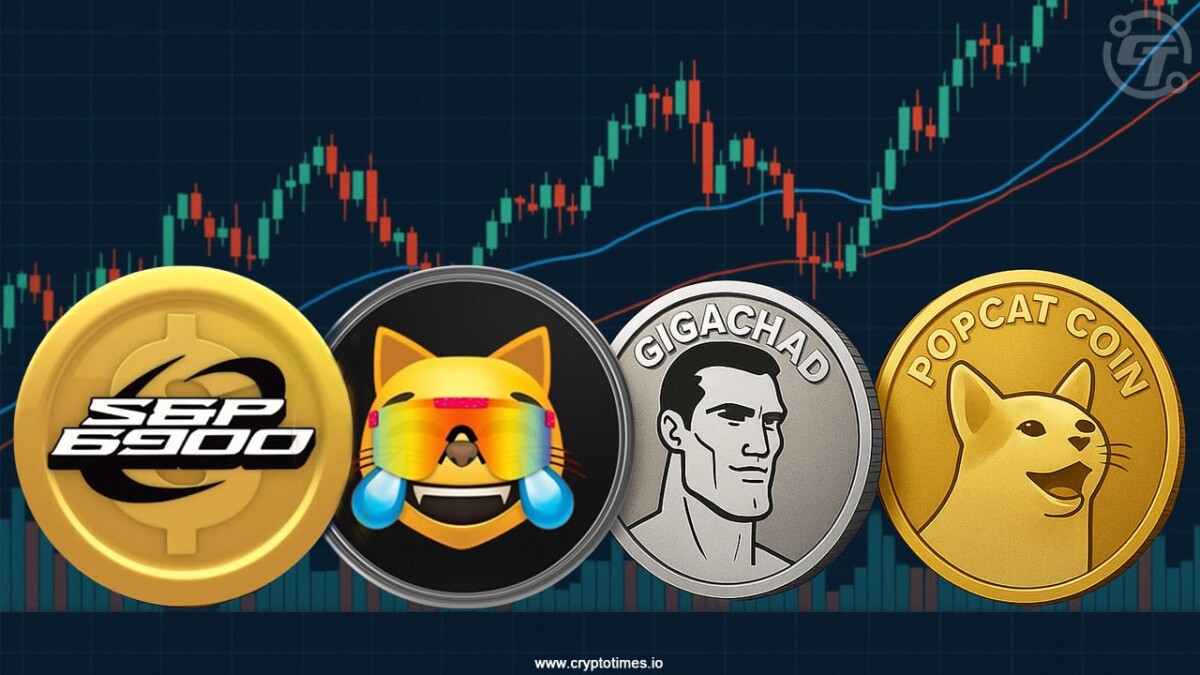
Crypto investor Murad Mahmudov has amassed more than $70 million in paper profits from memecoins, turning under $2 million into a meme-fueled fortune and reigniting debate over his controversial “supercycle” theory.
He is known for supporting what he calls a “memecoin supercycle,” the idea that meme-based tokens will outperform other types of crypto. His profits are now being seen by many as a test of that theory.
According to DropsTab, the biggest gains came from SPX6900, a memecoin that has skyrocketed over 10,500% in the past year. Mahmudov bought SPX6900 at just over $0.01; it now trades around $2.24, giving him an estimated $66 million profit from that token alone.
Other holdings such as GIGA and SKIBDI have also performed strongly, though not all of Mahmudov’s bets succeeded. His stake in Apu Apustaja (APU) dropped 53%, resulting in a loss of over $86,000. Losses on RETARDIO and POPCAT stand at around $490,000 and $270,000, respectively.
Mahmudov’s Supercycle Thesis
At Token2049 in Singapore last year, Mahmudov argued that memecoins are evolving into powerful digital subcultures.
“These tokens are like online cults—driven by humor, shared belief, and internet culture,” he said, “not financial models.”

His thesis suggests memecoins could outperform Bitcoin and Ethereum by riding collective human behavior rather than technical value. This view has gained traction as meme assets like DOGE, SHIB, and PEPE dominate social media and trading platforms.
However, not everyone in the crypto space agrees with him. Blockchain investigator ZachXBT has claimed Mahmudov might have been buying up large amounts of tokens quietly before promoting them. In one case, ZachXBT pointed to a wallet that bought MIN tokens one hour before Mahmudov publicly said he had acquired 1% of its supply.
Blockchain Sleuth Pushes Back
Not everyone agrees. On-chain investigator ZachXBT recently alleged that Mahmudov may be buying tokens quietly before promoting them. In one case, ZachXBT identified a wallet that acquired MIN tokens shortly before Mahmudov publicly claimed to own 1% of the supply.
ZachXBT shared wallet addresses allegedly linked to Mahmudov, enabling the public to trace his memecoin trades. As of now, Mahmudov has not responded to the accusations.
Memecoin Momentum
With Mahmudov holding such a large share of SPX6900, some fear a mass selloff could crash its price, challenging the “supercycle” narrative if one trader’s exit triggers broader panic.
Meanwhile, the memecoin sector continues to heat up. The total market capitalization hit $85 billion on July 24, up from $55 billion on June 30, a 54% increase in less than a month.
Some industry leaders are embracing the meme wave. Xion CEO Anthony Anzalone said the trend reflects shifting investor priorities:
“Memecoins are now the most attractive part of crypto because people see fewer compelling alternatives.”
Others, like Solana co-founder Anatoly Yakovenko, are skeptical. He recently called memecoins and NFTs “digital slop”—a comment that angered Solana-based memecoin traders. As Mahmudov’s portfolio surges and scrutiny grows, the future of memecoins—and the theory behind their rise—hangs in the balance.
Also Read: Solana Co-Founder Calls Memecoins and NFTs “Digital Slop”