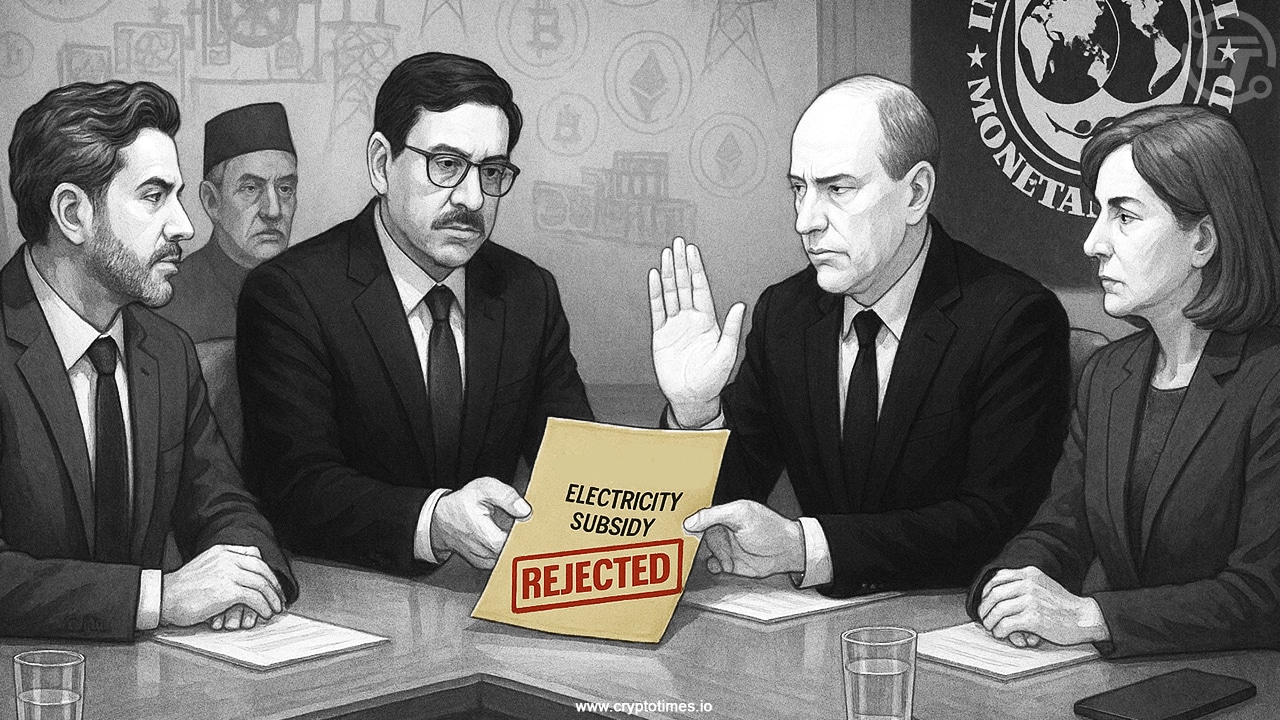
The International Monetary Fund (IMF) has turned down Pakistan’s proposal to provide subsidised electricity to crypto mining operations and select industrial sectors. Warning that these actions might make the already unbalanced power sector worse.
As per the local reports, Senator Mohsin Aziz chaired a meeting of the Senate Standing Committee on Power to reveal the progress. Secretary of Power Dr. Fakhray Alam Irfan addressed the committee on discussions that are being held with the IMF and revealed that the international lender has been vocal in its objection to such subsidies, especially in energy-intensive industries such as crypto mining and metal manufacturing.
Pakistan had considered using Bitcoin mining to use surplus electricity. The power division first came up with proposal 2024 to provide a six-month electricity tariff package, at the marginal cost, to address the problem of utilising excess amounts of electricity. Nevertheless, its plan to give a three-month version was partially approved by the IMF due to the possibility of distortion of the energy market.
In November 2024, an updated proposal was provided and aimed to bring in subsidies designed to suit specific companies. The government estimates that the type of scheme could be used to reduce electricity surpluses and stimulate demand.
The IMF, however, rejected the proposal, comparing it to sector special tax holidays that would sway the economy out of balance. As much as the IMF declined this quality as a change, Dr Irfan noted that the government was still consulting international financial institutions to have some alternative means.
During the same committee meeting, the lawmakers also discussed a recent financial deal with planned banks to tackle a giant circular debt in the country, calculated at Rs 1.275 trillion. There was a lot of blowback on the deal, with Senator Shibli Faraz stating that banks had been bullied into embracing the deal and that consumers would end up paying increased fees because of the deal.
Additionally, Secretary Power Dr. Irfan explained that no additional taxes had been levied and that the current debt servicing surcharge (DSS), which is Rs 3.23kWh, will remain in place for the next five to six years.
The government was also reported to have used technology to minimise theft of electricity, where 58% of the consumers are now rated to be under a protected category, where they continue to pay a lower tariff of Rs 10 per unit, as counted by Dr Irfan. The use of electronic accounts to detect and prevent thefts and the expansion of the amount of subsidies covered are currently underway.
The committee gave the Power Division instructions to produce a thorough report on the topics covered at the following meeting after the session ended.
Also Read: Bhutan Highlights Broader Crypto Vision Than Just Bitcoin Mining