India’s cryptocurrency sector has evolved significantly by 2026, moving from a loosely defined space into a regulated financial category governed by the Financial Intelligence Unit (FIU-IND), the Income Tax Act, and the proposed Crypto-Asset Reporting Framework (CARF). For Indian investors, this means that platform selection now involves weighing regulatory compliance, security infrastructure, fee structures, and available investment tools.
Within this evolving landscape, platforms that entered the market early offer a deeper insight into how exchanges have adapted to increasing regulatory and operational expectations.
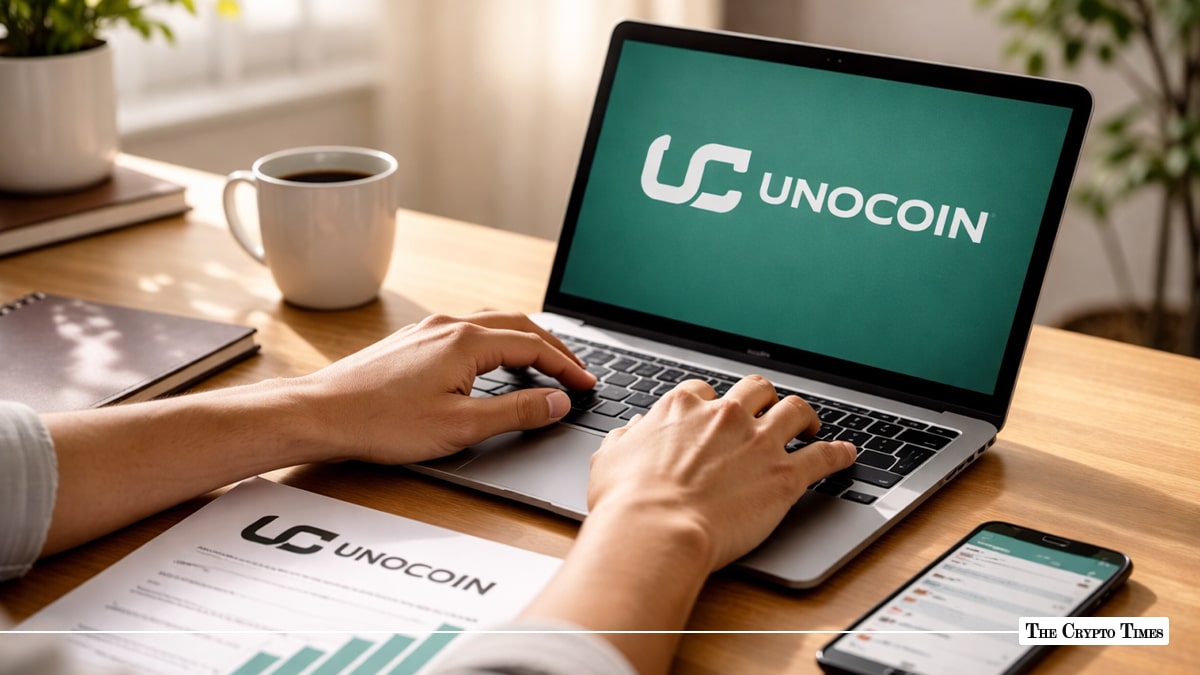
One of India’s earliest cryptocurrency exchanges is Unocoin, which was established in 2013 and reports over two million registered users. The platform supports trading in Bitcoin, Ethereum, and over 95 other digital assets, and positions its Systematic Buying Plan (SBP) as a core differentiator. This review examines Unocoin’s features, fee structure, regulatory compliance, and how it compares to other exchanges operating in India in 2026.
The 2026 Crypto Landscape in India: Taxes, Compliance, and Penalties
Before investing in digital assets, it is critical to understand the legal and financial environment in which Indian exchanges operate. The Indian government has firmly integrated cryptocurrencies into the national tax framework, focusing heavily on compliance, transparency, and anti-money laundering measures.
Taxation Rules and Withholding Taxes
The core taxation framework established in previous years remains in full effect for 2026. The government imposes a flat 30% capital gains tax on all profits generated from cryptocurrency trading. Additionally, a 1% Tax Deducted at Source (TDS) is levied on cryptocurrency transactions to ensure the government can track the movement of digital wealth. While the Reserve Bank of India (RBI) also champions its own Central Bank Digital Currency (the Digital Rupee), decentralized assets like Bitcoin and Ethereum remain legal to trade and hold.
New 2026 Penalties for Non-Disclosure
The Union Budget 2026-27 proposed new penalty provisions under a substituted Section 446 of the Income-tax Act, 2025, targeting prescribed reporting entities that fail to furnish or accurately report crypto-asset transaction statements under Section 509.
Effective April 1, 2026, under the substituted Section 446, a prescribed reporting entity that fails to furnish the required statement within the stipulated time faces a penalty of ₹200 per day for the duration of the default. A separate fixed penalty of ₹50,000 applies where inaccurate information is furnished and not corrected, or where due diligence requirements under Section 509(5) are not met.
While these penalties are directed at reporting entities rather than individual investors, the tighter compliance ecosystem will indirectly affect all traders as platforms strengthen their data collection and verification processes.
The Crypto-Asset Reporting Framework (CARF)
To strengthen oversight of offshore crypto transactions, India’s Union Budget 2026-27 introduced reporting obligations under Section 509 of the Income-tax Act, 2025 (corresponding to the earlier proposed Section 285BAA under the Income-tax Act, 1961), aligning domestic law with the OECD’s Crypto-Asset Reporting Framework (CARF).
India is currently in the process of formally committing to CARF at the OECD Global Forum level, with domestic enforcement of reporting penalties set to begin from April 1, 2026.
This framework mandates that prescribed reporting entities — primarily exchanges and crypto service providers — furnish detailed transaction statements to tax authorities and align their disclosures with anti-money laundering records maintained under FIU-IND guidelines. For users, this reinforces the importance of trading on FIU-registered platforms to reduce the risk of regulatory complications.
Unocoin in the Indian Exchange Landscape: A 2026 Comparison
The Indian exchange market features several major platforms, each catering to a different type of investor. While global platforms tend to emphasize large asset catalogs and derivatives trading, Unocoin has focused on a narrower offering centered on automated buying tools, regulatory compliance, and security. This positioning comes with trade-offs — fewer supported assets and higher base trading fees than most competitors.
For investors focused primarily on accumulating Bitcoin and Ethereum through recurring purchases, Unocoin’s domestic infrastructure and zero-fee SBP may offer advantages over platforms oriented toward active trading or derivatives. However, investors seeking broader asset selection or lower spot trading fees may find competitors more suitable.
Below is a comparison of how Unocoin measures against other major platforms in India as of early 2026.
| Feature / Exchange | Unocoin | WazirX | CoinDCX | Binance India |
|---|---|---|---|---|
| Primary Strength | Automated Buying Tools (SBP) | Domestic Liquidity | User Interface and Margin | Global Asset Variety |
| Year Established | 2013 | 2018 | 2018 | 2017 (Global) |
| Supported Assets | 95+ Cryptocurrencies | 250+ Cryptocurrencies | 1,000+ Cryptocurrencies | 500+ Cryptocurrencies |
| Trading Fees | 0.5% to 0.7% + 18% IGST | 0.2% Maker/Taker | 0.04% Maker / 0.06% Taker | 0.1% Maker/Taker |
| Unique Feature | 0% Fee on SBP purchases | Comprehensive trading tools | Specialized Earn products | Advanced Web3 & DeFi |
| FIU-IND Registered | Yes | Yes | Yes | Yes (Post Penalty) |
Step-by-Step Guide: Registration and Advanced KYC in 2026
Due to strict new mandates from the Financial Intelligence Unit-India (FIU-IND) implemented in January 2026, registering for a cryptocurrency exchange requires a highly secure, multi-step verification process. These measures are designed to prevent money laundering and protect users from fraud.
Step 1: Initial Registration
Begin by downloading the Unocoin mobile app (available on iOS and Android) or visiting their official website. Users enter a valid Indian mobile number and create a secure password. Unocoin sends a One-Time Password (OTP) to your phone; entering this code creates a basic, unverified account.
Step 2: Document Submission
To access trading features and higher transaction limits, users must complete profile verification. Users need to navigate to the settings menu and input personal details exactly as they appear on their government documents.
Users must submit a clear, scanned copy of their Permanent Account Number (PAN) card and a valid address proof, such as an Aadhaar card. Trading or transacting on Unocoin is impossible without a valid PAN card, as this uniquely identifies the user for tax and anti-money laundering purposes.
Step 3: Advanced Biometric Verification
Updated FIU-IND guidelines require exchanges to implement enhanced identity verification measures. Unocoin’s current process includes a live selfie verification step that uses software to monitor eye and head movements in real-time to ensure the applicant is really a human and not an AI-generated deepfake. During this step, Unocoin is also mandated to capture the user’s real-time geographic location and log their IP address.
Step 4: Bank Account Linking
Finally, users must link an active domestic bank account that matches the name on their PAN card. To comply with federal regulations, Unocoin verifies this account by initiating a micro-transaction. Once documents and bank details are approved—usually within two working days—the user receives a confirmation SMS, and their account is fully activated for trading.
Unocoin Fee Structure: Trading, Deposits, and Withdrawals
Understanding fee structures is important for evaluating net returns across platforms. Unocoin maintains a transparent fee structure, outlining the costs associated with trading, transferring, and storing digital assets in 2026.
Instant Trading Fees and Taxation
Unocoin charges a base transaction fee of 0.5% for buying and selling Bitcoin (BTC), and 0.7% for altcoins like Ethereum (ETH) and Tether (USDT). It is vital to note that the Indian government levies an 18% Integrated Goods and Services Tax (IGST) strictly on the transaction fee itself, not the total investment amount.
For example, if a user purchases ₹10,000 worth of Bitcoin, the 0.5% transaction fee equals ₹50. The 18% IGST applied to that ₹50 fee is ₹9. Therefore, the total out-of-pocket cost will be ₹10,059.
Deposit and Withdrawal Mechanics
A major advantage of using Unocoin is that Indian Rupee (INR) fiat withdrawals directly to the user’s registered, verified bank account are processed entirely free of charge. Depositing INR via bank transfer or the Unified Payments Interface (UPI) is also streamlined for local users.
When withdrawing cryptocurrency to an external wallet, the platform does not charge a platform fee, but users must pay a dynamic network fee. For Bitcoin, this network fee currently ranges between 0.0005 and 0.0009 BTC. This fee is determined by real-time blockchain congestion and goes directly to the decentralized miners who validate the transaction, not to Unocoin. Internal transfers—sending crypto to another registered Unocoin user’s mobile number—are completely free.
Custodial and Inactivity Fees
Unocoin charges a custodial fee on dormant accounts — 0.0001 BTC per month for accounts that remain entirely inactive — which the platform attributes to the cost of maintaining its cold storage infrastructure. Unocoin states that over 90% of user deposits are stored offline. The inactivity fee is worth noting as a cost for long-term holders who do not trade frequently — a consideration that could offset savings from other fee structures like the zero-fee SBP.
Unocoin’s Systematic Buying Plan (SBP): How It Works
Unocoin’s Systematic Buying Plan (SBP) is the platform’s flagship feature, designed to automate recurring cryptocurrency purchases using the dollar-cost averaging (DCA) strategy. The tool is targeted at investors who prefer systematic, long-term accumulation over active trading.
How Dollar-Cost Averaging Works
Dollar-cost averaging (DCA) is a widely used investment strategy that involves purchasing a fixed amount of an asset at regular intervals, regardless of price. The approach is designed to reduce the impact of short-term volatility on the average purchase price over time.
By purchasing a fixed Rupee amount of Bitcoin or Ethereum at set intervals, users buy more units when prices are low and fewer when prices are high, which can average out the cost basis over months or years.
Unocoin’s SBP automates this process. It is worth noting that DCA does not guarantee profits or protect against losses in a declining market — it is a risk-mitigation strategy, not a risk-elimination one.
The Zero-Fee Advantage
A notable aspect of the SBP is its fee structure: Unocoin charges 0% transaction fees on Bitcoin and Ethereum purchases executed through an active plan. Given that standard spot trades on the platform carry a 0.5% (BTC) to 0.7% (altcoins) fee plus 18% IGST, the SBP’s zero-fee model represents a meaningful cost difference for users who plan to accumulate over time. It is worth noting, however, that the SBP is limited to BTC and ETH — users looking to DCA into altcoins would still pay standard trading fees.
Setting Up Your SBP
Setting up an SBP requires a funded Unocoin INR wallet. Users navigate to the SBP section, select either BTC or ETH, and define a recurring investment amount and frequency (daily, weekly, or monthly). Once configured, the system executes orders daily at 12:00 AM IST, crediting purchased assets to the user’s Unocoin wallet.
Plans can be paused or cancelled without penalty. Users should note that SBP purchases draw from the INR wallet balance, so the wallet must be pre-funded for executions to proceed — if the balance is insufficient, the scheduled purchase will not execute.
Limitations and Considerations
While Unocoin offers distinct features like the zero-fee SBP, the platform has notable limitations that prospective users should weigh before committing.
The base trading fee of 0.5% to 0.7% (plus 18% IGST on the fee) is significantly higher than competitors like CoinDCX (0.04%–0.06%) and WazirX (0.2%). For active traders executing frequent spot trades outside the SBP, this fee differential can substantially impact returns over time.
With 95+ supported assets, Unocoin’s selection is narrower than CoinDCX (1,000+) or WazirX (250+). Users interested in emerging altcoins, DeFi tokens, or newer Layer-2 ecosystem projects may find the catalog insufficient.
In addition, the platform does not currently offer margin trading, futures, options, or other derivatives products. For experienced traders seeking leverage or hedging tools, this is a significant gap compared to platforms like Binance or CoinDCX.
The inactivity fee of 0.0001 BTC per month on dormant accounts is also an unusual cost that most Indian competitors do not charge. At current Bitcoin prices, this can accumulate meaningfully for users who buy and hold without regular trading activity — somewhat at odds with the long-term holding philosophy the SBP encourages.
Advanced charting, API access for algorithmic trading, and detailed order book tools are limited compared to platforms oriented toward professional traders.
Advanced Trading Ecosystem and Enterprise-Grade Security
Beyond basic buying and selling, Unocoin offers a suite of advanced features designed to help Indian investors manage diverse portfolios safely.
Portfolio Management and Rewards
The ‘Crypto Basket’ feature allows users to allocate funds across multiple cryptocurrencies in a single transaction, functioning as a basic portfolio diversification tool. Investors looking to lock in profits can utilize the ‘Auto Sell’ functionality, which triggers programmatic liquidations when an asset reaches a pre-defined price point.
The platform also includes a ‘Shake & Earn’ feature that offers small rewards for daily app engagement, and a Premium Gold membership tier that provides reduced trading fees and higher operational limits for active traders. Details on Gold membership pricing and specific fee reductions are available on Unocoin’s website.
Security Infrastructure
Unocoin outlines several security measures for user fund protection, though as with any centralized exchange, users should conduct their own due diligence. The mobile application requires mandatory biometric locks and enforces strict device access controls to prevent unauthorized logins. Users receive real-time alerts for any account activity.
At an institutional level, Unocoin partners exclusively with banking institutions that are fully compliant with RBI standards. Unocoin also offers a paper wallet generation tool, which allows users to create offline private keys for long-term cold storage.
While paper wallets eliminate online attack vectors, they carry their own risks — physical damage, loss, or theft — and are generally considered a less convenient and less secure option than modern hardware wallets like Ledger or Trezor. Users considering long-term storage should evaluate all available options.
What Users Are Saying: 2026 Platform Reviews
When evaluating a cryptocurrency exchange, real-world user experiences offer invaluable insights. In 2026, user sentiment around Unocoin generally highlights its approachability for beginners, quick transaction times, and robust security protocols.
Recent reviews from the Google Play Store strongly emphasize the platform’s ease of use for newcomers. For example, a March 2026 review by a verified user stated, “As someone new to crypto trading, I found this app extremely easy to use. It explains everything clearly and makes buying Bitcoin simple and stress-free. Deposits and withdrawals are super quick. I never faced any delays”. Another user review from February 2026 praised the application’s interface, noting that it is particularly user-friendly for beginners who are just getting into digital assets.
Feedback on independent review platforms like TrustFinance echoes this sentiment regarding safety and reliability. Reviewer Zainab Muhammad Munir praised the exchange, stating, “Unocoin stands out as a reliable and user-friendly platform for buying, selling, and storing cryptocurrencies in India. Its intuitive interface, quick transactions, and robust security protocols inspire confidence. Other users on the platform have similarly described it as an “exceptional platform” and a “fantastic platform for hassle-free cryptocurrency trading”.
While the majority of recent feedback is highly positive, some users have historically pointed out that the mandatory Know Your Customer (KYC) verification—which requires submitting permanent account numbers and participating in live biometric scans—can feel rigorous or intrusive.
However, as noted earlier in this guide, these are not arbitrary platform choices but strict legal requirements enforced by the FIU-IND for all compliant Indian exchanges to prevent fraud and ensure market safety.
Frequently Asked Questions (FAQ)
Is cryptocurrency trading legal in India in 2026?
Yes, buying, selling, and holding cryptocurrency is legal in India. While cryptocurrencies are not classified as official legal tender, they are recognized as digital assets. They are regulated under the Prevention of Money Laundering Act (PMLA) with FIU-IND as the supervisory body, and all profits are subject to a flat 30% tax under Section 115BBH with no provision for loss set-off, along with 1% TDS on transfer consideration.
Are fiat (INR) withdrawals free on Unocoin?
Yes, withdrawing Indian Rupees directly from a Unocoin wallet to the user’s registered, verified domestic bank account is completely free of charge.
Why do I need to submit my PAN card to use Unocoin?
Providing a PAN card is a mandatory legal requirement under India’s Anti-Money Laundering (AML) and Know Your Customer (KYC) regulations. Because all transactions interact with domestic bank accounts, the FIU-IND requires exchanges to definitively identify all users to prevent financial crimes and ensure accurate tax reporting.
What is the Unocoin inactivity fee, and how do I avoid it?
Unocoin charges a custodial fee of 0.0001 BTC per month exclusively for accounts that remain entirely inactive. Unocoin attributes this fee to the cost of maintaining its cold storage infrastructure. To avoid this fee, users need to maintain minimal trading activity on the platform.
Are offshore exchanges like Binance legal to use in India?
Yes, offshore exchanges are legal to use in India, provided they are registered as reporting entities with the FIU-IND. Binance, for instance, registered with FIU-India after paying a penalty of approximately ₹18.82 crore for prior PMLA non-compliance. All FIU-registered exchanges — domestic and offshore — are subject to the same KYC, AML, and tax reporting requirements.
Can I send Bitcoin from Unocoin to an external hardware wallet?
Yes, users can transfer digital assets to external wallets. While Unocoin does not charge a platform fee for this, users must pay a dynamic network fee (between 0.0005 and 0.0009 BTC for Bitcoin) which goes to the blockchain miners who process the transaction.
Disclaimer:
Some elements of this content may have been enhanced with the help of our artificial intelligence (AI) assistants for purposes such as basic refinement, review, image generation, and translation to deliver high-quality news in a shorter time frame. However, all AI-assisted content is reviewed and approved by our team to ensure accuracy, fairness, and editorial integrity.