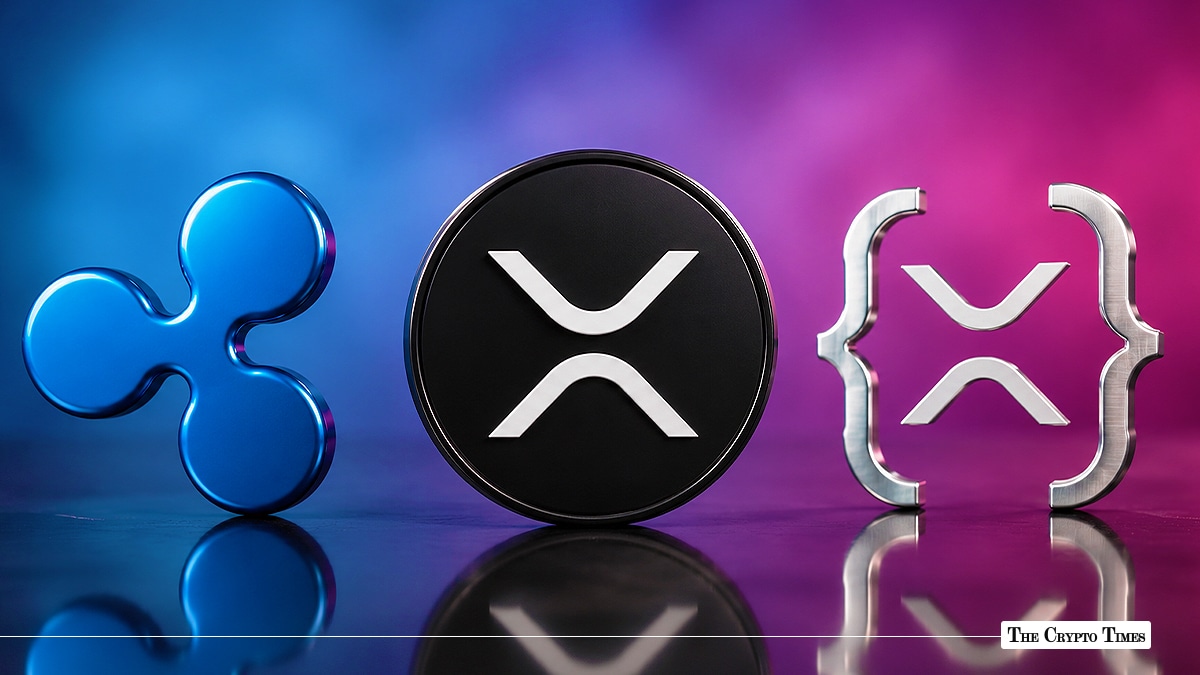
Ripple, XRP and the XRP Ledger are closely associated, but they are not interchangeable terms.
The simplest way to understand the difference is:
- Ripple is a company that develops financial and digital-asset infrastructure.
- XRP Ledger (XRPL) is an open-source public blockchain.
- XRP is the native cryptocurrency of the XRP Ledger.
Ripple uses and contributes to the XRP Ledger, and it owns a substantial amount of XRP. But Ripple did not create the XRP Ledger as a corporate product, does not own the network and is not the issuer of XRP in the way a company issues shares or a stablecoin.
That distinction matters to investors, developers and businesses because developments involving Ripple do not automatically represent changes to XRP or the XRP Ledger—and activity on XRPL does not necessarily involve Ripple.
Key Highlights
- Ripple, XRP and XRP Ledger refer to three different things: a company, a blockchain and a cryptocurrency.
- David Schwartz, Jed McCaleb and Arthur Britto developed the XRP Ledger before the company now known as Ripple was formed.
- XRP is the XRP Ledger’s native cryptocurrency. A total of 100 billion XRP existed when the ledger was created.
- Ripple does not own or control the XRP Ledger, although it is a major contributor to and participant in the ecosystem.
- Ripple owns XRP holdings, including XRP historically placed into escrow, but buying XRP does not give a holder ownership or equity in Ripple.
- The XRP Ledger does not use proof-of-work mining or proof-of-stake. It reaches agreement through the XRP Ledger Consensus Protocol.
- XRP is used for network transaction costs, account reserves, payments and potentially as a bridge asset between currencies and tokens on XRPL.
- Not every Ripple product or payment requires XRP. Ripple’s current payments infrastructure can support fiat, XRP and multiple stablecoins depending on the transaction and product.
Ripple vs. XRP vs. XRP Ledger at a glance
| Ripple | XRP Ledger (XRPL) | XRP | |
|---|---|---|---|
| What is it? | Financial technology company | Public Layer 1 blockchain | Native cryptocurrency of XRPL |
| Created/formed | Company formed in 2012, originally as OpenCoin | Developed in 2011–2012 | Created with the XRP Ledger |
| Main role | Builds payments, custody, stablecoin and digital-asset infrastructure | Processes transactions and supports payments, tokens and DeFi features | Native value transfer, transaction costs, reserves and liquidity |
| Who controls it? | Ripple controls its own company and products | Distributed network of servers and validators | No single issuer controls XRP at the protocol level |
| Can you buy it as crypto? | No | No | Yes |
| Does it use XRP? | Some products and services can | XRP is native to the ledger | It is XRP |
| Consensus | Not applicable | XRP Ledger Consensus Protocol | Not applicable |
| Is it a blockchain? | No | Yes | No |
| Is it equity in Ripple? | Not applicable | No | No |
Why are Ripple, XRP and XRP Ledger so often confused?
The confusion is partly historical.
The technology now called the XRP Ledger was originally associated with the name Ripple. XRPL documentation says David Schwartz, Jed McCaleb and Arthur Britto began developing the ledger in 2011 and completed its initial development in 2012.
The ledger’s native asset became known as XRP.
In September 2012, McCaleb and Britto, together with Chris Larsen, formed a company originally called NewCoin, which quickly became OpenCoin. The company was later renamed Ripple Labs and eventually shortened its brand name to Ripple.
For a period, therefore, variations of “Ripple” were used for the software, payment technology, company and digital asset.
The ecosystem gradually adopted more distinct names:
- Ripple for the company
- XRP Ledger or XRPL for the blockchain
- XRP for its native cryptocurrency
This naming history helps explain why phrases such as “Ripple coin,” “Ripple XRP” and “Ripple blockchain” remain common even though they are technically imprecise.
What is Ripple?
Ripple is a financial technology company that builds infrastructure for payments and digital assets.
The company currently offers products across areas including cross-border payments, digital-asset custody, stablecoins, institutional brokerage, treasury infrastructure and tokenization.
Ripple is an important participant in the XRP Ledger ecosystem. Its engineers contribute to the open-source XRPL codebase, the company develops products using XRPL and it has funded ecosystem development.
However, Ripple and the XRP Ledger are separate entities.
Ripple controls:
- Its own products
- Its corporate strategy
- Its XRP holdings
- Ripple USD (RLUSD), subject to its applicable issuer structure
- Commercial relationships and services it provides
Ripple does not unilaterally control:
- XRP Ledger transaction validation
- Which transactions users can submit to the public network
- The balances held by independent XRP users
- XRPL protocol amendments by itself
XRPL documentation explicitly states that Ripple does not own or control the XRP Ledger network.
What products does Ripple offer today?
Ripple’s product portfolio has evolved substantially.
Older crypto articles frequently refer to RippleNet and On-Demand Liquidity (ODL). Those names are important historically, but using them as the main description of Ripple’s current business is outdated.
Ripple currently presents products and infrastructure around:
- Cross-border payments
- Digital-asset custody
- Ripple USD (RLUSD)
- Prime brokerage
- Treasury
- Tokenization
Ripple Payments can support different settlement assets depending on the transaction and jurisdiction. Ripple’s current documentation says its payments platform can work with fiat as well as stablecoins including RLUSD, USDC and USDT, rather than depending on a single token.
That leads to an important distinction:
Ripple’s business success does not automatically mean every transaction uses XRP.
Likewise, an XRPL application can operate without being a Ripple product.
What is the XRP Ledger?
The XRP Ledger, or XRPL, is an open-source public blockchain launched in 2012.
It is the network on which XRP exists natively.
XRPL was designed with payments in mind, but its functionality has expanded to include tokenization, cross-currency payments, a decentralized exchange, automated market makers, NFTs, escrows and other financial applications.
The network is maintained by a broader ecosystem of developers, server operators, validators, businesses and users rather than by Ripple alone.
How does XRP Ledger consensus work?
XRPL does not use Bitcoin-style proof-of-work mining or Ethereum-style proof-of-stake.
Instead, it uses the XRP Ledger Consensus Protocol.
Each participating server selects validators it considers unlikely to collude. This group is represented through a Unique Node List, or UNL. Servers compare proposals and validation messages from trusted validators as they agree on the transactions and resulting state for the next ledger.
A validated ledger is considered final rather than waiting for multiple additional blocks to reduce reorganization risk.
XRPL’s consensus architecture is therefore different from both Bitcoin and Ethereum.
| Network | Consensus approach |
|---|---|
| Bitcoin | Proof-of-work |
| Ethereum | Proof-of-stake |
| XRP Ledger | XRP Ledger Consensus Protocol using trusted validator lists |
Protocol changes also cannot simply be activated by Ripple. XRPL amendments generally need support from more than 80% of trusted validators for at least two weeks before becoming enabled.
How fast is the XRP Ledger?
XRPL documentation says validators normally reach agreement on ledger updates approximately every three to five seconds.
For an evergreen explainer, this is a more meaningful metric than repeating a theoretical maximum TPS figure, which can change with software versions, transaction types and network conditions.
Does the XRP Ledger have smart contracts?
This question requires nuance.
XRPL Mainnet includes substantial functionality directly in the protocol, including:
- Token issuance
- Escrow
- Payment channels
- Cross-currency payments
- A central-limit-order-book DEX
- Automated market makers
- NFTs
- Multisignature accounts
Many functions that require user-deployed smart contracts on Ethereum can therefore be performed through native XRPL transaction types and ledger objects.
However, XRPL Mainnet should not simply be described as an Ethereum-style general-purpose smart-contract platform.
For EVM-compatible smart contracts, the ecosystem has the XRPL EVM Sidechain. XRPL documentation describes it as a separate Layer 1 network capable of running Ethereum smart contracts and ERC-20 tokens while using XRP as its native gas asset.
This distinction is important: XRPL Mainnet ≠ XRPL EVM Sidechain.
What is XRP?
XRP is the native cryptocurrency of the XRP Ledger. It is not a company, a blockchain or a share in Ripple.
XRPL documentation says 100 billion XRP existed when the XRP Ledger was created. XRP does not have Bitcoin-style mining that continuously issues new coins as block rewards.
XRP has several protocol-level uses.
1. Paying transaction costs
Every XRPL transaction specifies a small amount of XRP to destroy as its transaction cost.
Unlike many networks, that fee is not paid to validators. The XRP used for the transaction cost is permanently destroyed. This mechanism helps make large-scale transaction spam economically expensive.
The standard minimum cost for many ordinary transactions is currently 10 drops of XRP, or: 0.00001 XRP
Network load can increase the amount required.
2. Account reserves
XRPL accounts must maintain an XRP reserve.
The reserve exists partly to discourage the creation of large amounts of unnecessary ledger data. The base reserve is currently 1 XRP, with additional reserve requirements for certain objects an account owns.
Because reserve parameters can change through network governance, they should be checked against current XRPL documentation rather than hard-coded into an article indefinitely.
3. Sending value
XRP can be transferred directly between XRPL accounts.
It does not require an issuer or trust line in the way many other assets issued on the XRP Ledger do.
4. Acting as a bridge asset
XRP can serve as an intermediary asset when exchanging between currencies or other assets on XRPL’s built-in decentralized exchange.
If a direct trading route does not provide the best available path, XRPL’s payment system can potentially route value through XRP where doing so is beneficial.
This bridge-asset function is one of the reasons XRP has historically been associated with cross-border payments.
Who created XRP?
This is one of the most important misconceptions to correct.
XRP was not initially created by Ripple Labs as a company product.
David Schwartz, Jed McCaleb and Arthur Britto built the XRP Ledger over 2011 and early 2012. At the ledger’s creation, 100 billion XRP existed.
The company that eventually became Ripple was formed afterward.
XRPL’s official history says that 80 billion XRP was then gifted to the new company to support development and ecosystem growth.
A simplified timeline looks like this:
| Period | Development |
|---|---|
| 2011 | Schwartz, McCaleb and Britto begin developing the ledger |
| Early 2012 | Initial XRP Ledger development is completed |
| June 2012 | XRP Ledger launches |
| September 2012 | Company later known as Ripple is formed |
| 2012 | 80 billion XRP is gifted to the new company |
| 2013 onward | OpenCoin becomes Ripple Labs and later Ripple |
| 2017 | Ripple places 55 billion XRP into escrow to establish a predictable release framework |
This chronology is why saying simply “Ripple created XRP” is misleading.
Does Ripple own XRP?
This question needs more precision than a simple yes or no.
Ripple owns XRP, but it does not own XRP as an entire cryptocurrency.
Ripple received 80 billion of the original 100 billion XRP shortly after the company’s formation. The company has subsequently sold, distributed and placed portions of those holdings into escrow.
Therefore:
- Ripple owns XRP holdings.
- Individual investors and institutions can also own XRP.
- Ripple does not own every XRP.
- XRP is not equity in Ripple.
- Holding XRP does not confer voting or ownership rights over Ripple.
- Ripple’s XRP holdings do not give it unilateral control over XRPL consensus.
Writing “Ripple does not own XRP” without this distinction is technically misleading.
Does Ripple control the XRP Ledger?
No single company has unilateral control over XRPL.
Ripple contributes code and resources to the ecosystem, but XRPL servers and validators are operated by multiple independent participants.
Each server chooses which validators it trusts, and protocol amendments require broad validator support before activation.
That does not mean decentralization should be reduced to a simple marketing claim. XRPL uses a distinctive trust-based validator architecture, and readers evaluating decentralization should consider validator diversity, recommended UNLs, software development, infrastructure concentration and governance rather than relying on a single label.
How are Ripple, XRP and XRP Ledger connected?
The relationship is better described as an ecosystem connection rather than mutual dependence.
XRP and XRPL
These two have the strongest technical relationship.
XRP is built directly into the XRP Ledger and is used for:
- Transaction costs
- Account reserves
- Native value transfer
- Liquidity and payment routing
Without XRPL, XRP would not exist in its native form.
Ripple and XRPL
Ripple is one of the companies developing products and infrastructure using XRPL.
Its engineers also contribute to XRPL’s open-source software and ecosystem.
But other companies and developers can build on XRPL without obtaining permission from Ripple.
Ripple and XRP
Ripple owns substantial XRP holdings and has historically used XRP in liquidity and payment products.
However, XRP is available independently on public markets and can be held or transferred without using Ripple’s commercial services.
Ripple’s current business also includes products that do not depend exclusively on XRP.
Ripple vs. XRP: Why the distinction matters to investors
A particularly important misconception is that buying XRP is similar to buying shares in Ripple.
It is not.
When someone buys XRP:
- They acquire a crypto asset.
- They do not acquire Ripple equity.
- They do not receive a claim on Ripple’s revenue or profits.
- They do not obtain voting rights over Ripple.
- Ripple’s corporate performance does not mathematically determine XRP’s market price.
Likewise, a new Ripple partnership does not automatically mean XRP will be used in that partnership.
Investors should examine what a particular announcement actually involves:
Is Ripple providing custody? Is the transaction using XRPL? Is XRP involved? Is RLUSD involved? Or is Ripple providing another service entirely?
Those distinctions make financial coverage considerably more accurate.
XRP vs. RLUSD: Are they the same?
No.
XRP is the native cryptocurrency of the XRP Ledger.
Ripple USD (RLUSD) is a U.S. dollar-backed stablecoin issued within Ripple’s regulated infrastructure. Ripple says RLUSD is backed by cash deposits, U.S. Treasuries and cash equivalents and is issued on both the XRP Ledger and Ethereum.
| XRP | RLUSD | |
|---|---|---|
| Asset type | Native cryptocurrency | Fiat-backed stablecoin |
| Issuer | No conventional issuer | Ripple-related regulated issuer |
| Target value | Market determined | Designed to track $1 |
| Native to XRPL | Yes | Issued as a token on XRPL |
| Available on other chains | Wrapped/bridged representations can exist | Natively issued on XRPL and Ethereum |
| Used for XRPL transaction fees | Yes | No |
| Supply model | 100 billion created at ledger inception | Issued/redeemed against reserves |
This difference has become increasingly important as Ripple expands its stablecoin and institutional-infrastructure businesses.
Common misconceptions about Ripple, XRP and XRPL
| Misconception | Reality |
|---|---|
| Ripple and XRP are the same thing | Ripple is a company; XRP is a cryptocurrency |
| Ripple created the XRP Ledger | Schwartz, McCaleb and Britto developed XRPL before the company was formed |
| Ripple owns the XRP Ledger | XRPL is an open-source public network |
| Ripple owns all XRP | Ripple owns a portion of the XRP supply, not the entire asset |
| Buying XRP means investing in Ripple | XRP does not represent company equity |
| Every Ripple transaction uses XRP | Ripple products can use XRP, stablecoins, fiat and other assets |
| XRPL uses proof-of-stake | It uses the XRP Ledger Consensus Protocol |
| XRPL validators earn XRP staking rewards | XRPL transaction costs are burned rather than distributed as validator rewards |
| XRP and RLUSD are the same | XRP is the native asset; RLUSD is a Ripple-issued dollar-backed stablecoin |
| XRPL Mainnet is simply an EVM smart-contract chain | XRPL relies heavily on native protocol functionality; EVM contracts run on the separate XRPL EVM Sidechain |
Conclusion
The difference between Ripple, XRP and the XRP Ledger comes down to three separate layers:
Ripple is the company. XRPL is the blockchain. XRP is the blockchain’s native cryptocurrency.
Their histories and businesses overlap, but they should not be treated as one entity.
The XRP Ledger and XRP were developed before the company now known as Ripple was formed. Ripple subsequently became one of XRPL’s most important corporate contributors and received a large allocation of XRP, but the company does not own or unilaterally control the public ledger.
That distinction is increasingly important as both ecosystems expand. XRPL now supports payments, tokenization, decentralized trading and other financial infrastructure, while Ripple’s business spans payments, custody, stablecoins, institutional trading infrastructure and tokenization.
For readers—and particularly investors—the most important rule is simple:
A development involving Ripple does not automatically involve XRP, and an XRP Ledger development does not automatically represent a Ripple product.
Understanding exactly which of the three is involved makes crypto news, technical developments and investment claims much easier to evaluate accurately.
Frequently asked questions
1. Is Ripple the same as XRP?
No. Ripple is a financial technology company. XRP is the native cryptocurrency of the XRP Ledger. Ripple owns and uses XRP but the two are not the same entity.
2. Is XRP the same as XRP Ledger?
No. XRP is a cryptocurrency, while the XRP Ledger is the blockchain network on which XRP exists natively.
A useful analogy is that XRPL is the infrastructure and XRP is its native digital asset.
3. Did Ripple create XRP?
Not exactly. David Schwartz, Jed McCaleb and Arthur Britto developed the XRP Ledger and XRP before the company now known as Ripple was formed. The founders later gifted 80 billion XRP to the newly created company.
4. Who owns the XRP Ledger?
No single company owns the XRP Ledger network. It is an open-source public blockchain operated through a network of servers and validators. Ripple is a contributor to the ecosystem but does not have unilateral control over XR
5. Does Ripple own XRP?
Ripple owns a substantial amount of XRP, but it does not own the cryptocurrency as a whole. XRP can be independently owned, traded and transferred by anyone able to use the network and applicable market infrastructure.
6. Is XRP a coin or a token?
XRP is best described as the native cryptocurrency or native digital asset of the XRP Ledger. XRPL documentation notes that XRP has different technical properties from issued tokens on the ledger and is not typically described as a token within XRPL’s own terminology.
7. Does XRP use proof-of-stake?
No. The XRP Ledger does not use proof-of-stake. It uses the XRP Ledger Consensus Protocol, in which servers rely on chosen sets of trusted validators to reach agreement.
8. Can XRP be staked?
There is no protocol-native XRP staking mechanism comparable with Ethereum or other proof-of-stake networks because XRPL does not use staking to reach consensus.
Third-party platforms may market yield products involving XRP, but those products introduce separate counterparty, lending, liquidity or smart-contract risks and should not be confused with native network staking.
9. Do XRPL validators receive XRP rewards?
XRPL’s normal transaction cost is not paid to validators. The XRP used for transaction fees is permanently destroyed as an anti-spam mechanism.
10. Does every Ripple payment use XRP?
No. Ripple’s current payments infrastructure supports multiple types of settlement assets, including fiat and stablecoins, as well as XRP where appropriate. Its current product architecture is not dependent on every transaction using XRP.
11. Is RLUSD replacing XRP?
RLUSD and XRP perform different roles. RLUSD is designed to maintain a value tied to the U.S. dollar, while XRP is XRPL’s native cryptocurrency and remains necessary for network transaction costs and account reserves. The use of one does not technically eliminate the other.
12. Does XRPL support smart contracts?
XRPL Mainnet includes many programmable financial functions directly at the protocol level. General-purpose Ethereum-compatible smart contracts can be deployed on the separate XRPL EVM Sidechain, which uses XRP as its gas asset.
13. Can XRP exist without Ripple?
XRP exists natively on the XRP Ledger rather than inside Ripple’s corporate systems. Ripple is an important ecosystem participant, but it does not own or control the public network.
14. Is buying XRP the same as investing in Ripple?
No. XRP does not represent equity in Ripple. XRP holders do not receive company ownership, dividends, voting rights or a contractual claim on Ripple’s profits merely because they hold XRP.
Disclaimer: This article is for educational purposes only and does not constitute financial or investment advice. Crypto assets are volatile and readers should independently verify information before making financial decisions.
Disclaimer:
Some elements of this content may have been enhanced with the help of our artificial intelligence (AI) assistants for purposes such as basic refinement, review, image generation, and translation to deliver high-quality news in a shorter time frame. However, all AI-assisted content is reviewed and approved by our team to ensure accuracy, fairness, and editorial integrity.