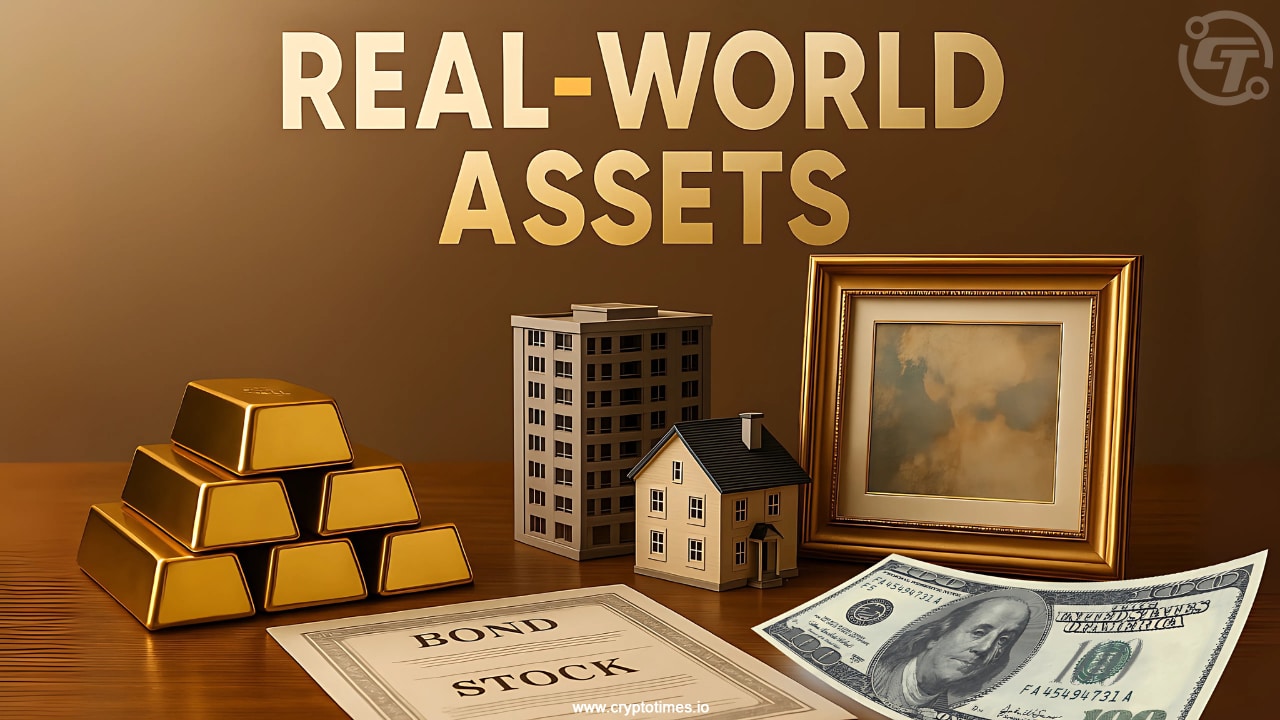
Trillions of dollars in assets like real estate, private credit, and fine art are currently locked in traditional systems, largely siloed from the dynamic digital economy. What if we could bring this immense value on-chain? That question is no longer hypothetical. So far this year, the tokenization of Real-World Assets (RWAs) is already a $28 billion market growing steadily, with implementations across most leading L1 and L2 chains.
These blockchain-based tokens, representing verifiable ownership of tangible assets, are the most significant bridge being built between Traditional Finance (TradFi) and Decentralized Finance (DeFi). The promise is revolutionary, unlocking global liquidity and democratizing investment opportunities. This article breaks down the RWA ecosystem and dives deep into seven pioneering projects that are leading the charge in this multi-trillion-dollar revolution.
The Foundation: Understanding the RWA Ecosystem
Before we explore specific projects, it’s crucial to understand how a physical asset becomes a digital token and why this process is so transformative.
From Physical to Digital: The Tokenization Process
Bringing a real-world asset onto the blockchain involves a meticulous, three-step journey that bridges the legal and digital worlds.
- Off-Chain Structuring: First, the physical asset is legally prepared. This usually means placing it into a legal wrapper, like a Special Purpose Vehicle (SPV), which isolates it financially. The asset’s ownership, value, and legal status are formally verified by trusted third parties. This step ensures the digital token has a legitimate, legally enforceable claim in the real world.
- Information & Valuation: Next, critical data about the asset, such as its valuation, legal title, and performance metrics, is brought onto the blockchain. This is done using oracles, which act as secure data bridges between the off-chain world and on-chain smart contracts. This ensures the digital representation accurately reflects the real-world asset’s status.
- Token Issuance: Finally, a smart contract is used to mint tokens on the blockchain. Each token represents a fractional share of ownership in the legally secured asset. These tokens can then be bought, sold, and traded on decentralized exchanges, making the asset’s value accessible to the digital economy.
The Five Pillars of Value: Why RWAs Matter
The tokenization process unlocks five fundamental advantages that are reshaping finance:
- Unlocking Liquidity: It converts traditionally illiquid assets, like a commercial building or a private equity stake, into easily tradable digital tokens, making it faster and cheaper to buy or sell ownership.
- Fractionalization: This allows high-value assets to be divided into thousands of smaller, affordable pieces. Suddenly, everyday investors can own a fraction of a luxury property or a priceless piece of art, democratizing access to wealth creation.
- Transparency & Efficiency: By recording ownership and transactions on an immutable blockchain ledger, RWAs drastically reduce the potential for fraud and cut down on administrative overhead, title searches, and settlement times.
- Stable Yield for DeFi: RWAs bring predictable, real-world yields, from rental income, loan interest, or bond coupons, into the often-volatile DeFi ecosystem. This provides a source of stable, uncorrelated returns for crypto investors.
- Global Accessibility: Tokenization breaks down geographical barriers. An investor in Asia can seamlessly buy a piece of a US-based real estate project, creating a truly global and interconnected marketplace for investment.
The Vanguard: An Analysis of 7 Leading RWA Projects
The RWA landscape is a dynamic frontier, with new innovations emerging constantly. However, as of 2025, a clear vanguard has established itself, with pioneering projects solidifying their positions as leaders. The following seven projects are not just participants; they are actively building the foundational pillars of the tokenized economy, each tackling a unique and critical corner of the market. From institutional-grade infrastructure to democratized private credit, they exemplify the power and potential of RWAs today.
Ondo Finance: The Institutional Gateway to U.S. Treasuries
Ondo Finance specializes in tokenizing low-risk, high-quality assets, primarily U.S. Treasury bonds and money market funds, into on-chain products like OUSG (Ondo US Short-Term Government Treasuries).
By bringing the TradFi world’s “risk-free” yield to DeFi, Ondo serves as a crucial bridge for institutional and risk-averse capital. Its unwavering, compliance-first approach, which includes strict KYC/AML checks, has set the gold standard for creating regulated RWA products. Ondo makes the most trusted yields in traditional finance accessible with the efficiency of the blockchain, attracting a new class of conservative investors to the on-chain economy.
Also Read: Ondo Finance Acquires SEC-Registered RWA Platform Oasis Pro
Centrifuge: The Pioneer of On-Chain Private Credit
Centrifuge provides a decentralized protocol that allows businesses to tokenize tangible assets like invoices, royalties, and mortgages. These tokenized assets are then used as collateral to access financing from liquidity pools.
As one of the earliest RWA pioneers, Centrifuge directly addresses a core challenge for small and medium-sized enterprises (SMEs): access to capital. By turning illiquid operational assets into liquid debt instruments, it creates a new, more efficient channel for business financing. For DeFi investors, it opens up a world of stable, real-world yields that are not correlated with crypto market volatility.
Pharos Network: The Next-Generation Infrastructure for “RWAfi”
Pharos Network is a high-performance Layer 1 blockchain engineered for the immense speed, scale, and complexity required by real-world financial applications, often termed “RWAfi” (RWA Finance).
Pharos represents the cutting edge of infrastructure being built to support the future of RWAs at a global scale. Its architecture is optimized for high-throughput transactions and complex financial logic, moving beyond the limitations of earlier blockchains. A recent landmark integration with the institutional lending giant Morpho signals its immense potential to become the underlying settlement layer for complex, high-volume, and institutional-grade RWA financial products.
Fastex: The Ecosystem Integrator
Fastex is a broad Web3 ecosystem, including the Fastex Exchange and the ftNFT marketplace, that is strategically integrating RWA tokenization as a core feature.
Fastex demonstrates a powerful and different strategy for RWA adoption. Rather than being a pure-play protocol, it is weaving RWA tokenization into the fabric of a diverse digital ecosystem. This approach introduces stable, yield-bearing assets to a wide user base engaged in gaming, trading, and digital collectibles, effectively bridging the gap between the speculative world of digital entertainment and the stable value of real-world assets.
Mantra: The Security-First Blockchain for RWAs
Mantra is a Layer 1 blockchain built from the ground up to address the specific needs of Real-World Assets, with compliance, security, and regulation at its core.
Mantra tackles the single biggest hurdle for widespread institutional adoption: navigating complex legal and regulatory frameworks. Instead of retrofitting a general-purpose blockchain, Mantra provides a purpose-built environment where developers can create RWA applications that are compliant by design. This security-first approach aims to give institutions the confidence they need to bring trillions of dollars in assets on-chain.
Also Read: MANTRA Launches OM Token Migration Ahead of 4-to-1 Split
Maple Finance: The Corporate Debt Market of DeFi
Maple Finance operates as an on-chain marketplace for institutional lending and borrowing, focusing on undercollateralized loans for reputable crypto-native firms and financial institutions.
Maple is effectively disrupting the multi-trillion-dollar corporate credit market. It uses a delegate model, where expert underwriters assess borrower creditworthiness, allowing capital to flow more efficiently than in traditional systems. By enabling reputable institutions to borrow directly from DeFi liquidity pools, Maple showcases the powerful potential of blockchain to create more transparent, accessible, and efficient capital markets for corporate debt.
Also Read: Maple and Aave Partner to Bring Institutional Assets On-Chain
Polymesh: The Purpose-Built Blockchain for Regulated Securities
Polymesh is a public, permissioned blockchain designed specifically for security tokens and other regulated assets.
Tokenizing a stock is fundamentally different from creating a cryptocurrency. Unlike general-purpose blockchains, Polymesh builds critical financial primitives, like identity verification, compliance rules, and governance, directly into its base layer. This specialized architecture streamlines the processes for issuing, managing, and trading tokenized securities, solving the unique challenges faced by regulated assets and making it a go-to platform for serious financial players.
The Road Ahead: Overcoming the Hurdles
Despite the immense potential and rapid progress, the path to mass adoption for Real-World Assets is not without its challenges. The industry is actively working to solve a critical trilemma that stands between the current momentum and a fully tokenized global economy.
First is Regulatory Clarity. Integrating RWAs into the complex web of global securities, property, and tax laws is a monumental task. Each jurisdiction has different rules, creating a fragmented legal landscape that innovators must carefully navigate.
Second is the persistent Oracle Problem. The integrity of an on-chain token is only as good as the off-chain data it relies on. Ensuring that the oracles feeding asset valuations and performance data to the blockchain are reliable, tamper-proof, and consistently accurate is a mission-critical technical challenge.
Finally, there is the question of Legal Enforcement. What happens when an on-chain agreement tied to a real-world asset is broken? Establishing clear, internationally recognized legal recourse for events like a loan default is essential for building institutional trust and ensuring investor protection.
Conclusion: The Dawn of a New Financial Era
Real-World Assets are not just another fleeting crypto trend; they represent a fundamental, evolutionary leap toward a more unified, transparent, and efficient global financial system. The tokenization of every valuable asset is a monumental undertaking, but the foundational layers are being meticulously laid by the pioneering projects leading the charge today. While the names of market leaders may evolve, the movement to bridge the world’s real value with the digital economy is irreversible. The journey has just begun, but it promises to unlock unprecedented liquidity and democratize access to wealth for generations to come.
Also Read: Robinhood Proposes SEC Rules to Regulate Tokenized RWAs