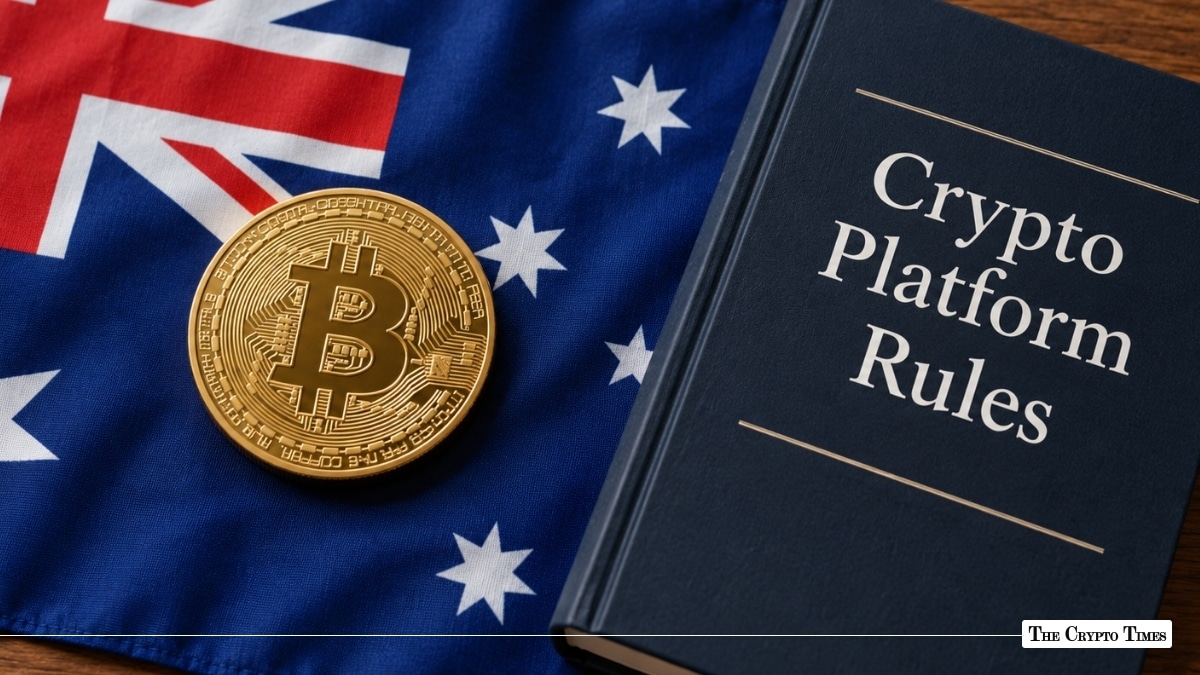
Australia’s financial regulator is seeking industry feedback on proposed rules for crypto platforms, including new requirements for customer asset protection, trading, and capital ahead of a regulatory framework planned for 2027.
The Australian Securities and Investments Commission (ASIC) published Consultation Paper 392 on October 15, outlining proposed standards for digital asset platforms (DAPs) and tokenised custody platforms (TCPs). The consultation follows the passage of the Corporations Amendment (Digital Assets Framework) Act 2026, which received Royal Assent on April 8. The law is scheduled to take effect on April 8, 2027.
Crypto Platforms Face New Licensing Rules
Under the new framework, businesses operating digital asset platforms or tokenized custody platforms covered by the law will need the appropriate Australian financial services (AFS) licence authorization, unless an exemption applies.
Licence applications are expected to open on April 8, 2027. Existing operators will have until October 7, 2027, to apply for a new licence or change an existing one. They can continue operating while ASIC reviews their applications, subject to the relevant transitional arrangements. ASIC is also preparing a new regulatory guide to explain which businesses fall under the framework, what licences they need and how existing financial services rules apply to them.
The regulator plans to follow a “same activity, same risk, same regulation” approach. This means businesses carrying out similar activities with similar risks should generally face comparable regulatory requirements, while the rules can still account for differences in business models and technology.
ASIC has also warned that regulation will not remove the risks associated with crypto investments. Digital assets can remain highly speculative, and investors could lose the full value of their investments.
ASIC Proposes Three Capital Models
One of the main issues in the consultation is how much capital crypto platforms should maintain to meet their financial obligations. ASIC has proposed three models, with requirements depending on a platform’s revenue, activities and custody arrangements.
Under one model, platforms without qualifying third-party custody arrangements would generally need to maintain at least A$14 million in net tangible assets or 10% of average revenue, whichever is higher. Platforms meeting certain third-party custody conditions could qualify for a lower base requirement of A$200,000, along with additional calculations linked to assets or revenue.
Another model proposes a A$7 million threshold for certain operators that do not hold underlying assets classified as financial products.
The third model uses a lower base requirement, with additional amounts depending on the platform’s activities. These include A$500,000 for acting as an agent, A$750,000 for operating a neutral trading venue and A$1 million for trading as principal.
ASIC is also proposing cash-flow forecasts and audit requirements. Certain licensees holding more than A$100,000 in client money would need to maintain at least A$50,000 in surplus liquid funds.
New Rules for Customer Assets and Trading
ASIC wants crypto platforms to follow clearer standards when storing and managing customer assets. The proposals cover recordkeeping, asset segregation, and oversight of third-party custodians. Platforms would also need to keep records of relevant wallet structures and addresses for at least seven years and report this information to ASIC every quarter. The reporting requirements would not include private keys or seed phrases.
ASIC is not proposing to require all customer assets to be held in Australia. Platforms could continue using overseas custodians but would need to disclose where assets are held and explain the risks associated with cross-border arrangements.
The proposed trading rules would require greater transparency around orders and completed trades. Platforms would also need controls to detect and prevent market manipulation.
ASIC is proposing restrictions on platforms trading for their own accounts, subject to certain exceptions. It also wants to prevent platforms from accepting payments or other benefits in exchange for giving particular tokens preferential treatment.
Platforms executing trades for customers would generally need to take reasonable steps to achieve the best outcome for those customers.
Stablecoin Rules and Next Steps
ASIC is also reviewing how stablecoins can count toward a platform’s financial requirements. Under the proposals, certain stablecoins issued or controlled by a platform or its related entities would be excluded from net tangible asset calculations. Eligible stablecoins held through independent custodians could still qualify.
The regulator also plans to update guidance covering certain wrapped tokens, custodial staking and public digital token infrastructure.
ASIC is accepting feedback until November 27, 2026, and expects to publish its final standards and guidance in March 2027. Further consultation may take place before the rules are finalised.
The framework is scheduled to take effect on April 8, 2027, with existing operators required to apply for the relevant licence or variation by October 7, 2027.
Also Read: Australia Seeks Longer CFD Safeguards as Retail Losses Exceed $458M