Key Highlights
- Solana Company CEO Joseph Chee said China could trigger another crypto “supercycle” if it reopens access to trading and broader blockchain use.
- Chee said Hong Kong is being used as a testing ground for how Chinese authorities could approach blockchain and crypto adoption.
- He said capital flight remains a key concern for Beijing as it considers how crypto could be used in China.
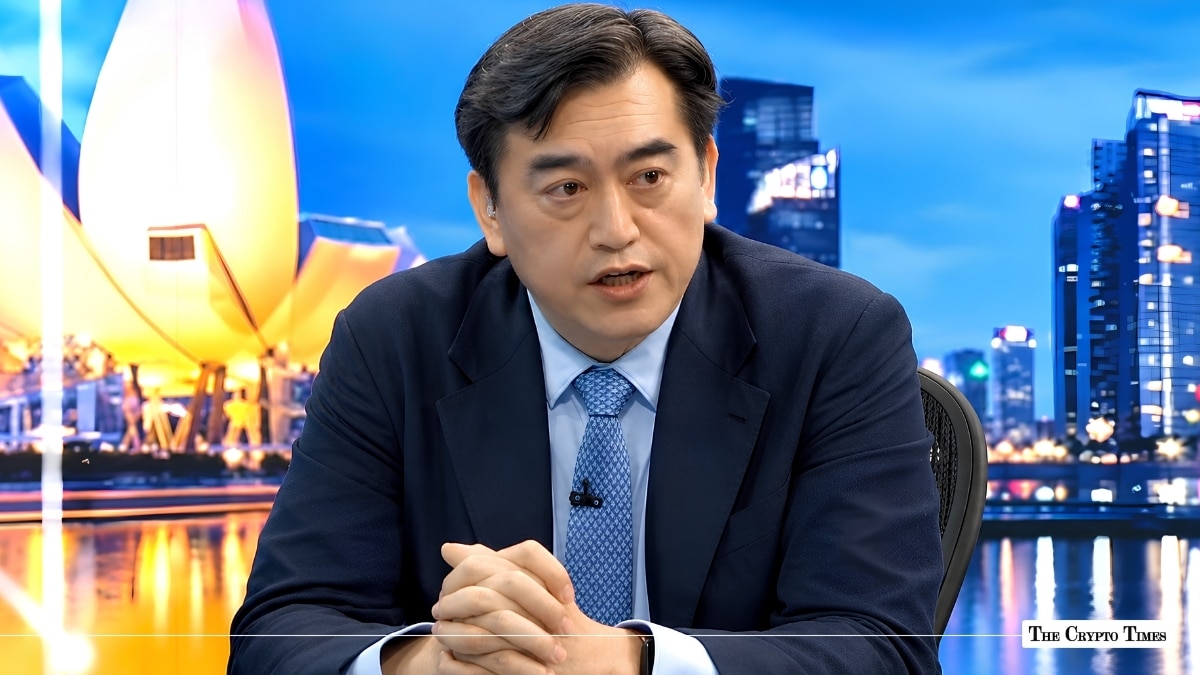
Solana Company CEO Joseph Chee said China could trigger another crypto “supercycle” if Beijing finds a way to manage the risks associated with digital assets and reopens access to crypto trading and broader blockchain applications.
Speaking to CNBC International on October 6, Chee said Chinese authorities are closely monitoring blockchain technology while weighing concerns around capital controls and financial stability.
China is watching crypto and blockchain development
Chee said Chinese authorities are monitoring developments in blockchain technology through think tanks, academics, and other groups familiar with the sector. He said China remains concerned about how the technology could be used under its existing financial and capital-control system.
“The Chinese government is watching the technology development very, very closely,” Chee said. He also pointed to Hong Kong as a testing ground for how Chinese authorities could approach digital assets.
China reopening crypto could expand the market
Chee said a potential reopening could expand access to crypto markets for Chinese users and companies. He said Asian users and traders played an important role in the early development of the crypto market before China’s crackdown slowed activity.
“When the Chinese government finds a way to manage this and allow access to trading crypto and allow the technology to be used by various companies, a Chinese company or cross-border trade, I think the crypto is going to go through another super cycle,” Chee said.
His comments describe a possible future policy shift rather than an announcement that China is preparing to reopen crypto trading. Recent coverage of his remarks likewise described the potential reopening as conditional on Beijing finding ways to manage the associated risks.
Capital flight remains a key regulatory concern
Chee said one of the main issues Chinese authorities would need to address is capital flight. China maintains controls on the movement of capital. Chee said crypto could make those controls harder to enforce because digital assets can move across borders.
“The key focus for the government will be capital flight as well,” he said.
Chee said authorities may not immediately allow crypto trading or the issuance of stablecoins onshore, while blockchain applications could continue to be tested on a smaller scale. At the same time, he said blockchain technology could potentially be used by companies and parts of the government to improve operational efficiency.
China recently warned that crypto is not fully anonymous
Chee’s comments come shortly after China’s Ministry of State Security (MSS) issued a warning about cryptocurrency-related risks.
In a September 28 report, the MSS described the idea that crypto transactions are completely anonymous as an “illusion.” It said blockchain records can preserve transaction histories, while exchanges, payment services, and crypto-to-fiat conversions can create links between transactions and real identities.
The MSS also warned that virtual currencies could be used in money laundering, cyberattacks, and espionage. It reiterated that crypto-related business activities remain illegal in mainland China.
Hong Kong has taken a different regulatory path
Hong Kong has taken a different regulatory approach from mainland China, with licensed virtual-asset platforms operating under its framework.
Hong Kong introduced a licensing system for approved virtual-asset platforms in 2023, while mainland China has maintained restrictions on cryptocurrency trading.
Chee did not provide a timeline for whether or when a similar approach could extend to mainland China.
Solana launches institutional settlement program
The China discussion comes as the Solana Foundation separately develops infrastructure for institutional settlement.
On October 6, the foundation launched Solana DvP, an open-source delivery-versus-payment program designed to let financial institutions settle tokenized assets and payments together onchain. J.P. Morgan provided input on institutional securities-settlement practices and requirements during development.
The DvP program is separate from Chee’s comments about China and does not indicate that Chinese financial institutions are preparing to use Solana.
Crypto volatility has not gone away
Chee also addressed the continued volatility of digital assets.
When asked about the risks associated with crypto markets, Chee said greater understanding of the asset class would be necessary. “People didn’t understand this is a class of asset for a long period of time. It’s going to be very volatile,” Chee said.
He said larger cryptocurrencies such as Bitcoin and Ethereum, and potentially Solana, could become more stable over time, but he expects volatility to remain a feature of the market. “Volatility is going to be a big part of it,” he added.
Chee said investors need to understand the risks involved before trading or investing in crypto assets.
No China reopening has been announced
Chee’s comments do not indicate that China has decided to reopen mainland crypto trading. Instead, he described what could happen if Chinese authorities find ways to manage concerns around capital flight, financial stability and the use of digital assets.
For now, mainland China’s restrictions on crypto trading remain in place, while Hong Kong operates under a separate digital-asset regulatory framework.
No timeline has been given for any change in mainland China’s crypto policy, and Chee’s comments describe a potential scenario rather than an announcement of a reopening.
Also Read: Conduit Files Suit Against Tether Over Frozen $2.76 Million USDT