The men who broke into a house in Solihull last December knew their victim held cryptocurrency. What they did not know was how to take it. So they called someone who did.
While three masked intruders assaulted the homeowner with hammers, a fourth man watched through a live video call on the victim’s own phone, telling them which apps to open and which wallet held the money. The attack lasted 45 minutes and ended only when hundreds of thousands of pounds had been transferred to a wallet the caller controlled.
The couple, who have not been identified and who the BBC refers to by the pseudonym James for the husband, described the attack to the broadcaster. West Midlands Police are investigating, and Crimestoppers is offering a £10,000 reward for information.
What Happened
The intruders forced the door open and attacked the homeowner immediately, striking him in the face, head, and ribs with hammers as he tried to fight them off, he told the BBC.
His wife, seven months pregnant at the time and expecting the couple’s third child, was held down on the sofa. She told the BBC she feared her husband had been killed when he lay unresponsive and that she worried the stress would cost her the pregnancy. The baby was carried to term and born healthy.
The couple did not know what the men wanted until one demanded the husband unlock his phone. The caller on the video link escalated the threats once he identified a wallet with substantial funds, telling the homeowner his wife and unborn child would be killed if the transfer was not made. The money was sent. The men also took several Rolex watches and left in a car with a waiting driver.
Before leaving, the homeowner says he heard the man on the call tell the three intruders they could keep £10,000 each while he took the remainder.
The Division of Labor
The structure of this attack is the part other crypto holders should notice. The men in the house supplied the violence. The man on the call supplied the technical knowledge and took the funds.
That separation makes the crime easier to commit. The intruders needed no understanding of wallets, seed phrases, or transfers. They needed only to be in the room and to make the victim comply, while someone else performed the extraction remotely and received the proceeds.
It also makes the crime harder to solve. The person who ended up with the money was never physically present.
Why Crypto Holders Are Targeted
Money in a bank account is held by an institution that can freeze a transfer, reverse it, or refuse one made under duress. Cryptocurrency held in self-custody has none of that. The holder controls it directly, the transfer settles in minutes, and once sent, it is effectively irreversible.
That combination is what makes these attacks worth committing and why recovery after the fact is so rare.
Chainalysis says the trend is accelerating. In research published this year, the firm reported about $30 million stolen in violent crypto robberies in the first half of 2026, putting the year on course to be the worst on record, with home invasions rising in particular. It notes that the physical security assumptions protecting conventional wealth, such as vaults, armored transport, or institutional gatekeepers, simply do not apply to assets held in a self-custody wallet.
The United States, Brazil, and Thailand are among the worst affected. France has recorded the largest number of attacks, 77 kidnapping and extortion cases in the first half of 2026 alone, against 45 in all of 2025, which the research links in part to a tax office data breach that appears to have let criminals locate wealthy holders. Those cases follow a run of violent abductions across Europe since 2025, including the kidnapping of a Ledger co-founder and his partner from their home in central France.
The Appeal
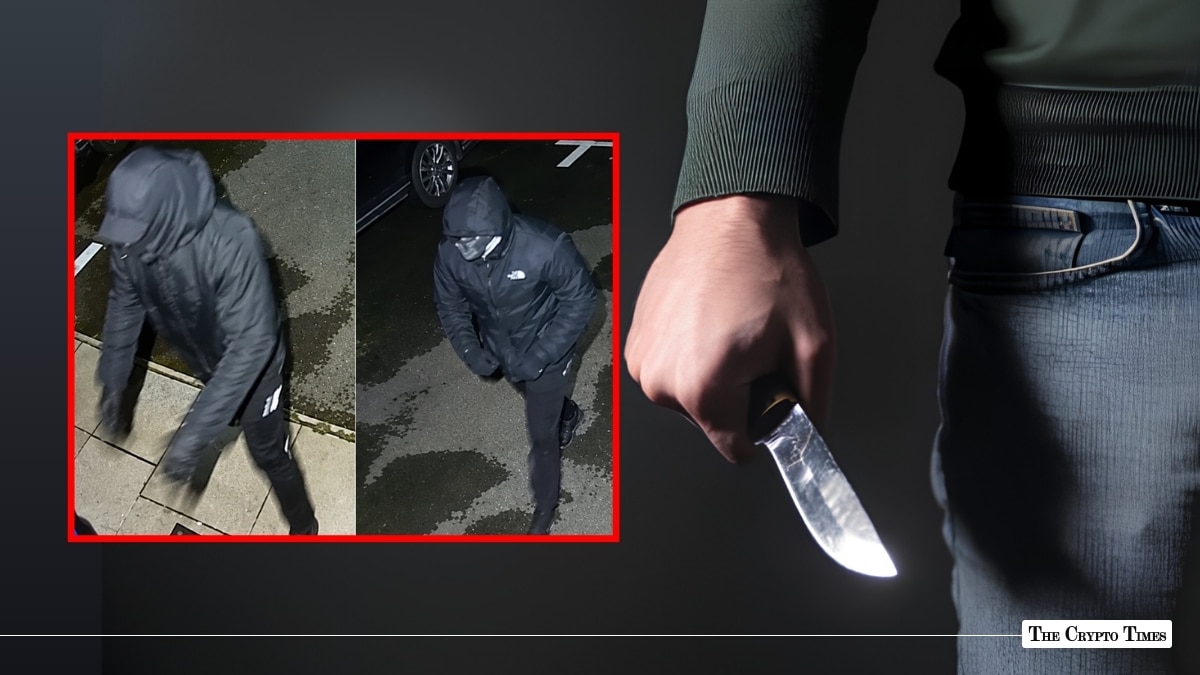
Police have not identified the attackers. Crimestoppers says the three intruders are believed to be in their late teens or early 20s, and that one is described as a black man with a scar under his left eyebrow. The driver waiting outside was not wearing a face covering.
Alan Edwards of Crimestoppers said the group appears to be part of an organized crime gang and that the charity is independent of the police and takes information anonymously.
The homeowner, who began investing in 2020 and had been trading full time since 2023, says he has lost everything and is returning to his former job. He told the BBC he has little expectation of recovering the money and wants those responsible caught instead.
What Holders Can Reasonably Do
Nothing about this attack was the victim’s fault, and no precaution guarantees safety. But the pattern across reported cases is consistent enough to be worth stating.
Attackers find targets through information that is public: social media showing wealth or location, forum posts, leaked databases, and in France a breached government dataset. Reducing what is publicly linkable to a name and address is the single step security researchers most often recommend.
Beyond that, the industry conversation has moved toward arrangements that make a victim unable to comply quickly even under duress—multi-signature setups, time delays, and keeping only a small balance accessible from any one device. The detail of those arrangements is a conversation for a security professional rather than a news article.
Also Read: Microsoft’s X Account Was Hijacked to Push a Clippy Token