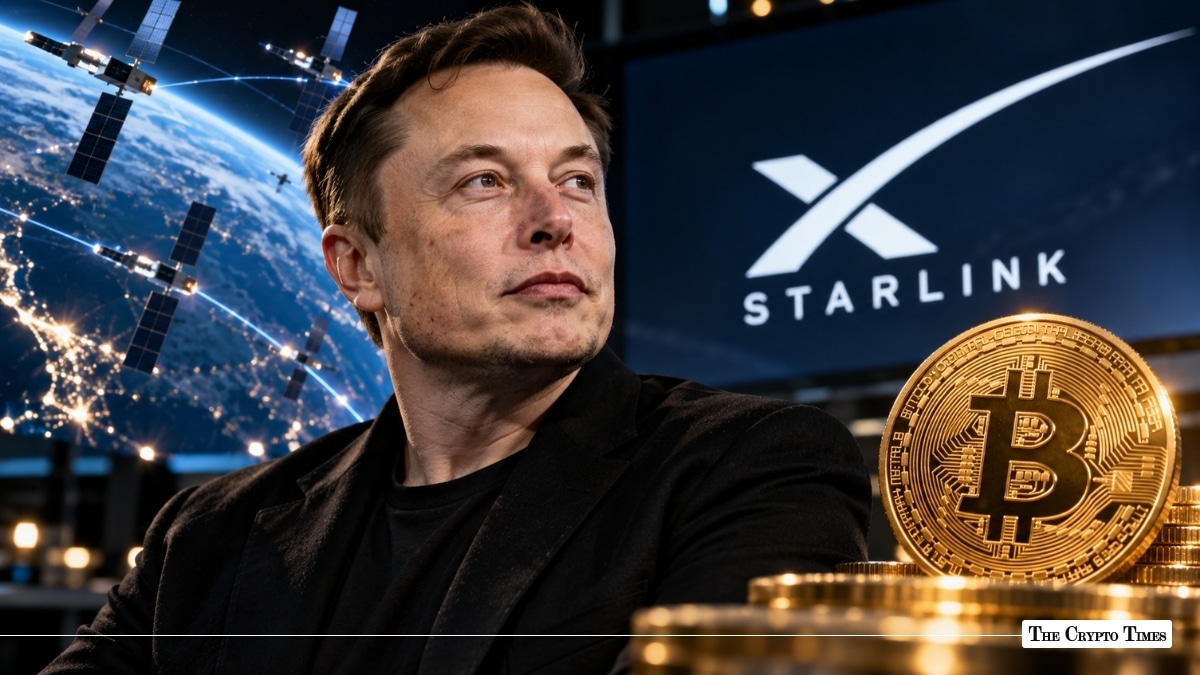
A claim that hackers locked every Starlink ground station and demanded $500 million in Bitcoin has returned to X, with multiple accounts posting the same text and video in late September 2026.
An X search for the event shows the wording still drawing engagement. Copies posted on September 29 and September 30, 2026, use identical language and a short split-screen video of Musk beside hooded figures and green code.
The claim
The text says a hacker group announced: “We have locked all Starlink ground stations worldwide. Pay $500 million in Bitcoin, or the world goes offline!” It then says Musk replied one minute later: “Check your firmware. While you were writing that ransom note, Neural-Auto-Patch released a micro-update that routed your entire operation through a dead-end satellite in deep orbit. Thanks for testing our hotfix.”
That structure is the giveaway. A global lock of ground stations would be visible to users and to operators. A $500 million Bitcoin demand would require a payment address. Neither appears with the posts.
What the primary record shows
Starlink’s status page lists ground stations, satellites, client connections, and overall service as operational. Its incident log shows no incidents reported on September 23, September 29, September 30, or October 1, 2026. A worldwide lock of ground stations would register as a major outage. It does not.
Elon Musk’s public account on X does not contain the quoted reply. A search of his posts for Starlink ransom language returns nothing matching the 3:01 AM text. Neural-Auto-Patch does not appear in SpaceX or Starlink product material. The phrase functions as a punchline, not as a documented firmware feature.
The Bitcoin side of the claim is also empty. The posts name a $500 million figure to be paid in BTC but give no address, transaction ID, or chain. A payment of that size would be public on the Bitcoin ledger. No such transfer has been tied to this story by any party named in the posts.
A real incident that is not this story
Readers may be mixing the meme with a fire at a Starlink gateway in Poland. On September 23, 2026, a fire broke out at a ground station in Wola Krobowska, south of Warsaw. Poland’s National Prosecutor’s Office later opened an investigation.
In an official notice on gov.pl, prosecutors said the fire was the result of arson and that there was a justified suspicion the perpetrators acted on the orders of Russian special services, with the aim of disrupting Starlink traffic in Poland and other Central and Eastern European countries. The case was opened under provisions covering activity for a foreign intelligence service and causing a fire that produced large-scale property damage. No charges had been filed at the time of the notice.
That case concerns one facility operated with Poland’s state telecom Exatel. It is an arson investigation, not a remote lock of every Starlink ground station, and it does not involve a Bitcoin ransom. Starlink’s status page did not log a network-wide incident that day.
Why the claim travels
The posts use a familiar format: a midnight threat, a one-minute celebrity reply, and a request to follow for more. Accounts recycling the text in this wave include handles that present themselves as leak or “truth” channels. Engagement on individual copies is modest, but the identical wording across accounts is what makes the claim look like a breaking report rather than a script.
Bitcoin is the hook. Ransom stories that name Bitcoin spread faster in crypto feeds because the asset is public and large transfers are easy to imagine. Real ransomware cases do use crypto. Those cases name wallets, operators, and legal actions. This Starlink post names none of those.
Platform fraud around Bitcoin accounts is also active. X has sued a network of Bitcoin-focused accounts in the UK High Court over alleged creator-payout manipulation. That case is about engagement and payouts, not satellite ground stations.
Verdict: FALSE
Hackers did not lock Starlink’s ground stations worldwide. Elon Musk did not post the Neural-Auto-Patch reply. No $500 million Bitcoin ransom tied to this text has been shown. The wording is a recycled script that gained fresh traction on X in late September 2026. The Polish gateway fire is a real, separate investigation into arson at one site, not evidence for the ransom post.
In a reply to a popular post with a similar claim, X’s AI assistant Grok replied “No, this isn’t true,” adding, “It’s a viral fake meme spreading across accounts with copied text and likely AI-generated video. No hacker group locked Starlink ground stations or demanded $500M Bitcoin. Elon made no such reply about “Neural-Auto-Patch” or dead-end satellites. Starlink is operating normally. Classic engagement bait.”
How to check a claim like this
Three checks settle this one. First, the operator’s status page. Second, the named person’s own account. Third, a payment address or transaction if Bitcoin is part of the demand. All three are missing here. The 3:00 AM and 3:01 AM timestamps, with no date and no zone, are not a substitute for those records.
For the last note, readers should treat viral posts as claims, not as confirmed events. High likes, views, or a familiar name do not prove that a ransom note, a one-minute reply, or a $500 million Bitcoin demand took place. Anyone can copy the same script, attach a meme video, and post it as a “drop.” Check the named person’s own account, the operator’s public status page, and whether a payment address or transaction exists before acting on the story. If those records are missing, the post is not news — it is content built to travel.
Also read: Is ‘Paul Le Roux’ Really Satoshi Nakamoto? What the Record Actually Shows