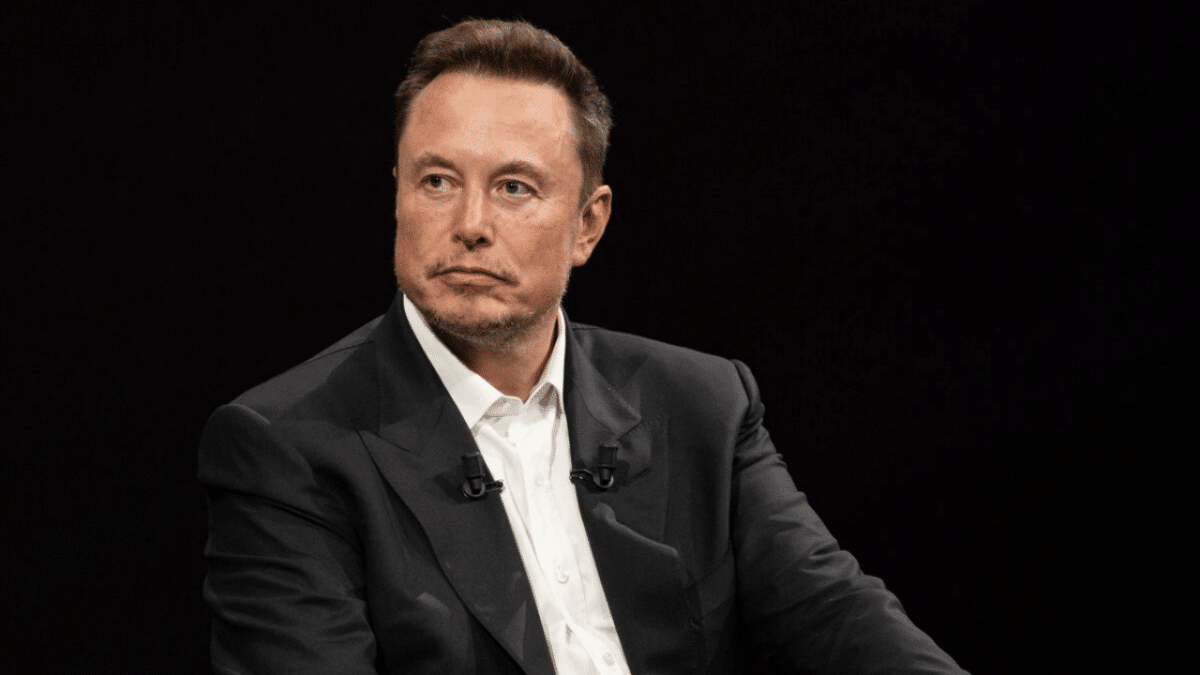
X, the social media platform owned by Elon Musk, has taken a group of high-reach Bitcoin accounts to the English High Court, alleging they operated as a coordinated network to manipulate engagement metrics and pull payouts from the platform’s creator payment scheme.
The case was filed on 17 September 2026 and was publicly confirmed by counsel three days later. It is the second stage of an enforcement fight that began in August with a wave of account suspensions and a referral to law enforcement, and it lands as X winds down the payout system that sat at the centre of the dispute.
The court filing
The claim, numbered BL-2026-001161, was lodged in the Business and Property Courts of England and Wales, Business List (Chancery Division). The claimants are X Internet Unlimited Company, the Irish-registered entity that operates X in the United Kingdom, and X Corp, the Nevada-registered company that is the primary contracting party under X’s Creator Revenue Sharing Terms.
The defendants are Mr Vivek Kumar Sen, Ms Zamyang Sherpa, and persons unknown who operated, used or otherwise controlled the accounts set out in Annex A of the pleading. The particulars of claim were signed by law firm Lewis Silkin LLP and verified by statements of truth from Diego de Lima Gualda and Adam Mehes, both listed as Senior Directors of Legal at X.
James Burnham, General Counsel of X and its sister company xAI, announced the suit on 20 September 2026, writing that the company had “sued several people who abused Creator Revenue Sharing by operating a coordinated network of accounts, posting inauthentic content to manipulate engagement, and using multiple bank accounts to hide their scheme.” He linked directly to the particulars of claim hosted on X’s own transparency portal.
What X alleges
According to the particulars of claim, the defendants enrolled multiple X accounts in the Creator Revenue Sharing Programme, a payout scheme that ran from around 5 July 2023 and was replaced by X’s Original Content Rewards Programme in September 2026, and then ran them as a single network.
The pleading alleges that they operated the accounts to like, repost and engage with one another’s content to create a false appearance of genuine human interaction; posted substantially similar or identical content across the accounts, sometimes within seconds of each other; built what X describes as a complex web of financial accounts to avoid detection; and kept spare accounts live so that if one was suspended, the others in the network would continue to generate payments.
The claim states that the defendants “fraudulently obtained payouts” across the scheme by manufacturing engagement, though the exact pound-sterling figure inside the pleading appears redacted in the public copy. The pleading also alleges that the First Defendant used the @Vivek4real_ account to offer paid engagement-manipulation services to third parties and to solicit the purchase of additional high-follower accounts.
X pleads six causes of action against the defendants: fraud and deceit, unlawful means conspiracy, unjust enrichment, knowing receipt, breach of contract and constructive trust. It seeks delivery up of the payments and traceable proceeds, damages, equitable and restitutionary compensation, interest under section 35A of the Senior Courts Act 1981, and costs.
The accounts named in the pleading
The particulars set out a table of six accounts, together with the Stripe payment accounts linked to them and the dates on which each was first enrolled in the programme. According to the filing, the associated Stripe account for @Vivek4real_ was in the name of Vivek Kumar Sen; @Bitcoin_Teddy was linked to Stripe profiles in the names of Stefan Mann and Vivek Kumar Sen; @saylordocs was linked to a Stripe account in the name of Vivek Kumar Sen; and @TrendingBitcoin, @Kalshibacktest and @PolyBackTest were linked to Stripe accounts in the name of Zamyang Sherpa.
The pleading also identifies three further handles, @BTC_Vibes, @MrSuperBitcoin and @Laserlump, that the claimants allege were used as part of the wider conspiracy to like, reply to and repost the primary accounts’ content. The full list of accounts appears in Annex A of the filing.
X says the defendants are resident in Preston, Lancashire, and that some subscription payments were made using debit cards linked to billing addresses at Chrysler Avenue, Newark, Delaware, and McMullen Circle, Bear, Delaware, in the United States. It also alleges that email addresses linked to the First Defendant were used across Stripe accounts registered in different names.
The evidence cited
The pleading sets out worked examples of alleged coordination pulled from the accounts’ post history. It cites a 26 October 2024 incident in which @TrendingBitcoin and @saylordocs are said to have posted identical content, the same phrase and image, within a two-minute window.
It describes a 21 November 2024 incident in which four of the accounts, @TrendingBitcoin, @Kalshibacktest, @Bitcoin_Teddy and @saylordocs, allegedly posted the same phrase and image within minutes of each other. It records a 12 August 2024 example in which three of the accounts, @Vivek4real_, @saylordocs and @Bitcoin_Teddy, are said to have replied to the same third-party post within seconds. Further examples are dated April 2025, July 2026 and August 2026.
X also points to what it describes as overlapping device identifiers, software clients, cookies and universally unique identifiers across the accounts, and to a December 2025 message it attributes to the First Defendant in which he allegedly wrote to a third party, “Can we continue on another channel, please as you haven’t enabled encrypted chat and I don’t want us to get in trouble for something X doesn’t allow.” Screenshots of the referenced posts appear in Schedules 1 and 2 of the filing.
The August suspensions that led here
The civil claim is the second act of a dispute that broke into public view a month earlier. On 18 August 2026, Bier, who had recently stepped back from his role as head of product at X, posted on the platform that one operator was running more than ten accounts and had drained the revenue-sharing programme of over $250,000 across the previous two years. He added that the case was being forwarded to law enforcement. The @Vivek4real_ account, run under the name Vivek Sen, had about 270,000 followers at the time of the suspension.
The suspension wave removed a cluster of high-volume Bitcoin and prediction-market accounts, including several of the handles that later appeared in the High Court claim. The Crypto Times covered the takedown in its 19 August report, X Suspends Bitcoin Accounts Amid Alleged $250K Revenue Scheme.
Journalist Gareth Jenkinson of The Block said at the time that he had confronted Sen over clips from his show being reposted without credit, and that Sen described the practice as a “net positive” for media companies because it drove additional exposure. Those allegations concern content reuse. The London claim is narrower in scope. It concerns manufactured engagement used to draw creator-programme payouts.
The dollar figure Bier used in August and the pound-sterling figure attached to the September filing are not identical. X has not published an unredacted payout ledger alongside the public copy of the particulars, and the two numbers should be read as separate public statements rather than as a confirmed conversion of the same amount.
Why the case matters for crypto media
The accounts at the centre of the claim were not fringe automated spam profiles. They sat inside the Bitcoin timeline: aggregators of Michael Saylor clips, trending Bitcoin update handles, and profiles branded around prediction-market platforms such as Kalshi and Polymarket. That is the same feed in which working reporters, analysts and independent commentators compete for the audience that X’s creator programme was designed to reward.
If the claim succeeds, it will represent the first English High Court judgment against a crypto-adjacent content operation for revenue-share manipulation.
The case also lands at a moment when X is rebuilding its creator monetisation stack around crypto rails. In August, CoinDesk reported that the platform was in discussions to use stablecoins including Circle’s USDC to pay creator royalties, a story The Crypto Times independently reviewed in Elon Musk’s X in Talks to Use Stablecoins Like USDC for Creator Royalties: Report.
The Creator Revenue Sharing Programme itself was retired on 7 September and replaced with the Original Content Rewards Programme, which pays for qualified impressions on original posts rather than for engagement volume. A public fraud claim against a Bitcoin cluster is therefore a signal of how X plans to police the payment surface underneath those new rails.
Context: creator payout fraud and coordinated networks
The London claim is one of a growing set of enforcement actions against coordinated networks that exploit social platforms for financial gain. In March 2026, on-chain investigator ZachXBT detailed a separate operation in which more than ten X accounts were purchased with pre-existing follower bases, used to post fabricated war and political content, and then pivoted into pump-and-dump token promotions that on-chain data suggested generated six-figure profits.
In June, a New York man was sentenced to 15 months in federal prison for a $1.4 million fake crypto influencer operation that used Telegram accounts to impersonate well-known figures and solicit fake staking investments.
The Sen and Sherpa filing is different in shape. It is a civil claim aimed at recovering money from named defendants over conduct inside a platform’s own monetisation product, and it turns on contractual rights under the X User Agreement and the Creator Revenue Sharing Terms rather than on criminal statute.
What is proven, and what is not
The public record establishes that X has filed a High Court claim against Sen, Sherpa and persons unknown, that the named accounts were suspended on 18 August 2026, that Bier publicly attached a $250,000 figure to a two-year window and said the file was being forwarded to law enforcement, and that Burnham has confirmed the suit and linked to the particulars of claim. The record does not establish that every named handle was controlled by the same two individuals, that any specific pound-sterling figure represents a final audited loss, or any finding of criminal guilt. No court has yet ruled on the allegations. The defendants remain entitled to contest the claim, and, as of publication, no defence has been entered on the public record.
The next procedural steps are service of the claim, any acknowledgement of service by the defendants, and any application to contest jurisdiction, liability or the facts alleged.
Also Read: Polymarket Hit by $10M Stolen-Card Fraud Attempt as CEO Told Staff to Keep Growing: WSJ