Key Highlights
- Vitalik Buterin says hiding users’ real names is no longer enough to protect on-chain privacy as AI and data analysis become more powerful.
- He said modern cryptography can control not only who can send assets but also who can access specific information.
- Buterin has also warned about AI privacy and security risks, including data leaks, malicious instructions, and unauthorized actions.
Ethereum co-founder Vitalik Buterin has warned that artificial intelligence (AI) is changing the privacy risks facing blockchain users.
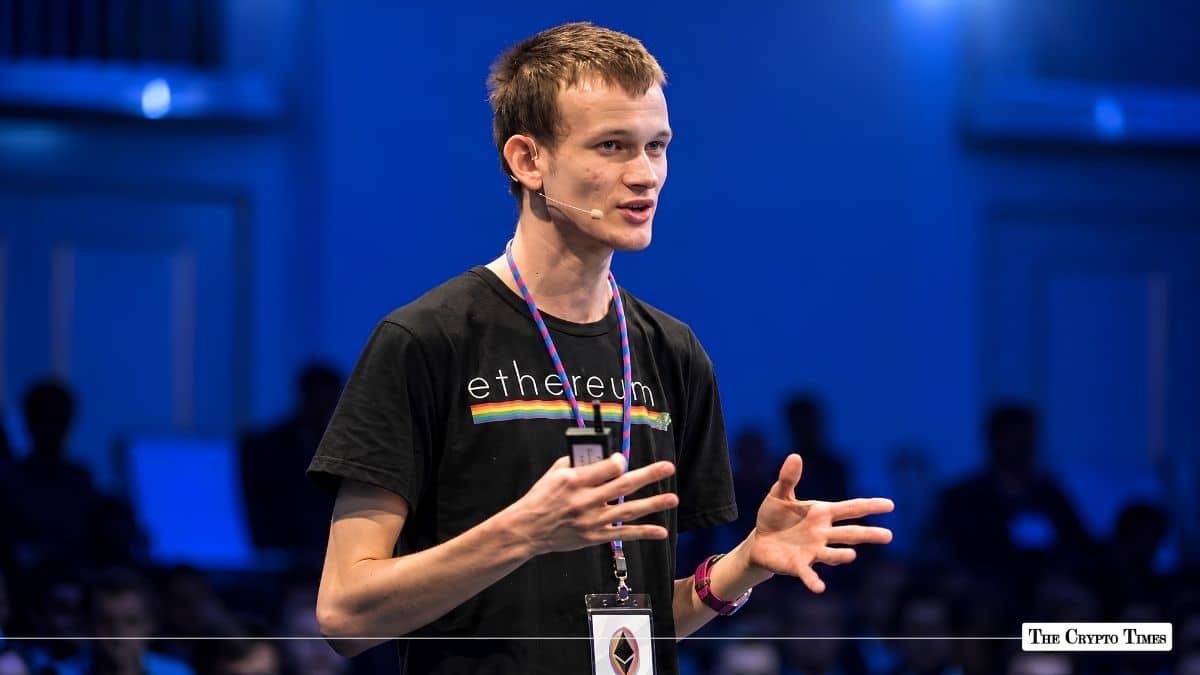
Speaking at the 12th Global Blockchain Summit on Wednesday, Buterin said simply keeping a person’s real name away from their transactions is no longer enough. He said powerful AI and data analysis tools can make public blockchain information much easier to study.
For years, one basic approach to blockchain privacy was simple: a wallet address could be used without directly showing the person’s real name. Buterin explained that this gave users some level of privacy because people could see transactions without immediately knowing who was behind each address.
Names are no longer enough
Buterin compared public blockchains to “Twitter for your bank account,” a phrase used by Zooko Wilcox, the creator of Zcash. He also pointed to Bitcoin’s 2008 white paper, saying its approach to privacy was based on keeping a person’s name separate from their transaction.
That idea made more sense when blockchain data was harder to study. But the tools available today are much more powerful.
“We have extremely powerful data analysis, extremely powerful AI,” Buterin said. He added that the older approach to privacy is “obviously not sufficient anymore.”
AI can study public activity
The concern stems from the amount of information available on public blockchains. Transactions, wallet addresses, balances, and transaction histories can be viewed and analyzed.
While a wallet address may not directly reveal a person’s name, patterns in its activity can provide additional information about its owner or connections to other addresses.
AI can make it easier to examine large amounts of information and find links that may not be obvious when looking at individual transactions. This means that simply using a wallet address instead of a real name may not provide the level of privacy users expect.
Blockchain use is expanding
Buterin said the issue is becoming more important because people now want to do much more with blockchains than send and receive payments. Users want faster networks and applications with more features, which means blockchain systems will have to handle more types of activity and information.
He also explained that the idea of what needs to be protected on a blockchain is changing. Bitcoin was mainly built around protecting one digital asset, Bitcoin. Ethereum expanded that idea by allowing users to create and use other digital assets.
Modern cryptography can now go further by protecting information as well as assets. Buterin described this as an era of “programmable cryptography,” where code can decide not only who can send an asset but also who can see certain information.
In simple terms, the question is moving from “Who can send this?” to “Who is allowed to see this?”
That change could allow privacy rules to be built directly into blockchain applications. Instead of relying mainly on users hiding their real names, applications could use cryptography to control access to sensitive information.
Buterin has raised AI concerns before
Buterin has also previously warned about privacy and security risks linked to AI itself.
In an April 2026 blog post, he discussed the risks created by AI systems that depend on remote infrastructure and can access private user information.
He also raised concerns about autonomous AI agents, jailbreak attacks, malicious instructions, data leaks, and unauthorized actions.
His latest comments extend those concerns to blockchain privacy. As AI tools become more capable of analyzing large amounts of public information, Buterin argues that blockchain privacy mechanisms will need to evolve beyond simply separating users’ names from their transactions.
The focus, in his view, is increasingly on controlling who can access and use information associated with a person’s onchain activity.
Also Read: Sky Protocol and Galaxy Deepen Ties With $100M sUSDS Treasury Move