Key Highlights
- Ireland’s Criminal Assets Bureau (CAB) has identified cases involving criminals storing cryptocurrency access keys, cash and valuables in private vaults.
- CAB Chief Michael Gubbins said cash remains the dominant form of illicit money in Ireland despite the use of cryptocurrency.
- Investigators have also identified hawala-style underground banking networks used to move money between jurisdictions.
Ireland’s Criminal Assets Bureau (CAB) has identified cases in which criminals used privately operated vaults to store cryptocurrency private keys, cash, luxury watches and other valuables.
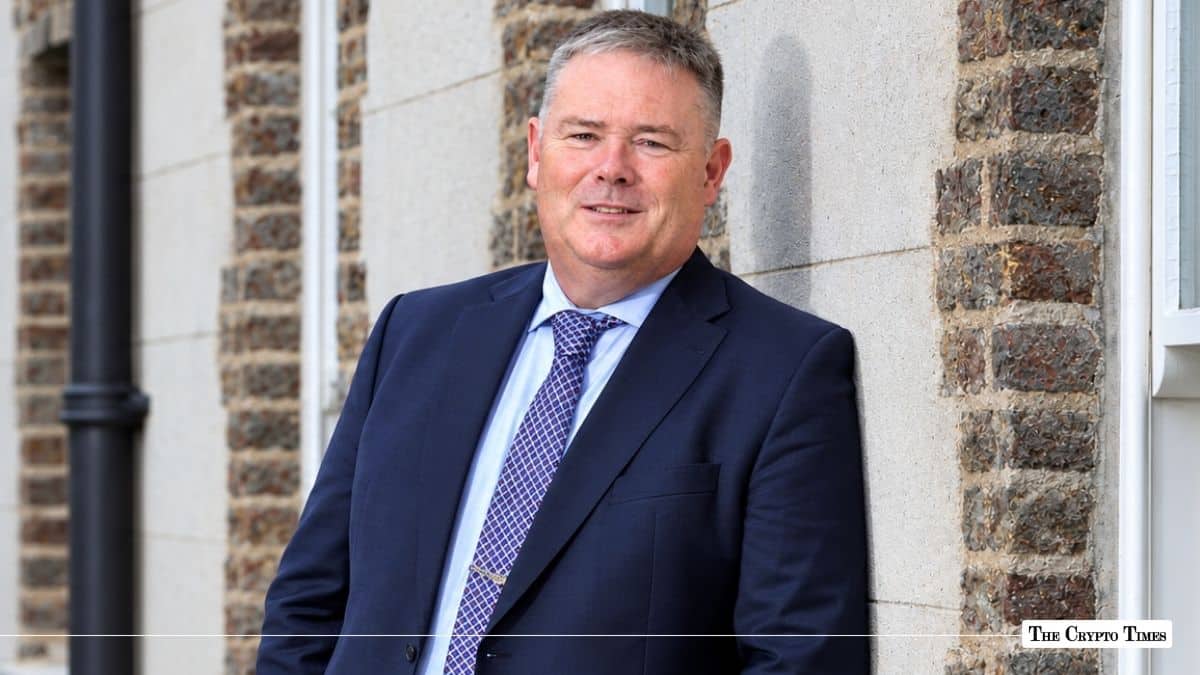
According to an Irish Independent report published September 6, CAB Chief Detective Chief Superintendent Michael Gubbins said the practice emerged through the bureau’s investigations and was raised with Ireland’s Anti-Money Laundering Steering Committee.
The cases show how cryptocurrency can appear alongside cash, informal money-transfer networks, property and high-value goods in investigations into suspected criminal proceeds.
Private vaults used to hold crypto keys and cash
Gubbins said investigators had encountered criminals using private vaults to store different types of assets.
“The use by criminals of vaults to store assets could be cryptocurrency keys, cash, watches, or even passports and stuff like that.”
Unlike cash or physical valuables, cryptocurrency itself does not need to be stored inside a vault. Access information such as private keys or recovery credentials can, however, provide control over digital assets held on a blockchain.
Private storage facilities therefore give investigators another physical location to consider when tracing access to digital assets and other property.
Crypto is being used alongside traditional methods
CAB’s observations do not suggest that cryptocurrency has replaced cash in Ireland’s illicit economy.
Gubbins said professional money launderers continue to provide services to criminal organisations, moving or converting proceeds through different financial channels.
One method identified by the Bureau is the hawala system, an informal value-transfer network in which money deposited in one jurisdiction can be made available in another without physically transporting the same cash across borders.
Such networks can operate alongside cryptocurrency transactions, bank transfers and physical cash, meaning individual transactions may form only part of a wider financial trail.
Vault seizure linked to €230,000 money-laundering case
CAB has also identified a direct connection between a private vault and a suspected money-laundering investigation.
In a case involving alleged money laundering by Peng Fei He, the bureau seized approximately €230,000 from a safe deposit box at Merrion Vaults.
Investigators had previously seized around €800,000 linked to the wider operation, which was allegedly connected to a hawala network.
According to the case details, the network charged a 6% commission for transferring money between jurisdictions.
The case illustrates how physical storage facilities can feature alongside informal banking networks in investigations involving suspected criminal proceeds.
CAB says cash still dominates criminal finance
Despite the cryptocurrency-related cases, Gubbins said physical cash remains central to drug trafficking in Ireland.
He also said the cryptocurrency use encountered by Irish investigators remains relatively basic compared with some other forms of financial crime.
“What we see here in Ireland is that the use of crypto is still quite basic. We continue to see people dealing in cash, buying houses, building extensions.”
His comments indicate that cryptocurrency currently represents one part of a broader criminal-finance system rather than replacing established methods.
Property and luxury goods remain part of the picture
CAB investigations have also involved luxury watches, designer goods, expensive vehicles and property.
Gubbins said criminal proceeds can be used to purchase assets or fund visible improvements to homes, creating additional avenues for investigators to trace suspected illicit wealth.
The cases show that proceeds can move between digital assets, cash and physical property rather than remaining within a single financial system.
Ireland continues recovering seized bitcoin
CAB is also dealing with bitcoin seized during earlier criminal investigations.
The bureau has been handling approximately 2,000 BTC seized in an earlier case. Access to part of the holdings was complicated because the wallet codes had been stored in a fishing rod that was later discarded.
CAB subsequently worked with Europol to gain access to the cryptocurrency.
The holdings were valued at roughly €360 million, with more than €130 million reportedly realised by converting seized bitcoin into cash.
The case highlights a distinction between identifying cryptocurrency holdings and actually controlling them. Investigators may be able to establish that assets are held at a particular wallet address without immediately possessing the credentials required to move them.
Another 500 BTC recovered in 2026
Ireland has continued recovering bitcoin connected to earlier criminal investigations.
In July 2026, authorities recovered another 500 BTC from wallets connected to Clifton Collins, with the holdings valued at approximately $90 million at the time of the recovery.
The recovery was reported as the third successful bitcoin recovery of 2026, bringing Ireland’s reported recoveries for the year to 1,500 BTC. Approximately 4,500 BTC remained unrecovered at the time.
The recoveries indicate that some cryptocurrency holdings linked to criminal investigations can remain unresolved for extended periods while authorities work to establish control over the relevant wallets.
Crypto transactions can still be traced
Gubbins said criminal groups may view cryptocurrency as offering a degree of anonymity, while also facing risks from price volatility and losing access to wallets.
“There is a degree of anonymity, but there is also a risk around the volatility and the value of it.”
Cryptocurrency transactions can leave permanent records on public blockchains. Investigators and blockchain analytics firms can sometimes follow funds across addresses and identify connections to exchanges or other services.
The challenge is often linking blockchain addresses to the people, businesses or criminal networks controlling them.
New EU AML rules will increase scrutiny
CAB’s findings come as Ireland prepares for the implementation of new European Union anti-money laundering requirements.
The EU’s updated framework will strengthen anti-money-laundering controls and extend obligations across sectors including crypto-asset services and certain businesses dealing in high-value goods.
Ireland has also been strengthening its national approach to financial crime, increasing scrutiny of businesses and professional intermediaries that could be used to move or conceal illicit proceeds.
Gubbins said tighter controls are already affecting parts of the traditional financial system.
“Things are certainly getting tighter on the high street.”
The changing regulatory environment could make the use of alternative channels, including informal money-transfer networks and digital assets, an area of continued attention for investigators.
Crypto remains one part of Ireland’s criminal finance landscape
CAB’s latest cases show that investigators are encountering cryptocurrency alongside cash, private vaults, informal banking networks, property and luxury goods.
The bureau’s comments do not indicate that crypto has displaced cash as the dominant form of illicit finance in Ireland. Instead, digital assets appear to be one component of a broader system through which criminal proceeds can be stored, transferred or converted.
The bitcoin recovery cases also illustrate a separate challenge for law enforcement: tracing a blockchain transaction does not necessarily provide control over the underlying assets.
For investigators, the cases involve following proceeds across multiple forms of value and establishing links between digital wallets, physical assets and the people controlling them.
Also Read: Philippines Groups Crypto Firms With Casinos, Freezes New Payment Licenses for a Year