The Sun reported this week that British media personality and model Katie Price ended her marriage to Lee Andrews after being given a recovery phrase to a wallet he was said to have described as holding $50 million and finding a balance of £2.22. Neither party has publicly confirmed the account, and the reporting rests on unnamed sources.
A recovery phrase is not a password. Anyone who has seen it controls the wallet permanently, and there is no way to revoke that.
The Sun reported on September 2 that Price consulted a London divorce lawyer and that a source told the paper she ended the eight-month marriage after a financial expert checked the wallet on Monday.
What Was Reported
According to The Sun’s account, Andrews told Price he held around $50 million, roughly £37 million, in cryptocurrency and promised her a portion of it. The paper reported he provided the recovery phrase needed to access the wallet, that Price asked a financial expert to check it, and that the balance came to about $3.
The Crypto Times has not independently verified any element of that account. It comes from sources cited by The Sun and named by neither. Andrews has not commented publicly on the reported wallet, and Price has not publicly detailed it either.
What follows concerns the mechanics involved, which apply regardless of whose version of events proves accurate.
A Recovery Phrase Is Total Access
A recovery phrase, also called a seed phrase or mnemonic, is typically 12 or 24 words generated when a self-custody wallet is created. Those words mathematically derive every private key the wallet uses, which means the phrase is not a credential for checking a balance—it is the wallet.
Anyone holding the phrase can import it into any compatible wallet application on any device and move every asset it controls immediately and irreversibly. Blockchain transactions cannot be reversed, and there is no issuer or administrator who can freeze the funds or restore them.
The access is also permanent and unlimited in number. Sharing the phrase does not grant temporary or view-only permission, and it cannot be withdrawn afterwards. The only remedy once a phrase has been exposed is to create an entirely new wallet and move the assets to it.
What a Balance Check Shows
Checking a wallet returns its holdings at the moment of the query. It does not, on its own, establish what the address held previously, when assets moved, or who moved them.
That history is publicly available on most chains, but retrieving it requires examining the address on a block explorer rather than reading a balance. A wallet showing a small sum today may have been empty since it was created or may have held far more at an earlier point and been emptied since—and the two cases look identical from the balance alone.
A single recovery phrase also generates multiple addresses across multiple chains. A wallet application restoring from a phrase will typically display the accounts it derives by default, and assets held on other networks or in accounts further along the derivation path may not appear without additional steps.
None of that establishes anything about the reported case. It establishes that a reported balance figure, taken alone, supports a narrower conclusion than it might appear to.
Exposure Is a Recurring Failure Point
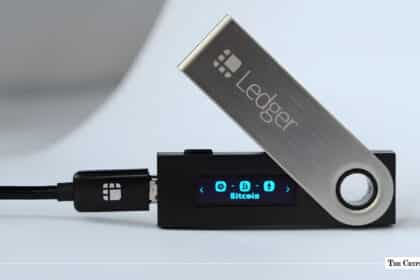
Seed-phrase disclosure has produced losses in circumstances well outside fraud. South Korea’s National Tax Service accidentally published a wallet’s recovery phrase in a February 26 press release, in an unmasked photograph of a Ledger device and the sheet of paper the phrase was written on. Roughly $4.8 million in seized tokens were moved before being returned hours later.
The agency apologized, saying it had been trying to provide a vivid record of the seizure and had not realized sensitive information was included. Within weeks it moved to outsource custody of seized digital assets to professional firms, and the Deputy Prime Minister ordered an audit of digital assets held across public institutions.
A separate claim before the High Court of Justice of England and Wales makes the same point from the opposite direction. Ping Fai Yuen alleges his estranged wife and her sister obtained the 24-word recovery phrase to his Trezor using home CCTV and that 2,323 Bitcoin were moved in August 2023 and dispersed across 71 addresses. The assets sat offline in hardware storage, and no encryption was defeated. The phrase alone was sufficient.
Mr Justice Cotter struck out the claims in conversion and trespass to goods, holding those torts do not extend to intangible property, while allowing the claim to continue on other grounds and describing the claimant’s prospects of success as very high. The allegations have not been tested at trial.
The pattern in both is the same. Hardware storage, offline keys, and strong passwords all protect the phrase rather than replacing it, and once the phrase is known, none of those protections apply.