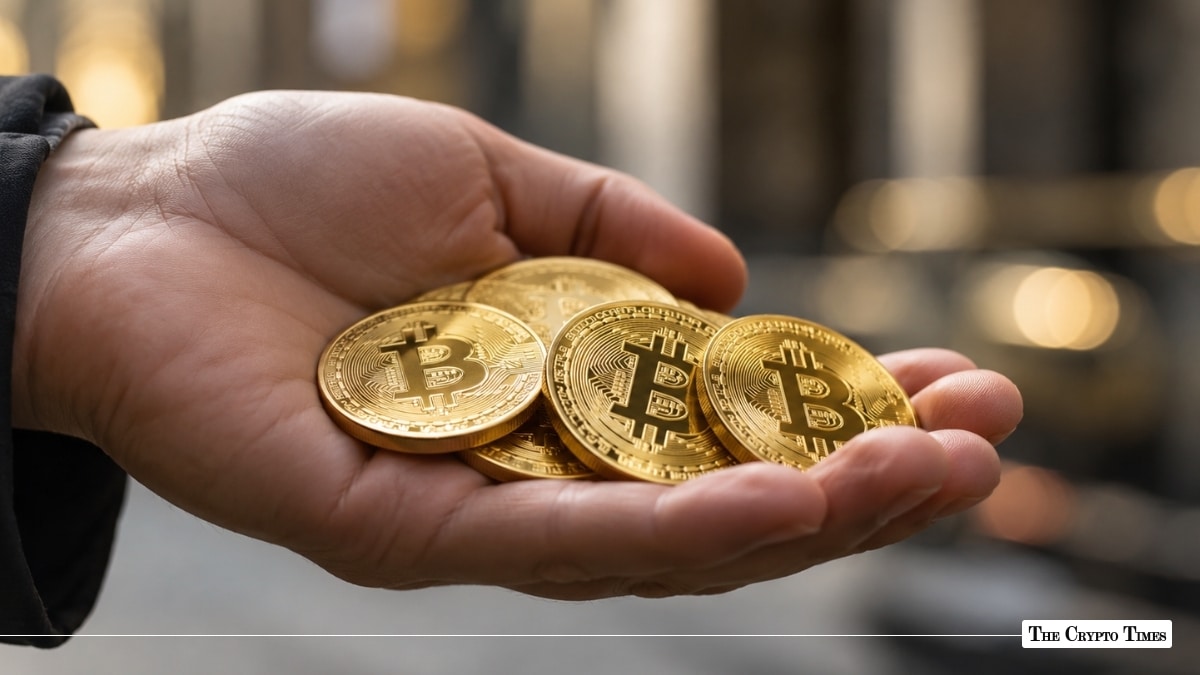
A British man who spent £1,500 on Bitcoin in the winter of 2011 has recovered the full holding after more than a decade of inaccessibility, following work by a Liverpool law firm that traced the coins through old records and related court papers.
The investor, who asked to be identified only as Chris, received 61 BTC in May 2026. CEL Solicitors, which handled the claim, put the value at £3,331,618 (approximately $3.86 million) at the point of return.
The case was first reported in an exclusive interview published by LBC, in which Chris described years of watching the price rise while assuming the coins were gone for good.
A purchase on Britain’s first Bitcoin exchange
Chris bought the coins in December 2011 through Britcoin, an early UK platform that was later incorporated as Intersango Ltd. At the time a single BTC cost about £2.94, which amounts to approximately $4.58—as per sterling’s historical figures.
Historic data from Investing.com confirms that Bitcoin was trading in the range of $2.97 to $4.61 in December 2011.
Chris said a friend who followed shares had persuaded him that the new digital currency “was going to be a massive thing.” He invested cautiously.
Intersango attracted thousands of users but ran into difficulty from late 2012. By early 2014 the website was down and customers who tried to withdraw funds received no response.
Chris’s holding was then worth roughly £4,000. The platform was not authorized by the Financial Conduct Authority (FCA), which limited ordinary routes of redress. He later told LBC that operators “had the privilege of just shutting down and walking away.”
Over subsequent years he made unsuccessful attempts to contact former operators. In 2018 he received emails that he now understands came from two of the founders. He deleted them, believing they were scams. “It was a punch in the stomach watching bitcoin go up and up,” he said. After a time he stopped checking the price.
Tracing ownership after 12 years
In January 2026, encouraged by his wife, Chris instructed CEL Solicitors. Ryan Sweetnam, the firm’s director of financial litigation, said the team assembled proof of purchase, including bank records from almost 15 years earlier, together with ownership documents and filings from related proceedings in the United States. Specialists tracing through the firm’s sister company identified a wallet associated with the defunct exchange.
CEL Solicitors has stated that the wallet still held more than 5,500 BTC believed to belong to former Intersango users. Chris’s claim was resolved by negotiation rather than a contested hearing. He instructed the firm on January 20, 2026; the coins were returned on May 28, 2026. The firm described four months as unusually quick given the age of the records and the cross-border nature of the work.
Sweetnam has said that gathering documents after so many years was the main obstacle, but that verification of a legitimate claim remained possible. CEL Solicitors published its account of the recovery on its website in June 2026 and later summarised the case through Legal Futures.
The story of Intersango
Intersango began in early 2011 as Britcoin, then was incorporated in June that year as Intersango Ltd, a UK private limited company. It was the first dedicated Bitcoin exchange serving British customers and, for a short period in 2011–12, ranked among the larger platforms worldwide. It was run by three co-founders: Donald Norman, Patrick Strateman, and Amir Taaki.
Taaki had built the original Britcoin user base; the new company took those accounts across. LBC notes that the platform was never authorised by the Financial Conduct Authority. When it ran into trouble from late 2012 and the website went dark by 2014, customers had no ordinary regulator to petition.
Thousands of accounts were left without withdrawals. LBC has put the book at more than 5,000; later California filings cited by Axios give 5,681. Its co-founders have spent years in US court over the shutdown.
LBC alleged that one founder still holds about 5,500 BTC, some of it said to belong to former users. CEL Solicitors, which recovered 61 coins for one client in May 2026, says court papers were the first clear admission that customer assets remained under someone’s control, and that only a handful of users had been repaid before that case.
Whether the rest of the wallet will be returned is still a matter of proof and negotiation, not a completed distribution.
A different kind of lost Bitcoin
Chris’s recovery sits beside a better-known British case that has not ended well. James Howells, an IT engineer from Newport, mined several thousand Bitcoin in 2009 and stored the private key on an encrypted hard drive. In 2013 the wrong drive was thrown out and taken to Docksway landfill, owned by Newport City Council.
Early reports put the holding at about 7,500 coins; Howells and later accounts usually say 8,000 (approximately $624 million at prevailing Bitcoin price of $78,100—as of 7:50 AM, August 31, per CoinGecko data). The coins remain visible on the blockchain explorer. The only copy of the key, if it survived, is under more than a million tonnes of waste. The council refused excavation on environmental grounds.
In January 2025 Judge Keyser KC in Cardiff dismissed Howells’s claim for access or about £495 million in compensation, holding that the landfill and its contents belong to the authority. By August 2025 Howells said he was no longer seeking to buy the site, dig it, or negotiate with the council—as reported by BBC. He still maintains that the Bitcoin is his even if the physical drive is not, and has turned to other projects.
The contrast with Chris is practical, not moral. One man’s coins were held by people connected to a defunct, unregulated exchange; proof of purchase and legal tracing produced a transfer. The other man’s key is, on his own account, in compacted rubbish the courts will not let him search. Persistence recovered 61 bitcoin in the Intersango case. It has not recovered a hard drive from a Welsh tip.
A larger home, and coins still held
Chris has said he is unused to sums of this size. He and his family have never struggled, he told LBC, but they have not been able to live as they wished. He plans to use part of the proceeds to buy a larger house that can accommodate a family member with disabilities, and to keep most of the Bitcoin.
The recovery does not restore every customer of the old exchange. CEL Solicitors has indicated that substantial balances remain in the identified wallet and that other former users with sufficient proof of ownership may have a claim. Whether those assets will be returned, and on what terms, has not been determined in court.
The episode illustrates both the durability of Bitcoin held on-chain and the practical difficulty of recovering coins left with an unregulated platform that simply ceased to operate. Chris’s coins were never lost in the sense of a discarded private key. They remained under the control of people connected to the failed exchange until documentary evidence and tracing produced a negotiated transfer.
Also read: Bitcoin Wallet Moves 10 BTC After More Than 15 Years of Dormancy