
Key Highlights
- Bitcoin ETFs recorded $201.9 million in outflows on August 28, ending a nine-day streak of inflows.
- The ETFs still attracted $924.5 million during the August 24–28 week, despite the latest outflow.
- Ether ETFs moved in the opposite direction, adding $102 million and extending their inflow streak to 10 straight sessions.
U.S. spot Bitcoin exchange-traded funds (ETFs) recorded $201.9 million in net outflows on August 28, ending a nine-day run of positive flows, according to data from SosoValue.
The withdrawals came as Bitcoin traded near $77,500 after falling from above $80,000, with investors taking money out of several major funds during the latest trading session. The nine-day winning run had brought about $3.04 billion into the Bitcoin ETF market since August 17.
However, the latest outflow shows that the strong buying run has now paused. Even so, the funds still recorded $924.5 million in total inflows during the August 24–28 trading week, meaning one bad day has not yet changed the bigger picture.
Bitcoin ETF inflows turn negative
The recent numbers showed a clear change from the previous day. Data from Farside Investors shows that On August 27, U.S. spot Bitcoin ETFs recorded $242.3 million in net inflows. One day later, the funds moved to nearly $202 million in net outflows, creating a $444.2 million swing between the two sessions.

ARK 21Shares’ ARKB saw the largest withdrawal at $114.9 million. Bitwise’s BITB followed with $49.7 million, while BlackRock’s IBIT recorded $33.4 million in outflows. VanEck’s HODL also lost $13.2 million.
Morgan Stanley’s MSBT was one of the few funds to see fresh money, recording $9.3 million in inflows. The other listed funds recorded no net movement.
The reversal came just one day after combined Bitcoin ETF assets crossed $100 billion in net assets. On August 27, BlackRock’s IBIT alone attracted $277.6 million, while Fidelity’s FBTC lost $83.6 million and Grayscale’s GBTC recorded $27.2 million in outflows.
Bitcoin falls below $80,000
The ETF outflows also came as Bitcoin struggled to stay above $80,000. Bitcoin opened August 28 at $80,261.86 but later fell to around $77,078 before finding some support above $77,000.
At the time of reporting, the asset is trading for $78,282, representing a steady 0.73% increase over the last 24 hours.
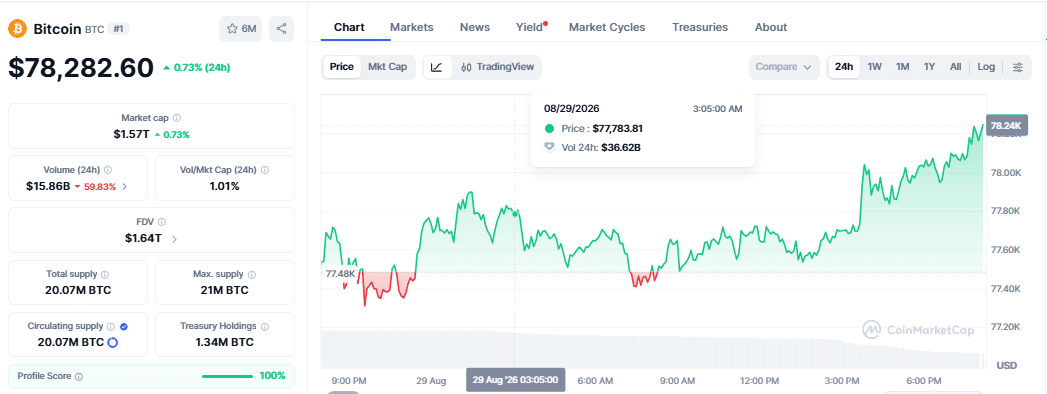
The drop followed an earlier move toward $81,200 during the week. Bitcoin then faced selling pressure after failing to hold above $80,000.
Fed comments add to market pressure
The market also had to deal with comments from Federal Reserve Chair Kevin Warsh at Jackson Hole.
Warsh said inflation remained above the Federal Reserve’s 2% target. He said the Fed’s preferred inflation measure was running at 3.7% over 12 months and 4.1% over six months.
Although Warsh did not say the Fed would raise interest rates, his comments reduced hopes for easier monetary policy in the near term.
This matters for Bitcoin because higher interest rates can make cash and government debt more attractive. That can leave less money available for riskier assets such as cryptocurrencies.
Ether ETFs keep attracting money
While Bitcoin ETFs saw money leave, spot Ether ETFs continued to move in the opposite direction.
According to Farside, Ether ETFs recorded $102 million in net inflows on August 28, extending their positive run to 10 straight sessions. Earlier in August, the funds attracted $2.6 billion during their strongest inflow week since October.
This means investors have not completely stepped away from crypto ETFs. Instead, the latest data shows a clear difference between Bitcoin and Ether funds.
For Bitcoin ETFs, the next few trading sessions will be important. Another series of outflows would give a stronger sign that demand is weakening. But for now, one negative session has ended a nine-day winning run without wiping away the strong inflows recorded during the period.
Also Read: Will 2026 Break BTC’s Green Aug To Red Sep Pattern?