Thirty-nine state bankers associations across the United States have grouped to build a shared, bank-controlled blockchain network intended to carry tokenized deposits, regulated stablecoins, automated settlement, and programmable payment tools, with the coalition aiming to bring the system online sometime in 2027.
The group, calling itself the BankChain Alliance, made the effort public on Tuesday and framed it as an attempt to keep the next generation of payment rails inside the regulated banking perimeter rather than leaving that ground to outside technology providers.
The alliance says the network will be industry-owned, industry-designed, and industry-governed, and that it will be built on a common blockchain platform. According to figures published by the group in its announcement and reproduced across trade coverage, the 39 participating associations collectively represent 3,283 banks that hold a combined $21.8 trillion in assets. That figure describes the balance sheets of the represented lenders, not the value of the proposed network or of any assets that would move across it.
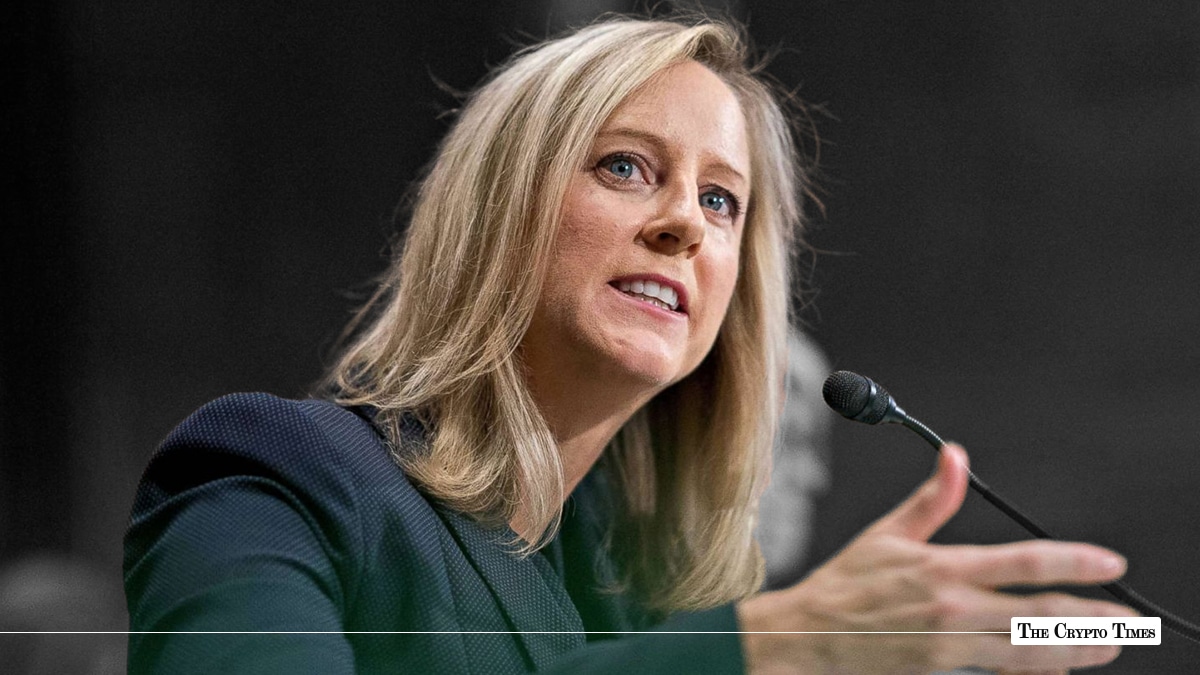
Kathy Kraninger, who is serving as interim chair of the alliance while also leading the Florida Bankers Association, said the collaboration is about “banks of all sizes building their own future.” Kraninger, a former director of the Consumer Financial Protection Bureau under the first Trump administration, said the network is being built so that institutions of every size can offer modern digital banking capabilities without giving up the security standards or regulatory expectations customers already associate with their banks.
A technology partner has not been chosen yet. BankChain Alliance said it is running a formal selection process and has confirmed only that the platform is intended to be interoperable with other networks and will invite ownership from banks across the country. No individual banks have publicly committed to ownership so far, according to the announcement and subsequent trade coverage.
A crowded field of bank-led ledger projects
BankChain Alliance is arriving in a market where several bank-led blockchain efforts are already in various stages of build-out. The Clearing House, the New York-based payments company owned by 25 of the country’s largest banks, said in June that it would operate a tokenized deposit clearing and settlement network targeting a mid-2027 launch.
JPMorgan Chase, BMO, BNY, Citi, Citizens, Fifth Third, and HSBC are among the institutions involved in the effort, which is designed to let a tokenized deposit at one member bank settle against a tokenized deposit at another under common rules.
Regional lenders have taken a separate route through the Cari Network, a permissioned blockchain platform led by former Comptroller of the Currency Eugene Ludwig. According to Cari’s own materials, the network was developed with five founding regional bank partners: Huntington National Bank, First Horizon, M&T Bank, KeyBank, and Old National. Cari announced a minimum viable product in March 2026, with a pilot planned for the third quarter and commercial deployment targeted for the fourth. In an August update, Cari said commitments had grown to more than 30 banks representing roughly $10 trillion in assets, with about 40 additional institutions in discussions.
Community bankers have their own vehicle in the DTX Consortium, formed by the Independent Bankers Association of Texas. IBAT said in an April 28 statement that the consortium had passed 40 bank participants, including institutions headquartered outside Texas. A June update on the association’s site put membership at more than 50 banks. On July 22, IBAT announced that it had selected Rimark, Infinant, and Privacy Lock as technology partners for the pilot.
Christopher Williston, IBAT’s president and chief executive, framed the community-bank effort in explicit terms in a June statement on the association’s site, saying it was “more important than ever that community banks band together to build their own future in tokenized deposits” and that the group wanted to “avoid a repeat of Zelle, where the big banks pushed technology down to us as a cost center only.” That comment, made in response to The Clearing House announcement rather than to BankChain Alliance, illustrates the underlying tension the new state-association coalition is trying to resolve.
BankChain Alliance is positioning itself as broader than any of those. Its pitch is that a single shared platform, built under the umbrella of state trade groups that already speak for thousands of institutions, can spare smaller banks the cost of standing up individual ledgers while still giving them a seat at the ownership table.
Regulatory backdrop and policy positioning
The push comes about 13 months after the passage of the Guiding and Establishing National Innovation for U.S. Stablecoins Act, commonly called the GENIUS Act, in July 2025. That statute set the first federal framework for payment stablecoins and, notably for this initiative, permits banks to hold stablecoins and reserves in custody, use blockchains, and issue tokenized deposits. The Federal Deposit Insurance Corporation followed with a proposed rule in April 2026 addressing supervision of stablecoin issuers under its purview and clarifying the treatment of tokenized deposits held on insured balance sheets.
State associations behind BankChain have also been active on Capitol Hill. The group sent a letter to the Senate on July 13 urging tighter language on stablecoin yield rules in the pending CLARITY Act, arguing that any allowance for indirect interest on such instruments would undercut deposit-taking institutions. That position mirrors the broader industry stance in favor of the strict yield prohibition in GENIUS.
What is still unclear
Several important details remain unsettled. The alliance has not named a technology vendor and has not published technical specifications, including the consensus mechanism, whether the network will be permissioned, or how it will connect with the Federal Reserve’s FedNow service and The Clearing House’s RTP and CHIPS systems. Governance rules for how member banks would vote on protocol changes, and a cost structure for participation, have also not been disclosed.
Independent analysts have flagged the interoperability question as central to whether any of the parallel bank-led networks succeed. James Wester, director of crypto at Javelin Strategy & Research, has noted in industry commentary that tokenized deposits are of limited use if they stay confined to a single bank’s proprietary ecosystem, an observation that applies with equal force to the BankChain effort until it settles how it will interconnect with the other consortia already in build-out.
Consumer uptake is another open question. Bank of America’s payments chief Mark Monaco has said publicly that clients are not aggressively asking for tokenized deposit products, even as senior executives at large lenders describe the shift toward on-chain money in sharper terms. Industry reporting on the mid-2027 bank efforts has described internal enthusiasm at member institutions as measured rather than urgent, a signal that adoption curves may lag the timelines being set by planners.
Participating associations
The 39 state groups that signed on include the Alabama, Arkansas, Connecticut, Delaware, Florida, Georgia, Hawaii, Idaho, Indiana, Iowa, Kansas, Maine, Maryland, Massachusetts, Michigan, Minnesota, Mississippi, Missouri, Nebraska, Nevada, New Hampshire, New Jersey, North Carolina, North Dakota, Oklahoma, Oregon, Pennsylvania, Rhode Island, South Carolina, South Dakota, Tennessee, Texas, Utah, Vermont, Virginia, Washington, Wisconsin, and Wyoming Bankers Associations, along with the Ohio Bankers League.
Whether BankChain Alliance can move from announcement to production ledger on the timeline it has set will depend on the technology partner it selects in the coming months, the number of individual banks that convert general trade-association support into direct equity commitments, and how quickly federal regulators finalize the rulebook around tokenized deposits under the GENIUS Act.
The competitive picture will also depend on whether the alliance chooses to keep the network permissioned within its membership or to open it up in some form to the other bank-owned tokenization efforts already underway at The Clearing House, Cari, and the DTX Consortium.
Also Read: Japan Weighs Blockchain-Based Settlement for Stocks, Government Bonds