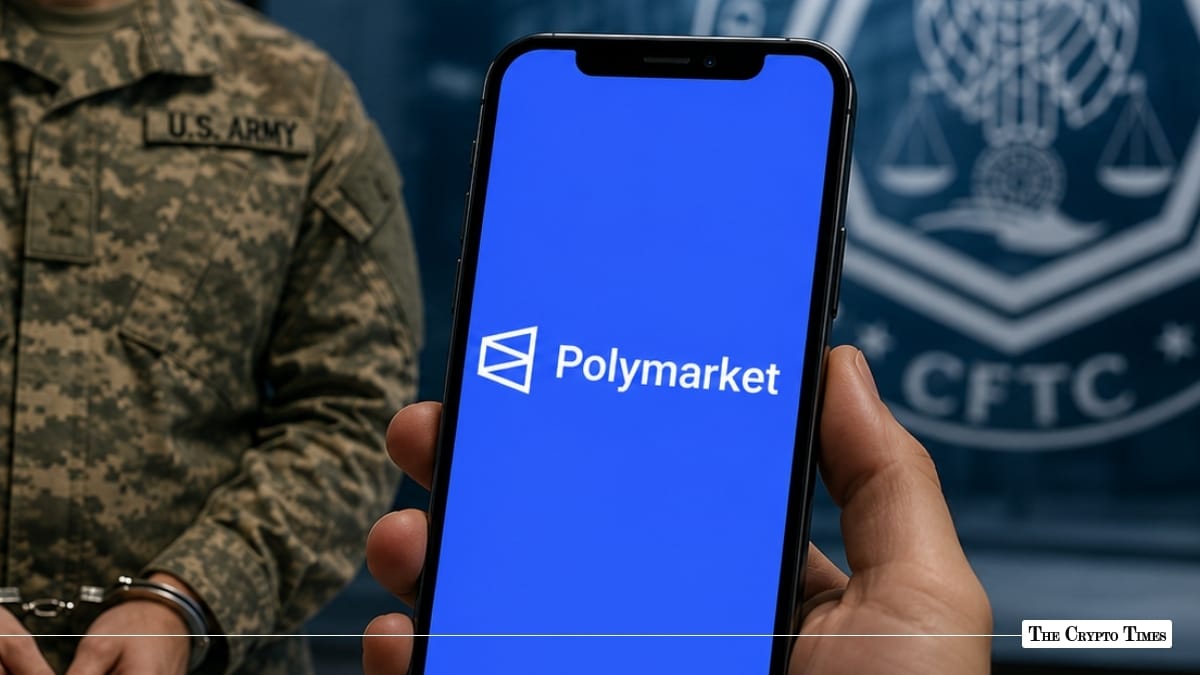
Lawyers for Gannon Ken Van Dyke, the active-duty U.S. Army soldier accused of using nonpublic information to trade on the prediction market Polymarket, have urged a federal judge to reject the Commodity Futures Trading Commission’s (CFTC) request to weigh in on his criminal case.
In a filing dated August 24, 2026, in the U.S. District Court for the Southern District of New York (SDNY), Van Dyke’s defense opposed the CFTC’s request for permission to submit an amicus, meaning “friend of the court,” brief addressing several of his defense arguments. Van Dyke has pleaded not guilty, and the allegations against him have not been proven in court.
What the Defense Argued
According to the August 24 defense filing, the CFTC had asked the court for permission to present its views on several of Van Dyke’s arguments, including the defense position that event contracts on platforms such as Polymarket do not qualify as “swaps” subject to the agency’s authority.
Van Dyke’s lawyers have argued that the CFTC is not acting as a neutral friend of the court but is instead attempting to advance its interests in a separate civil enforcement action through an amicus filing. The defense described the agency as “a regulatory wolf” and asked the court to reject its request.
The CFTC has separately argued that the event contracts at issue fall within the commodities laws it administers. The defense disputes that interpretation and has raised the issue as part of its motion to dismiss.
The Crypto Times has not independently characterized the parties’ legal positions beyond their court filings and public positions, and has attributed the arguments to the respective parties.
Background: The Alleged $400K Polymarket Bets
Federal prosecutors have alleged that Van Dyke, whom court filings describe as an active-duty U.S. Army Special Forces soldier from North Carolina, used nonpublic information tied to “Operation Absolute Resolve,” a mission to capture former Venezuelan President Nicolás Maduro and his wife, Cilia Flores, to place bets on Polymarket.
According to the CFTC’s complaint, between December 30, 2025, and January 2, 2026, Van Dyke bought more than 436,000 “Yes” shares of a contract on whether Maduro would be out of power by January 31, 2026, trading under the handle “Burdensome-Mix.”
The CFTC said the trades generated more than $404,000 in profits, while the Justice Department’s indictment put the figure at approximately $409,881. Investigators have also alleged that Van Dyke later attempted to conceal the activity by moving proceeds to a foreign crypto wallet and requesting deletion of his Polymarket account.
These remain allegations, and no court has found that Van Dyke committed insider trading.
The CFTC has described the matter as its first insider-trading enforcement action involving event contracts and its first use of the “Eddie Murphy Rule,” a Dodd-Frank provision concerning trading based on material, nonpublic government information.
Two Cases, One Stay
Van Dyke faces two parallel proceedings in the SDNY: a criminal case brought by the U.S. Attorney’s Office and a civil enforcement action brought by the CFTC. The criminal indictment was unsealed on April 23, 2026. The CFTC separately filed its civil enforcement complaint against Van Dyke.
On August 10, 2026, U.S. District Judge Andrew Carter granted a stay of the CFTC’s civil case pending the outcome of the criminal proceeding, after prosecutors argued that the two matters involved substantially overlapping conduct and evidence. Van Dyke had opposed the stay and sought to litigate both cases simultaneously.
The stay did not dismiss the CFTC’s complaint or determine whether Van Dyke violated commodities law.
That sequence is central to the current dispute. With the CFTC’s own civil case paused, Van Dyke’s defense is now challenging the agency’s attempt to participate in the criminal proceedings through an amicus brief.
The Legal Question Over Prediction-Market Contracts
The procedural dispute also raises a broader question over the legal status of prediction-market event contracts.
Van Dyke’s lawyers argue that the contracts at issue do not qualify as “swaps” under the Commodity Exchange Act and have raised that issue in seeking dismissal of the criminal indictment. The CFTC, meanwhile, has argued that the commodities laws it administers are relevant to the contracts at the center of the case.
The court’s treatment of that question could affect how similar event contracts are evaluated under U.S. commodities law, including contracts offered through prediction-market platforms.
The issue is relevant beyond Van Dyke’s case as prediction markets such as Polymarket and Kalshi face growing scrutiny over the legal classification and regulatory treatment of event contracts. The Crypto Times is not predicting the outcome of the case or the court’s interpretation of the contracts.
What Happens Next
The court has yet to rule on whether the CFTC may file its proposed amicus brief. Van Dyke’s motion to dismiss the criminal indictment also remains pending. The criminal proceedings remain ongoing, with the case expected to continue into late 2026 or early 2027, according to court reporting.
The immediate developments to watch are the court’s ruling on the CFTC’s amicus request, the defense’s motion to dismiss, and any further filings addressing whether the event contracts fall within the Commodity Exchange Act.
The Crypto Times has contacted the CFTC at 10:05 AM UTC for comment on the defense’s opposition. The article will be updated if the agency responds.
Also read: US Makes Iran’s Crypto Sector Sanctionable, Ties Broker to $100M in Crypto Oil Payments