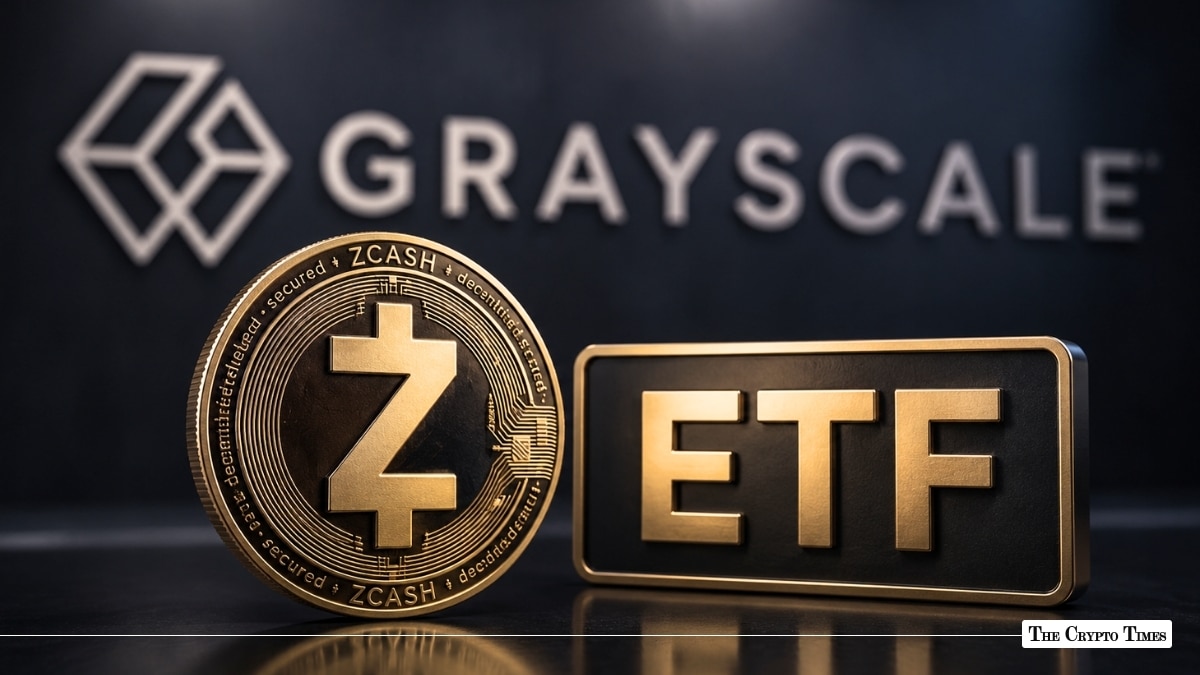
Grayscale Investments’ Zcash ETF began trading on NYSE Arca on Tuesday under the ticker ZCSH, becoming the first U.S. exchange-traded product to offer spot exposure to a privacy-focused cryptocurrency.
The listing follows a Certificate of Amendment filed with the Delaware Secretary of State on August 24, 2026, which formally renamed the vehicle from Grayscale Zcash Trust (ZEC) to The Zcash ETF, according to the fund’s prospectus.
The fund uplists from the OTCQX marketplace, where its shares had been quoted since October 2021 under the same ZCSH ticker. As of August 20, 2026, the closing price on OTCQX was $45.34, a 1% discount to net asset value per share, the prospectus states. The Trust reported a NAV of $155.16 million and a NAV per share of $32.13 as of June 30, 2026.
Fund structure, fees and service providers
The Trust is sponsored by Grayscale Investments Sponsors, LLC, a consolidated subsidiary of Digital Currency Group (DCG). Coinbase Custody Trust Company, LLC serves as custodian, Coinbase, Inc. as prime broker, and The Bank of New York Mellon as transfer agent and administrator. The sponsor’s fee accrues daily at an annualized rate of 2.5% of the NAV Fee Basis Amount, payable in ZEC.
Shares are issued and redeemed in blocks of 10,000, referred to as Baskets. Creations may occur through either in-kind delivery of ZEC or Cash Orders, while redemptions are currently available only through Cash Orders, the filing states.
The engaged liquidity providers are JSCT, LLC (an affiliate of Jane Street), Virtu Financial Singapore Pte. Ltd. and Galaxy Digital Trading Cayman LLC. Jane Street Capital and Virtu Americas serve as authorized participants, positioning them to arbitrage any deviation between the ETF’s market price and its underlying NAV.
The fund’s NAV is calculated with reference to the CoinDesk Zcash Benchmark Rate, which replaced the CoinDesk Zcash Price Index (ZCX) as the Trust’s reference index on April 1, 2026. Constituent trading platforms as of June 30 are Binance, Gemini, Kraken and OKX, weighted by 24-hour trading volume.
DCG contribution arrangement
The prospectus discloses that DCG International Investments Ltd., a wholly owned indirect subsidiary of Digital Currency Group, is in non-binding discussions to acquire contribution shares through an authorized participant in exchange for approximately 200,000 ZEC tokens, valued at roughly $170 million at prevailing prices. The sponsor cautions that the arrangement is not a commitment and DCG could ultimately purchase more, fewer, or no shares.
The Trust already held approximately 2.3% of ZEC in circulation as of June 30, 2026, which translates to close to 391,000 ZEC. If completed, the potential DCG contribution would raise concentration considerations for the fund’s free float and introduce a related-party dynamic between the sponsor’s parent and the largest holder.
Historical premium and discount profile
Between October 18, 2021 and June 30, 2026, ZCSH’s OTCQX-quoted shares traded at a maximum premium of 240% to NAV per share and a maximum discount of 55%, with an average premium of 53% and an average discount of 19% over the period, the prospectus notes. Closing quotes were at a discount on 700 days across that window.
The conversion to an ETF introduces continuous share creation and redemption. Under the arbitrage mechanism, authorized participants are expected to create shares when the market price trades above NAV and redeem when it trades below, tightening the historical gap that shaped returns for OTCQX-era holders.
ZEC price and network context
Zcash traded at $849.58 at press time, up 2.17% over the past 24 hours, with a session range of $799.36 to $867.66, per CoinMarketCap. The privacy asset’s market capitalization stands at $14.3 billion, ranking it the tenth-largest cryptocurrency, with a circulating supply of 16.83 million ZEC against a 21 million hard cap. Twenty-four-hour spot volume registered $1.47 billion.
The token has printed its highest levels since 2018, having briefly touched near $853 on August 23. It remains 85.7% below its all-time high of $5,941.80 recorded on October 29, 2016, but sits more than 5,200% above its July 5, 2024 low of $15.97.
Network-side catalysts have compounded the ETF-driven bid. The Ironwood NU6.3 upgrade activated on July 28 opened a new shielded pool and introduced a protocol-level turnstile mechanism, retiring the legacy Orchard pool that was affected by a soundness vulnerability disclosed in June 2026. More than 182,000 ZEC have migrated to the new pool since activation.
Zcash was launched on October 28, 2016 by a team led by Zooko Wilcox-O’Hearn. The protocol uses Zero-Knowledge Succinct Non-Interactive Arguments of Knowledge (zk-SNARKs) to enable shielded transactions that conceal sender, recipient and amount while preserving auditability through viewing keys and selective disclosure.
As of Grayscale’s most recent research note dated August 2026, shielded transactions accounted for roughly 90% of Zcash transaction activity as of July 20.
Analyst take
The debut extends Grayscale’s trust-to-ETF conversion strategy that began with GBTC in January 2024 and now spans Bitcoin, Ethereum, Solana, XRP, Dogecoin and a range of thematic products. Two structural questions will shape ZCSH’s early trajectory.
The first is fee competition. At 2.5%, ZCSH’s sponsor fee sits materially above the 1.5% Grayscale charges on GBTC and well above the sub-0.3% expense ratios common among competing spot bitcoin funds. Compression will hinge on whether rival issuers file competing privacy-coin products.
The second is regulatory jurisdictional exposure. The prospectus flags that some jurisdictions, including the European Union, have passed legislation restricting privacy-preserving tokens, and that a determination that ZEC involves a “security” transaction could trigger extraordinary expenses or termination of the Trust. For institutional allocators, that risk profile makes ZCSH a distinct product from the broader bitcoin and ether ETF cohort.
The launch also raises the bar for further privacy-asset ETF filings. With the SEC’s September 2025 generic listing standards already in force, the path for rival privacy-token products has narrowed to a benchmark and custody question rather than a Section 19(b) proceeding.
Also Read: US Treasury Launches Quantum Task Force With Dedicated Digital Assets Workstream


![Logos of Hyperliquid Policy Center and Trade[XYZ] in front of the Commodity Futures Trading Commission (CFTC) seal](https://www.cryptotimes.io/wp-content/uploads/2026/08/Hyperliquid-and-TradeXYZ-Push-CFTC-to-Onshore-500B-Oil-Perpetuals-Market-420x280.jpg)