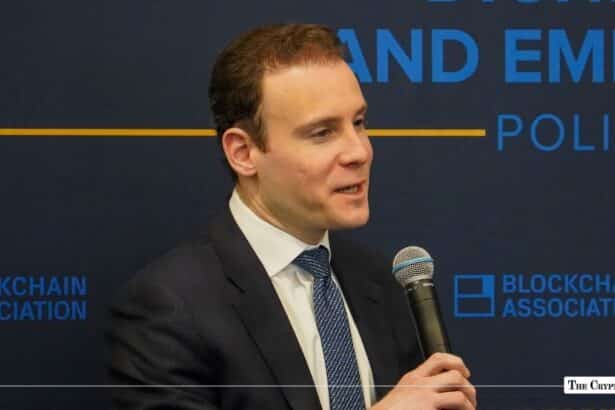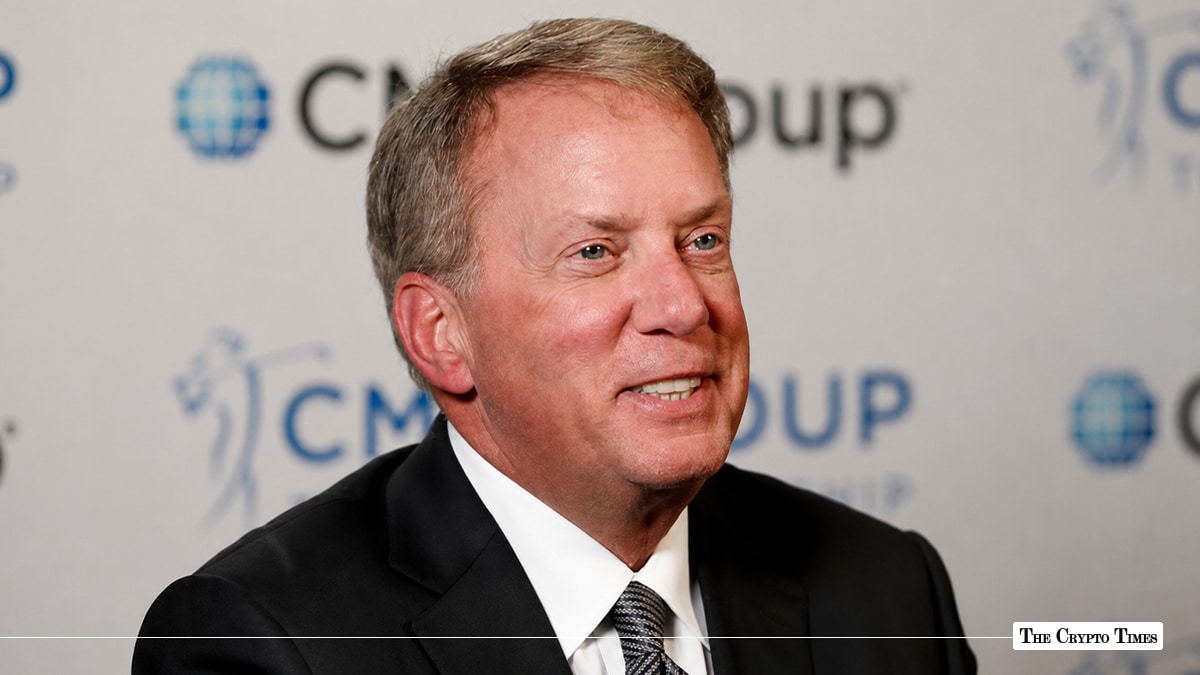
Roughly 2,500 event contracts have been self-certified since January 2025, and none has been opposed by regulators, CME chief executive Terrence Duffy told the Commodity Futures Trading Commission’s (CFTC’s) inaugural Innovation Advisory Committee meeting on Thursday.
Duffy said a number of those self-certifications covered products that violate Core Principle 3, the requirement that a contract not be readily susceptible to manipulation. “There’s no doubt about it,” he said. “And if you don’t think that’s true, then you don’t watch the news.”
Self-certification allows a registered exchange to list a new contract by filing it with the CFTC and certifying that it complies with the law, rather than seeking prior approval. The Commission can review or stay a filing but is not required to act.
“We’re Not a Bunch of Carnival Barkers”
Duffy pointed to markets on the ousting of Venezuelan President Nicolás Maduro and on President Trump’s teleprompter and said some sporting contracts that are not purely outcome-based are being manipulated.
“That is not good for our industry. That is horrible for our industry,” he said. “We’re not a bunch of carnival barkers at a circus. We are running the most envious markets in the world in the United States of America.”
He linked the point to the administration’s stated aim of making the US the crypto capital of the world. “We don’t want to chase our own participants out of our own markets either,” he said. “And by listing susceptible markets to manipulation, it is really doing the opposite of what we’re trying to effectuate.”
Duffy said he has supported crypto markets since 2017, when CME listed bitcoin futures, and described the company as a big crypto franchise. CME has listed more than 100 million event contracts since entering the market last year.
Selig Interrupted, and Duffy Accepted the Correction
CFTC Chairman Michael Selig interrupted to say the products Duffy cited were not listed in the United States. “They never were. This occurred offshore, and that’s fake news.”
“Fake news? Okay, that’s a cute comment, too,” Duffy replied, before asking whether Selig was suggesting some sports events were not listed in the US.
Selig said the Maduro contract and the teleprompter-related contract were not listed in the United States. Duffy said he understood and that they were on Polymarket. Selig said they were listed overseas and asked whether that was fair. “Yes, that’s the answer,” Duffy said.
Duffy then returned to the teleprompter case, saying the president’s own teleprompter operator was involved in manipulation and that it was not good and that he understood an investigation was under way. “I’m just bringing it up. That’s not good for markets,” he said. “We can get into a back and forth if you like. I’m happy to do that, too.”
Trump’s longtime teleprompter operator has been accused of using inside knowledge to place bets on Kalshi tied to the State of the Union address, and a US soldier has been accused of trading on Polymarket using intelligence about Maduro’s capture. Neither has been convicted.
Duffy Raises Compute Contracts and Cantor
Duffy said Kalshi had already been approved for a prediction market on compute, while listed contracts on the same subject were going through long review processes, which he said made no sense.
“Now Cantor Fitzgerald is now partnering with Kalshi on that compute,” he said. “Okay, we’ll just call that a coincidence.”
Duffy provided no evidence of any connection between the approvals and the partnership. The Crypto Times contacted the CFTC for comment at 7:18 am UTC.
Offshore Perpetuals and VPN Access
Duffy said perpetual futures on Xtrade.xyz and Hyperliquid are having an impact on US markets and are illegal for US participants.
“I would have to ask the Commission what they are doing to police everybody’s VPN where they are not accessing these markets,” he said. “They are having an impact on this, but yet we are being held up; others are being held up. Kalshi is being held up on trying to list 24/7 markets.”
The comments came a day after President Trump said at a White House meeting that Selig is working to bring Hyperliquid into the United States in a fully compliant and legal fashion. Hyperliquid’s front end blocks US IP addresses, and its terms treat US persons as restricted.
Duffy said he expects all markets to move to round-the-clock trading eventually and that the banking system and federal government will need to follow.
Selig Signals Further Rulemaking
Selig said during the meeting that the Commission expects to propose amendments to Parts 38 and 40 of its regulations governing designated contract markets that list event contracts, covering consumer protection, product governance, market design, and incentive programs. He said the agency had heard public criticism that its existing consumer safeguards were inadequate.
The Crypto Times covered the meeting live, including Selig’s remarks on a possible CFTC-regulated market structure for crypto assets, reported separately.
Duffy closed by saying a level playing field matters and consumers must always be protected, citing the 2008 and 2009 financial crisis. “The best way to ruin a market—and I guess I’m old enough to recall in 2008 and nine—when the financial industry takes bad behavior, it doesn’t take a step backwards. It takes 20.”
Also Read: Coinbase’s Armstrong: Clarity Coming Either Way — Senate Vote or CFTC-SEC Rules