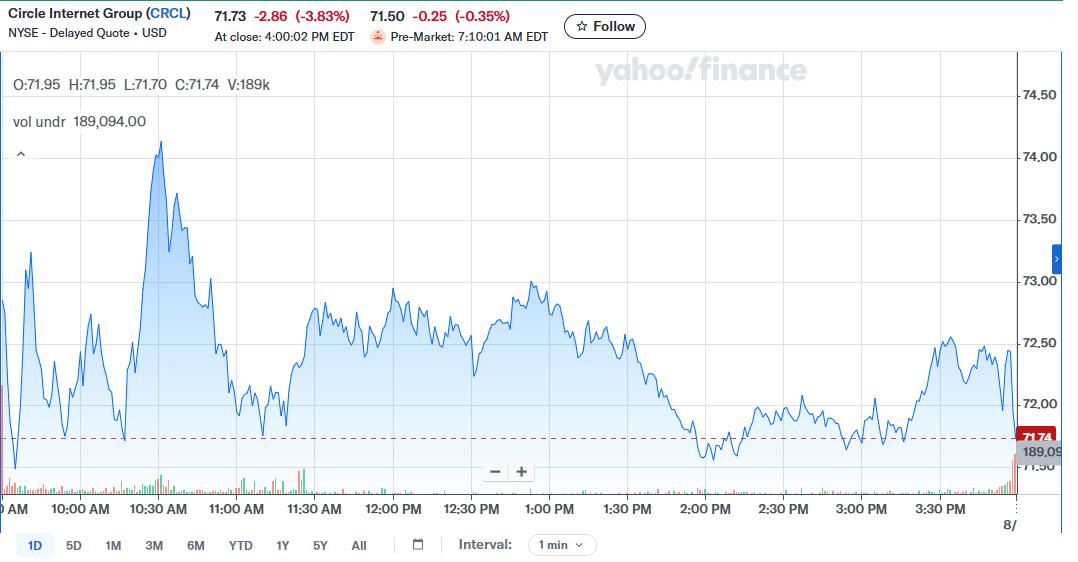
Three of the most prominent crypto-linked stocks fell together in the latest session, a pattern that usually signals a shared cause rather than three coincidental company stories. According to market data, Robinhood Markets (Nasdaq: HOOD) closed down 4.90% at $91.53, Coinbase Global (Nasdaq: COIN) fell 2.87% to $146.23, and Circle Internet Group (NYSE: CRCL) dropped 3.83% to $71.73. In pre-market trading the following morning, all three were little changed, suggesting the bulk of the move came during the regular session.
The most telling detail is what Bitcoin did, or rather, didn’t do. The cryptocurrency held relatively firm near $64,400 as of publishing even as these equities sold off, meaning the stocks fell by more than their underlying market. That divergence is the key to understanding the move: it was driven by a broad shift away from risky assets, and crypto stocks, which tend to amplify swings in sentiment, took the brunt of it.
The Shared Catalyst: A Risk-Off Macro Backdrop
The common thread pulling all three stocks lower was a deterioration in broad market risk appetite. Rising U.S. Treasury yields and a rebound in oil prices have been draining demand for higher-risk assets, pressuring high-beta crypto equities even while Bitcoin itself stayed relatively stable. When bond yields rise, safer assets like government debt become more attractive relative to speculative, growth-oriented stocks, and richly valued crypto-linked names are among the most sensitive to that shift. Higher oil prices compound the effect by stoking inflation concerns, which can push rate-cut expectations further out.
Much of that yield pressure ties directly to the Federal Reserve. The 10-year Treasury yield has climbed toward 4.68% even after in-line inflation data, reflecting the market’s awareness that three Fed officials dissented in favor of a rate hike at the July meeting. That hawkish backdrop sets up a pivotal week: the minutes from that July meeting are due Wednesday, August 19, giving markets their clearest read yet on how close the hawkish minority came to prevailing, followed by the Fed Chair’s Jackson Hole keynote on August 27–29. Investors often de-risk ahead of such events, and crypto stocks, among the most rate-sensitive corners of the equity market, tend to feel that caution acutely. In other words, the sell-off looks less like a verdict on crypto and more like positioning ahead of key signals on the path of interest rates.
This dynamic has been building for weeks. Glassnode noted that Bitcoin has underperformed the S&P 500 in two of the last three trading sessions and has beaten the index on only about a third of trading days over the past three months, a sign that crypto has been losing its relative momentum against traditional equities. In that environment, the stocks most exposed to crypto sentiment tend to fall faster than Bitcoin on down days, exactly as they did here.
It is worth emphasizing what this was not: there was no evidence of a company-specific disaster at Robinhood, Coinbase, or Circle driving the session’s losses. The uniformity of the decline across three businesses with quite different models is itself the strongest clue that the cause was external and macro, not internal.
Why Each Stock Is Sensitive in Its Own Way
Although the three fell together, they are exposed to crypto through different channels, which is worth understanding.
Coinbase is the most directly tied to crypto market activity. As the largest U.S. crypto exchange, a substantial share of its revenue comes from trading fees, so it is highly sensitive to both crypto prices and trading volumes. When sentiment sours and volumes thin out, Coinbase’s revenue outlook is pressured, and its stock tends to move sharply with the market’s mood.
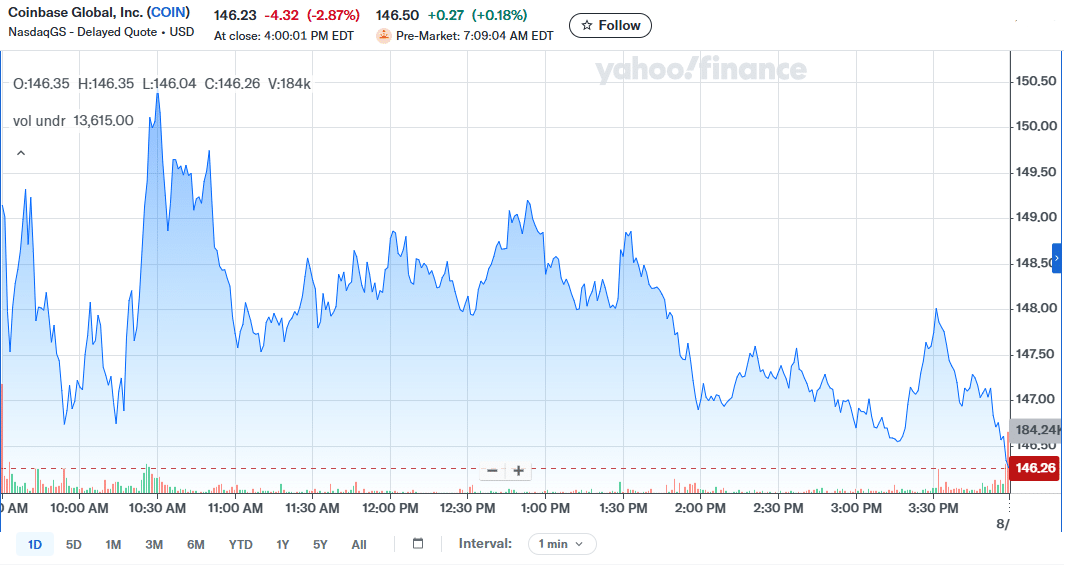
Robinhood is a more diversified brokerage, offering stock, options, and crypto trading, and increasingly other financial products; but it still generates a meaningful portion of its revenue from crypto transactions. That makes it a crypto-sentiment proxy on risk-off days, even as the company works to reduce its dependence on digital-asset trading. Notably, HOOD was the hardest hit of the three in this session, down nearly 5%.
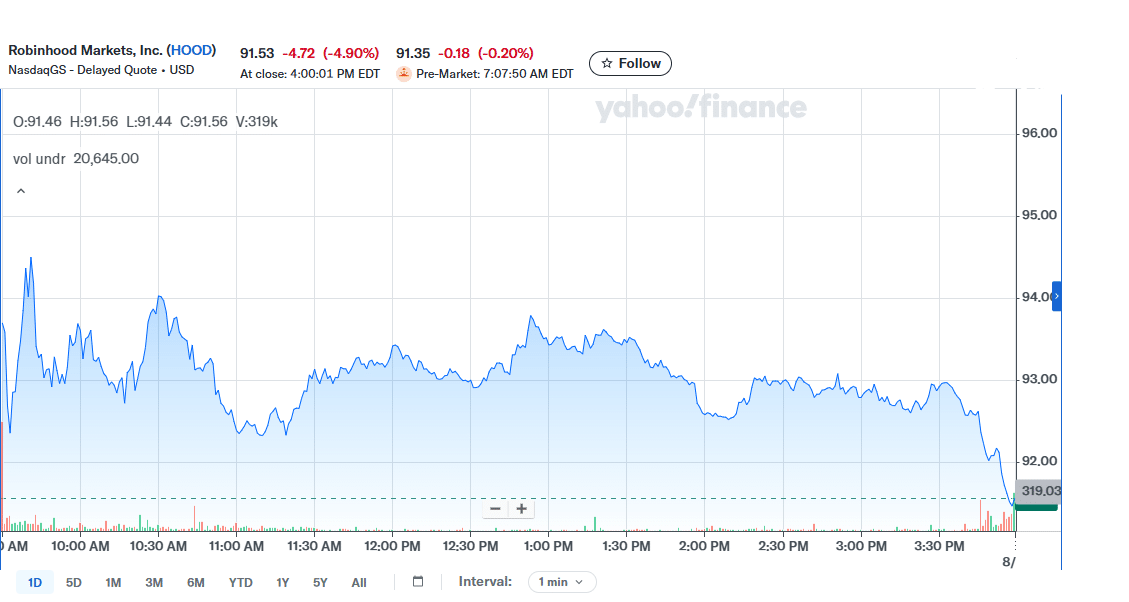
Circle is exposed through a different mechanism: it is the issuer of USDC, the second-largest stablecoin, and its business is tied to the health of the broader stablecoin and digital-asset ecosystem. Circle’s revenue also depends heavily on the interest income earned on the reserves backing USDC, which makes it particularly sensitive to interest-rate expectations, a notable link on a day when rising yields were part of the story. Weaker crypto sentiment can also weigh on stablecoin demand and circulation, another channel through which macro pressure reaches its shares.
The Bigger Picture
The session fits a broader theme that has defined 2026 for crypto equities: a market caught between a relatively resilient Bitcoin price and a challenging macro backdrop for risk assets. Capital has at times rotated toward semiconductors and AI-infrastructure names, and crypto stocks have frequently traded as leveraged expressions of risk sentiment, outperforming on risk-on days and underperforming on risk-off ones. Recent sessions have also seen regulatory uncertainty add to the caution, including the SEC’s abrupt cancellation of a planned crypto-rulemaking meeting, though the immediate driver here was the macro backdrop of yields and oil.
For investors, the key takeaway is diagnostic rather than directional: when Bitcoin is steady but crypto stocks fall together, the explanation usually lies in the macro environment and these companies’ high sensitivity to risk sentiment, not in their individual fundamentals. Whether that macro pressure eases or intensifies will likely continue to drive these stocks in the near term more than any company-specific development. This report makes no prediction about where any of these stocks go next, and nothing here is investment advice.
Also Read: SpaceX (SPCX) Faces 319M Share Unlock After Reclaiming $135 IPO Price