The Blockchain Association filed an amicus brief on August 12 supporting Custodia Bank’s certiorari petition, docketed as No. 26-62.
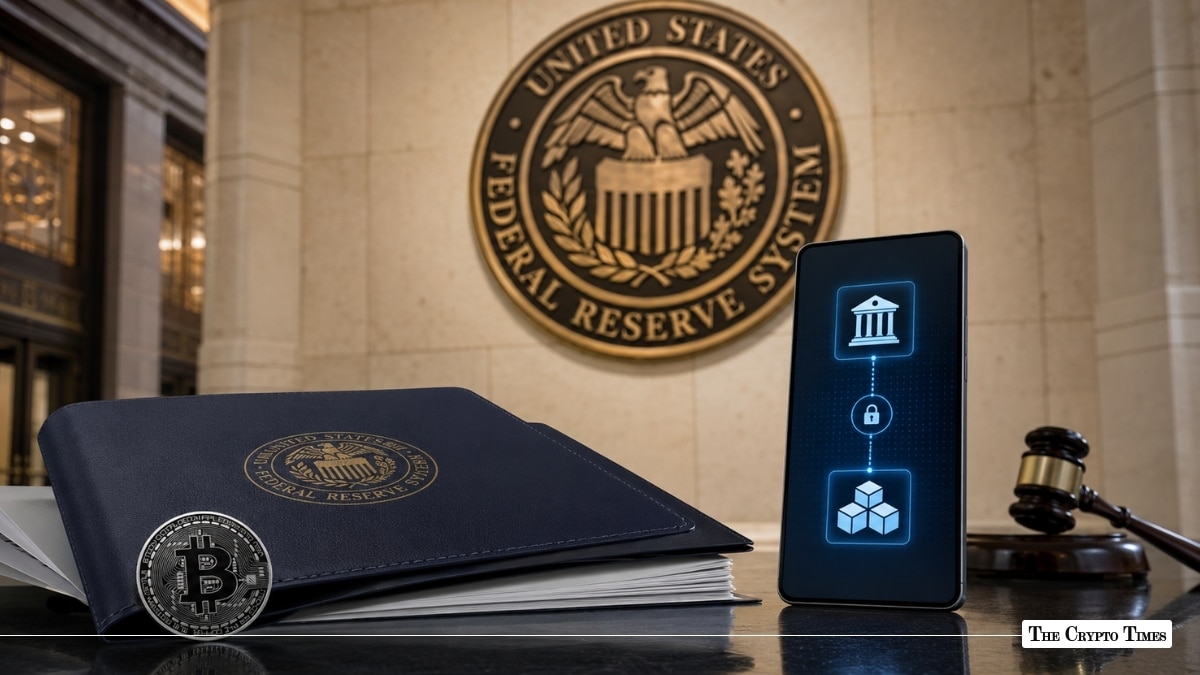
The Federal Reserve’s proposed Payment Accounts would deny digital-asset banks access to the automated clearinghouse system used for payroll and business-to-business payments, according to a brief the Blockchain Association filed at the Supreme Court on August 12 as a third party supporting Custodia Bank.
Three Limits Named in the Brief
The brief identifies three restrictions in the Fed’s proposal, published at 91 Fed. Reg. 30,627 on May 26. The accounts would lack access to FedACH, which the brief describes as the principal service used for payroll, consumer billing, and business-to-business payments in the United States. They would pay no interest on balances. And closing balances would be capped at $1 billion, which the brief calls a material constraint for large digital-asset firms.
The brief argues that the Monetary Control Act requires the Fed to provide automated clearinghouse services to all eligible institutions on a non-discriminatory basis, citing 12 U.S.C. § 248a(c)(2) and (b)(4). It states that firms would in practice continue relying on partner bank intermediaries for the majority of transactional volume, quoting a February report in Payments Dive that recorded critics describing the proposal as a skinny account.
The brief describes the proposal as an improvement over the status quo and a welcome retreat from what it calls the Fed’s open hostility over the previous decade, while arguing it signals the Fed may continue treating the industry as second-class.
Proposal Followed Trump’s Executive Order by Four Days
President Trump signed an executive order on May 19, published at 91 Fed. Reg. 30,475, directing federal regulators to reduce barriers to entry for fintech firms and requesting a comprehensive evaluation of the framework governing access to Reserve Bank payment accounts. The Crypto Times reported the order on May 20, when it set a 90-day deadline for regulators and 120 days for the Fed’s evaluation.
The Fed published its Payment Accounts proposal four days after the order appeared in the Federal Register.
Case Reached the Court in July
Custodia Bank filed its petition for a writ of certiorari on July 10, represented by Davis Polk & Wardwell with Kannon Shanmugam as counsel of record, which The Crypto Times reported at the time.
The Tenth Circuit affirmed the denial of Custodia’s master account on October 31, 2025, in a 2-1 panel decision, and in March declined to rehear the case before the full bench of the circuit by a vote of 7-3. The court held that the Federal Reserve Act and the Monetary Control Act grant Federal Reserve Banks discretion to approve or deny master account applications, which let a bank hold reserves at the Fed and settle payments directly rather than through another bank as an intermediary, from eligible entities, and that neither the statutes nor subsequent amendments mandate automatic access. The Crypto Times covered the panel ruling.
The Tenth Circuit majority stated that the Fed’s discretionary power over master accounts is necessary to protect national payment systems from risk. The Blockchain Association’s brief argues those concerns are not a basis to override the statutory text and lists tools it says Congress already provided: requiring extra balances, rejecting transactions at a zero balance, limiting holdings, and deny banks access to the discount window, the Fed’s short-term emergency lending facility.
Association Represents More Than 100 Companies
The Blockchain Association is represented by Gibson, Dunn & Crutcher, with Nick Harper as counsel of record alongside Stephanie L. Brooker, Matt Gregory, and M. Christian Talley. The brief states the Association represents more than 100 companies, including software developers, infrastructure providers, exchanges, custodians, and investors.
The brief states that no counsel for a party authored it and no party made a monetary contribution toward its preparation. The Crypto Times contacted the Blockchain Association for comment at 10:30 am UTC on August 12.
Brief Cites Kansas City Fed’s Earlier Assessment
The brief states that the Kansas City Fed told Custodia there were no showstoppers with its master account application and that the Federal Reserve Board later directed the Kansas City Fed to reverse course, sending it a redlined denial letter. Both statements cite the appendix to Custodia’s petition.
Custodia holds a Wyoming special purpose depository institution charter, under which it must back all customer deposits with high-quality liquid reserves and cannot lend against them, per Wyo. Stat. Ann. § 13-12-105(a). The brief notes that a Fed policy statement was published December 22, 2025, at 90 Fed. Reg. 59,731 recognized that state-chartered banks holding liquid assets equal to 100% of demand deposits and other short-term liabilities may minimize the risk of deposit runs and contagion.
Brief Raises an Appointments Clause Question
The brief argues that leaving the decision in place would give regional Federal Reserve Bank presidents unchecked authority over master accounts, which it says would make them inferior officers at a minimum and likely principal officers under Lucia v. SEC and United States v. Arthrex. Those presidents are not appointed by the President, a court of law, or a head of department.
Judge Timothy Tymkovich dissented at the Tenth Circuit, writing that the statutory text issues a command beyond the Fed’s discretion.