Key Highlights
- Vitalik Buterin’s updated Ethereum roadmap shows substantial overlap with his 2023 plan but reprioritizes several technical goals.
- Quantum safety and strong privacy have moved higher on Ethereum’s agenda, while some EVM improvements and verifiable delay functions have been deprioritized.
- Ethereum is exploring new state types, polynomial binary trees, native rollups, and aggressive post-quantum scaling approaches.
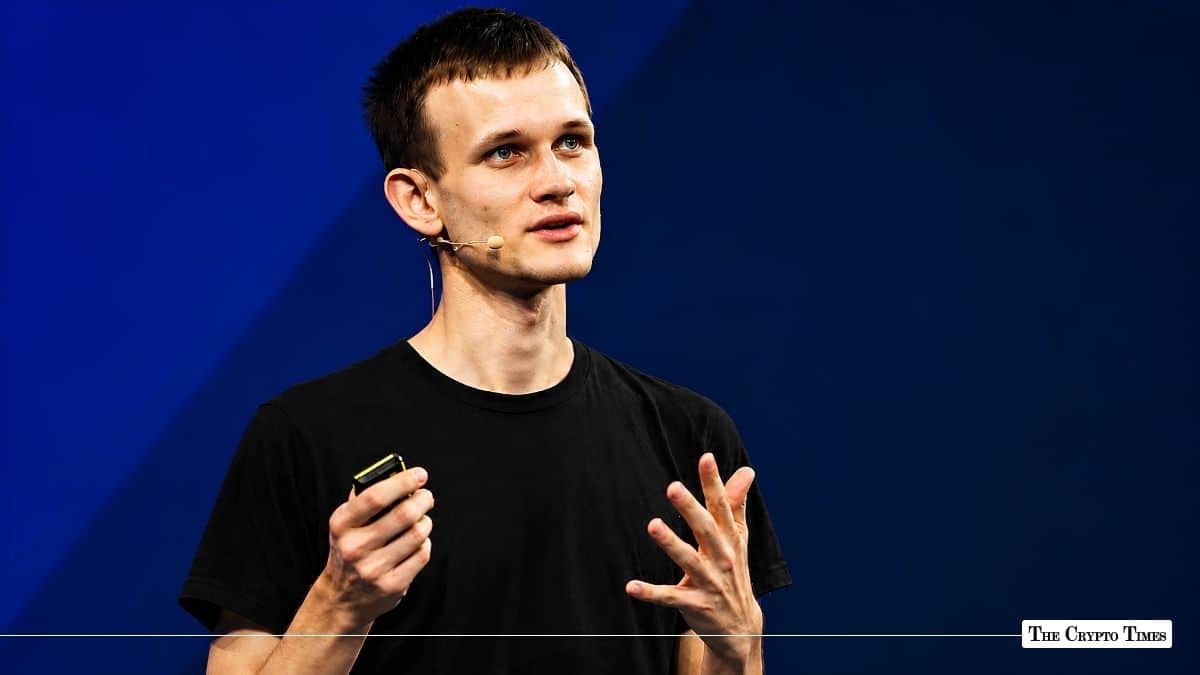
Ethereum co-founder Vitalik Buterin published an updated version of his 2023 roadmap on August 10, 2026, comparing the earlier diagram with Ethereum’s current “Strawmap.”
In an X post on Monday, Buterin noted substantial overlap between the two documents but said some items have been reordered. Quantum safety, for example, has moved higher in priority. Other items have been deprioritized, including verifiable delay functions and a range of Ethereum Virtual Machine improvements.
Certain constructions have also been replaced by alternatives that Buterin described as superior. These include the progression from Verkle trees to unified binary trees and then to polynomial binary trees, as well as the shift from state expiry to new state types.
What does the updated roadmap include
The post highlighted multiple elements present in the Strawmap that did not appear in the 2023 diagram. These additions include stronger attention to privacy, covering keyed nonces, recent roots, aspects of FOCIL, lean privacy pools, and wormholes.
The roadmap also includes scaling approaches designed for a post-quantum environment, including leanSPHINCS signatures and aggregation, as well as zkzk frames.
Buterin also included a “lean-ification” of the Ethereum specification to support formal verification. He said full formal verification of the protocol is feasible only with modern AI tools. Blob and gas futures, which were not concepts in the 2023 roadmap, also appear in the current map. Native rollups are included as well, with Buterin noting that SNARKs were not sufficiently mature for consideration in the earlier roadmap.
The updated map also leaves more room for changes to the EVM’s future architecture.
Ethereum explores alternatives to the EVM
The inclusion of zkzk frames points to the possibility of Ethereum exposing an instruction-set architecture other than the EVM to developers.
Buterin identified leanISA and RISC-V as leading candidates, describing them as simpler and more modern alternatives to the EVM. Under this approach, developers could eventually interact with these architectures directly, while the EVM could become an intermediate representation rather than remain a core protocol-level feature. Buterin said deeper exploration of this direction remains too early for inclusion in the Strawmap.
New state types are also presented as more than a replacement for state expiry. Buterin described them as a different approach to Ethereum scaling.
Common theme in scaling approaches
Buterin identified a common theme in the scaling approaches found in both new state types and zkzk frames. Another theme is the use of STARKs and AI-assisted formal verification as core elements of the technical plan. Recursive STARKs appear in multiple layers of the protocol.
One specific primitive, referred to as the aggregate-to-union verified dependencies primitive, is expected to be used in three places: the execution layer, the consensus layer, and the data layer.
Buterin said this approach can be considered safe only with formal verification, which itself depends on modern AI tools.
The updated roadmap lists several target properties for Ethereum, including quantum safety, stronger user privacy, security, censorship resistance, and greater performance and scalability while maintaining those properties. It also calls for a more “Lean” Ethereum specification.
Buterin’s broader view on AI
Buterin has previously published a detailed, multi-part analysis of the development of AI capabilities and its possible implications for humanity.
In that analysis, he examined AI capabilities across multiple dimensions rather than focusing solely on whether machines could surpass humans. His framework considered areas including physical tasks, strategic thinking, creativity, and emotional intelligence.
The discussion of AI-assisted formal verification in the updated Ethereum roadmap adds a technical application to Buterin’s broader interest in the capabilities of modern AI systems.
Also Read: Robinhood Stock Edges Lower as UK Crypto Expansion Gets Underway