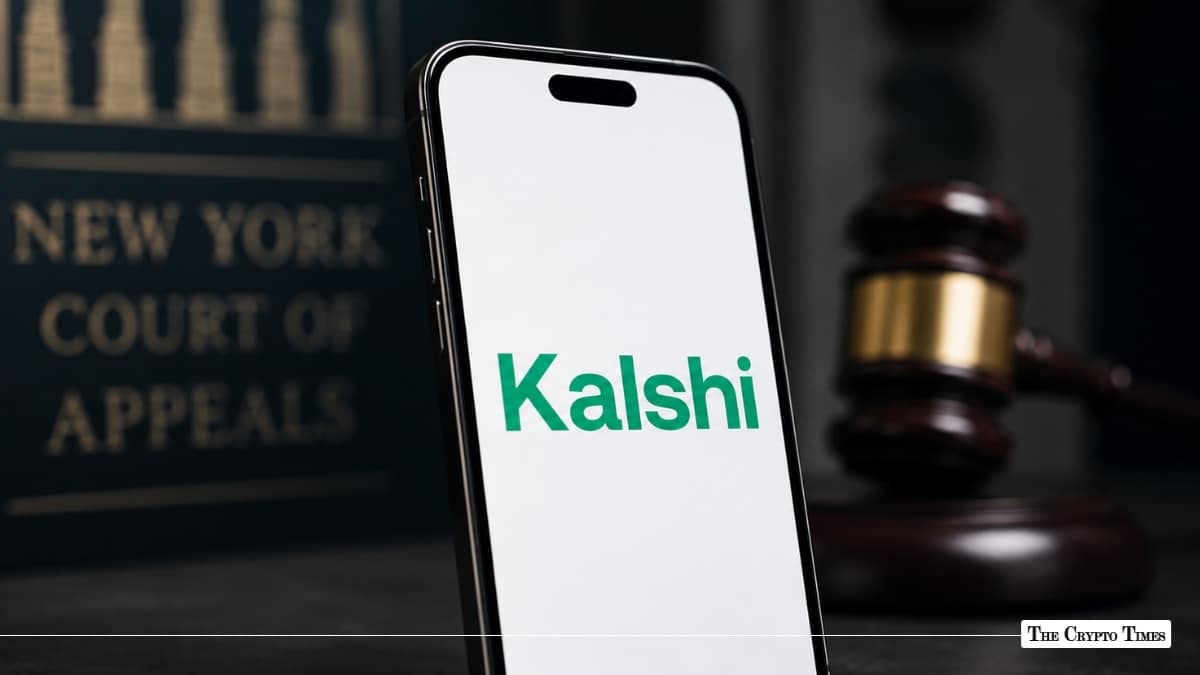
On July 29, a Second Circuit judge denied Kalshi’s bid for emergency relief from New York’s gambling enforcement and referred its broader injunction request to a three-judge panel, leaving the prediction-market operator without a temporary shield just as a deal pausing state penalties runs out. The narrow order stops short of resolving the appeal, but it removes the stopgap Kalshi had sought while the higher court weighs its case.
Inside the July 29 Order
Circuit Judge Myrna Pérez, sitting for the U.S. Court of Appeals for the Second Circuit, denied Kalshi’s motion “to the extent” it sought temporary administrative relief pending review by a three-judge panel, according to the order in KalshiEX LLC v. Williams, Docket No. 26-1835. Temporary administrative relief is an emergency stopgap that briefly holds the status quo while a court decides whether to grant fuller relief; Pérez declined to grant it.
She did not, however, rule on the underlying request. The order refers Kalshi’s motion for an injunction pending appeal, which would let the company keep operating in New York while the case is decided, to a three-judge panel. That motion remains open, and how quickly the panel acts is not yet clear.
The order followed two setbacks at the district level. On July 7, Southern District of New York Judge Analisa Torres denied Kalshi’s preliminary injunction, and in late July she rejected a second Kalshi motion, this one seeking to keep operating pending the appeal.
Why the Timing Matters
The appellate order arrived a day before a negotiated moratorium—under which New York had agreed to hold off on seeking penalties—was set to expire. With that pause lapsing and no temporary shield in place, New York regulators are positioned to move against Kalshi while the three-judge panel considers the injunction.
New York Attorney General Letitia James has disputed Kalshi’s legal theory and, according to reporting on the case, is expected to pursue a civil enforcement action in state court seeking restitution, disgorgement, civil penalties, and injunctive relief. The dispute began when the New York State Gaming Commission sent Kalshi a cease-and-desist letter in October 2025, alleging its sports-event contracts violated state gambling law.
The Preemption Question at the Core
Beneath the procedural back-and-forth is a single question: do Kalshi’s sports-event contracts count as federally regulated derivatives under the Commodity Exchange Act or as gambling subject to state law? Kalshi, a designated contract market registered with the Commodity Futures Trading Commission (CFTC) since 2020, argues its federal status displaces, or preempts, state gambling statutes. New York argues its consumer-protection laws still apply.
In her July 7 opinion, Torres rejected preemption under all three recognized theories—express, field, and conflict—finding the Commodity Exchange Act does not override New York’s gambling law as applied to these contracts. Notably, she declined to defer to the CFTC’s own view that federal law should control, instead interpreting the statute independently under the Supreme Court’s 2024 Loper Bright decision, which ended automatic judicial deference to federal agencies. That reasoning is now what Kalshi is asking the Second Circuit to revisit.
A Fight That Reaches Beyond Kalshi
The stakes extend well past one platform. The same preemption question hangs over Polymarket’s U.S. entity, Crypto.com’s event-contract affiliate, and crypto exchanges such as Coinbase and Gemini that have moved toward event contracts, all of which rely on the CFTC framework Kalshi is defending. The CFTC itself has backed Kalshi in amicus filings and sued several states to assert its jurisdiction, even as it recently warned Kalshi and Polymarket’s U.S. entity to tighten how they self-certify new contracts.
Kalshi has grown into the dominant U.S. prediction market, processing tens of billions of dollars in monthly volume, pursuing a reported $40 billion valuation, and expanding into regulated crypto perpetual futures. That scale is why courts elsewhere reaching conflicting conclusions matters: legal observers have said a widening split could eventually push the question to the Supreme Court.
Where Kalshi Stands Across the States
New York is one of more than a dozen jurisdictions where Kalshi faces challenges over its sports-related contracts. It has secured preliminary injunctions in states including New Jersey, where the Third Circuit affirmed in April, and Tennessee, while drawing adverse rulings in Maryland, Nevada, and Arizona, among others, and facing a temporary restraining order in Michigan. The result is a fractured national map that the Second Circuit’s eventual ruling could help settle for the region.
For now, the July 29 order leaves Kalshi in a narrower spot than the headlines suggest: its appeal is intact and its injunction request is before a full panel, but its temporary protection in New York is gone, and the state’s enforcement window is open.
Also Read: Binance.US to Seek CFTC License for Prediction Markets in Comeback Bid