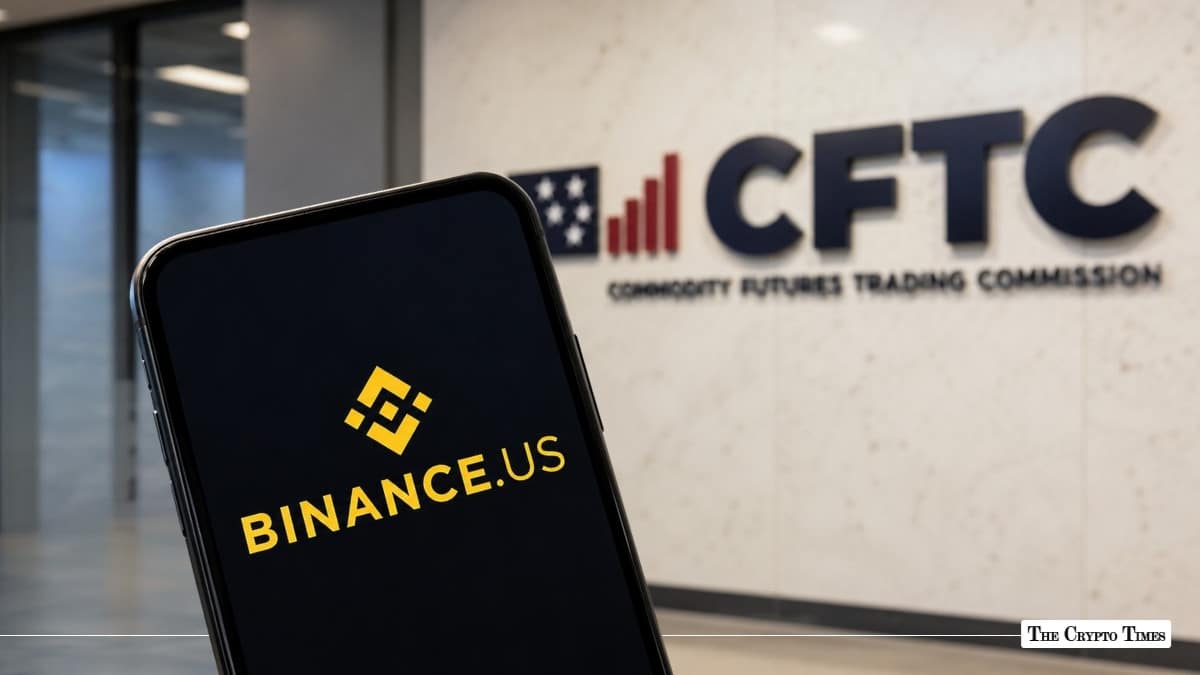
Binance.US plans to apply for a federal derivatives license to launch its own prediction markets, betting its comeback on one of the most contested products in U.S. crypto.
CEO Steve Gregory, who goes by Stevie Satoshi online, said the exchange will apply to the CFTC for a Designated Contract Market license in August, disclosing the plan during an on-stage conversation with journalist Eleanor Terrett at the Rare Evo conference in Las Vegas.
A DCM is the CFTC’s core authorization for a federally regulated exchange to list futures, options, and event-based contracts, subject to 23 core principles covering market surveillance, customer protection, financial resources, and safeguards against manipulation.
Winning one would let Binance.US offer regulated prediction markets to U.S. customers directly, rather than through a partner. Gregory framed it as part of a wider push that also includes lower trading fees and an expansion beyond spot trading into perpetual contracts. The exchange has not yet appeared on the CFTC’s list of pending applications, approval is not guaranteed, and no product launch date has been set.
A Comeback Bet
The move matters most as a measure of how far Binance.US is trying to climb back. At its 2022 peak, the exchange controlled roughly 20% of the U.S. crypto market. That collapsed after its global affiliate settled with U.S. authorities in 2023 over anti-money-laundering and sanctions violations, a $4.3 billion deal that included a guilty plea from Founder Changpeng Zhao, and after Binance.US lost banking rails and faced its own Securities and Exchange Commission (SEC) lawsuit.
With those regulatory cases dismissed or settled through 2025, the exchange has been rebuilding its product catalog, and prediction markets are the centerpiece of that effort rather than a side bet. For a platform that spent two years shrinking, launching a federally regulated derivatives venue is a statement that it intends to compete for relevance again.
Joining a Crowded Race
Binance.US is late to a field that has filled quickly. Gemini secured its own DCM license in December 2025 and added a clearing license this spring, building a full-stack prediction and derivatives marketplace whose Gemini Predictions product has already cleared more than 100 million contracts. Kalshi and Polymarket remain the incumbents, Coinbase has partnered with Kalshi rather than build its own, Robinhood is in talks with Crypto.com, and sports-merchandise giant Fanatics recently moved to acquire regulated broker-dealers to run its own exchange.
The strategies split into two camps: those buying or building their own CFTC-licensed venue, like Gemini, Bitnomial, and now Binance.US, and those renting access through a partner. Binance.US is choosing to own the rails, the harder and slower path, but the one that keeps the economics in-house.
On Contested Legal Ground
What makes the timing striking is that the commercial rush is accelerating while the legal foundation underneath it is still being fought over. Just days earlier, 44 state attorneys general told the CFTC it has no authority over sports-related event contracts, the latest escalation in a state-versus-federal war that has already produced lawsuits and a blocked ban in Minnesota.
Exchanges lining up for DCMs are effectively betting that the CFTC’s jurisdiction prevails, and the current Commission has given them reason to. It has dropped its case against Gemini, moved to defend Kalshi and Polymarket against state challenges, and is finalizing the first federal rulebook for event contracts. Binance.US is wagering that by the time its application clears, the CFTC framework it is applying under will still be standing.