


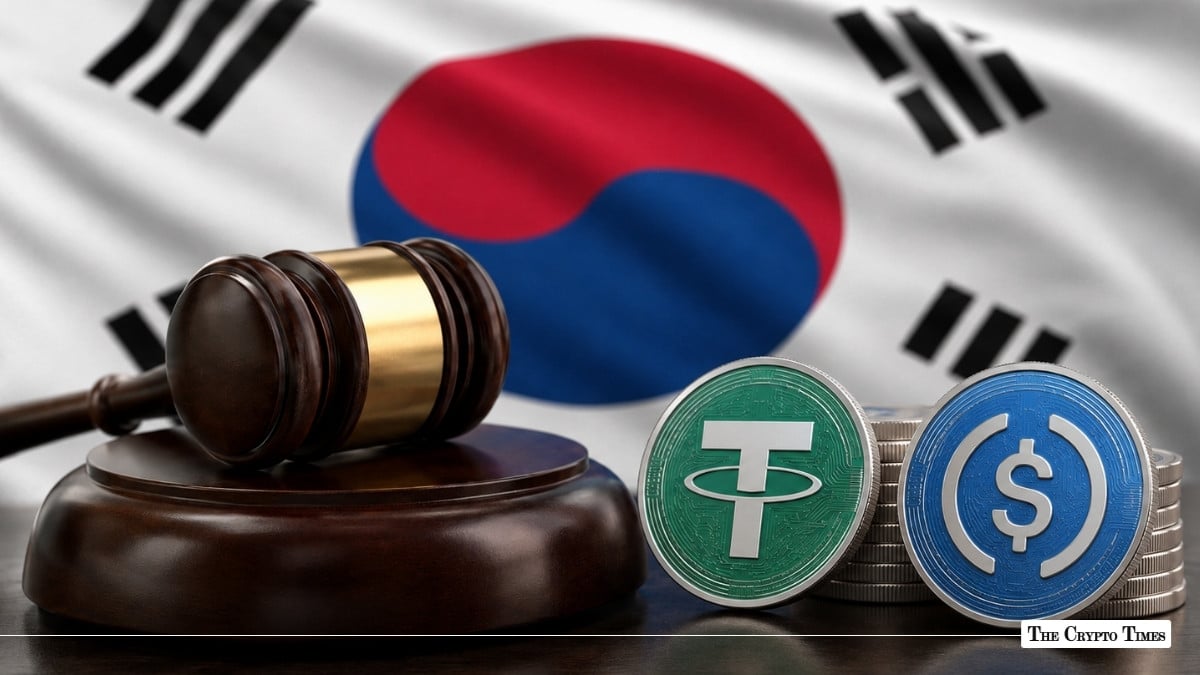
South Korea’s Financial Services Commission (FSC) is moving to accelerate crypto regulation by proposing a unified bill for its long-awaited Framework Act on Digital Assets, with stablecoin rules expected to be a key focus.
According to local reports, the proposal will be presented to the National Assembly’s Political Affairs Committee on Tuesday as the regulator aims to complete the legislation before the end of 2026.
FSC Chairman Lee Won-geon is set to present the commission’s second-half policy agenda during the committee’s first work report since the second half of the 22nd National Assembly was formed. The meeting will also be attended by Financial Supervisory Service Governor Lee Chan-jin.
Unified digital asset bill
According to the FSC’s report submitted to lawmakers, the government and the ruling party are preparing a consolidated version of the Digital Asset Framework Act by combining several bills currently pending in the National Assembly.
The legislation is expected to define the digital asset industry, establish business conduct rules, and create a legal framework for stablecoin issuance and distribution. It would also introduce exchange entry requirements, disclosure standards for token issuance and circulation, and stronger internal control and IT security requirements designed to align crypto firms more closely with financial institutions.
The FSC said the goal is to build a digital asset ecosystem that balances innovation with financial stability.
Stablecoin and infrastructure focus
The proposal follows South Korea’s broader economic strategy announced earlier this month, under which the government pledged to enact the Digital Asset Framework Act during the second half of 2026. The law is expected to establish a legal foundation for stablecoins while strengthening anti-money laundering (AML) measures to combat financial crimes involving digital assets.
The proposal also aligns with South Korea’s wider digital asset strategy. Earlier this month, the government announced plans to launch a 2027 pilot linking tokenized government bonds with the Bank of Korea’s wholesale central bank digital currency (CBDC) platform, signaling a broader effort to modernize financial markets through blockchain infrastructure.
Around 10 digital asset and stablecoin bills are currently pending in the National Assembly, and the FSC plans to consolidate them into a single legislative framework after consultations with the ruling party and relevant government agencies.
Highlighting the progress, Yoo Young-jun, Director General of Digital Finance Policy at the FSC, said, “We are currently consulting with relevant agencies with the goal of completing legislation on virtual assets as soon as possible,” adding that the commission would “promptly finalize legislation on stablecoins as soon as possible.”
Corporate crypto access and next steps
Alongside the stablecoin legislation, the FSC is reviewing guidelines to expand corporate participation in South Korea’s crypto market, noting that the issue is closely tied to the second phase of the Digital Asset Framework Act.
If approved, the changes could ease restrictions that have largely prevented financial institutions from participating in the country’s crypto market since 2017.
Kim Seong-jin, head of the FSC’s Virtual Assets Division, said the commission is “making great efforts to expedite” the Digital Asset Framework Act. On opening the corporate market, he added, “We are continuously discussing the guidelines,” noting that authorities would coordinate with relevant agencies before deciding the timing of the announcement.
Several policy questions, however, remain unresolved before the legislation can move forward. Authorities have yet to decide whether Korean won-backed stablecoins should be issued through a bank-led consortium under a proposed 51% rule. Regulators are also considering whether 15% to 20% equity ownership limits should apply uniformly to major domestic exchanges, including Dunamu, Bithumb, Coinone, Korbit, and Gopax.
The government’s final draft of the Digital Asset Framework Act has not yet been released publicly, leaving key details under discussion. Still, lawmakers from the National Assembly’s Political Affairs Committee have signaled they intend to fast-track deliberations once the draft arrives.
Committee Chairman Yoo Dong-soo said, “We reached an agreement to hold the first and second subcommittees twice a month,” signaling an effort to speed up the bill’s review before year-end.
Also Read: US Graham Russia Sanctions Bill Explicitly Targets Crypto Evasion





