Key Highlights
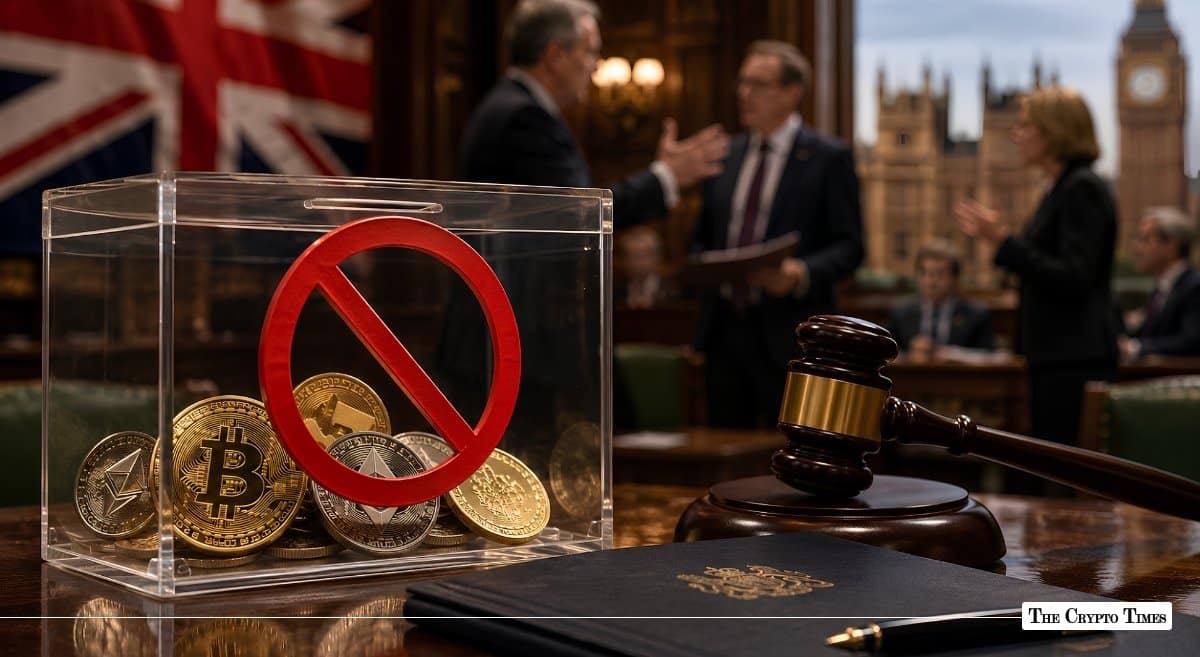
- Labour MPs have proposed a permanent ban on cryptocurrency donations to UK political parties.
- The amendments target the Representation of the People Bill, which returns to Parliament on July 14.
- Lawmakers say recent controversies surrounding Reform UK’s crypto-linked funding exposed weaknesses in existing rules.
The UK’s debate over cryptocurrency regulation has expanded into politics, with a group of Labour MPs seeking a permanent ban on crypto donations to political parties following growing scrutiny over Reform UK’s fundraising.
According to a report by The Guardian, members of Parliament from the all-party, anti-corruption group have tabled amendments to the Representation of the People Bill, arguing that digital assets should no longer be accepted as political donations once the current temporary restrictions expire.
The amendments will be considered when Parliament resumes debate on the bill next week.
Labour MPs call for permanent crypto donation ban
Among the proposed changes is an amendment led by Labour MP Liam Byrne, who argues that cryptocurrency donations create unnecessary risks to transparency and political oversight.
Byrne linked the proposal to recent questions surrounding Reform UK’s fundraising, saying lawmakers should strengthen safeguards before digital assets become a permanent source of political financing.
He said, “With each passing day, we learn new revelations about the extraordinary lengths to which Reform UK politicians will seemingly go in order to avoid proper oversight of their finances.” Byrne urged MPs across Parliament to support the amendments, arguing that stricter rules are necessary to protect the integrity of UK elections.
Reform UK funding sparks fresh scrutiny
The proposals follow renewed attention on donations received by Nigel Farage’s Reform UK, including millions of pounds reportedly linked to cryptocurrency entrepreneurs Christopher Harborne and George Cottrell. According to the report, several financial transactions involving the pair were reportedly flagged by banks to the UK’s National Crime Agency (NCA) over concerns related to the source of funds.
Farage has denied any wrongdoing and previously rejected allegations surrounding the party’s fundraising. The controversy has nevertheless intensified calls for tighter oversight of digital asset donations within UK politics.
Days earlier, Farage also faced criticism over his involvement in crypto policy after lawmakers questioned whether his public support for certain digital asset regulations could have benefited Harborne and other major crypto donors.
While Farage has rejected the allegations, the controversies have increased pressure on lawmakers to tighten political funding rules involving digital assets.
The issue has been under discussion among UK lawmakers for several months. In March 2026, Prime Minister Sir Keir Starmer said cryptocurrency donations to UK political parties would be banned in response to the Rycroft review on foreign financial interference.
The review also recommended capping annual political donations from British citizens living abroad at £100,000 and banning foreign-funded online political advertisements, although the government is still considering several of those proposals.
Broader election finance reforms proposed
The proposed crypto ban is one of several amendments Labour MPs are seeking to add to the Representation of the People Bill. Other proposed reforms include lowering national campaign spending limits, tightening disclosure requirements for newly formed political parties, strengthening checks on donations linked to potential foreign influence, and imposing stricter restrictions on certain overseas political donations.
The UK government has already indicated it intends to strengthen parts of the legislation before the bill returns to Parliament on July 14, although several Labour MPs argue the current reforms do not go far enough.
A spokesperson for the Ministry of Housing, Communities and Local Government said the government would continue looking for ways to strengthen the legislation as it moves through Parliament.
Crypto regulation expands beyond financial markets
The proposed ban highlights how digital assets are increasingly becoming part of broader policy discussions beyond financial regulation. While the UK has spent recent years developing rules for stablecoins, crypto exchanges, and digital asset service providers, lawmakers are now examining how cryptocurrencies intersect with election financing and political transparency.
If approved, the amendment would make the UK’s temporary restrictions on crypto political donations permanent, adding another layer to the country’s evolving regulatory approach toward digital assets.
Also Read: India Crypto Ban: RBI Backs Prohibition, Tax Department Flags Evasion Risks