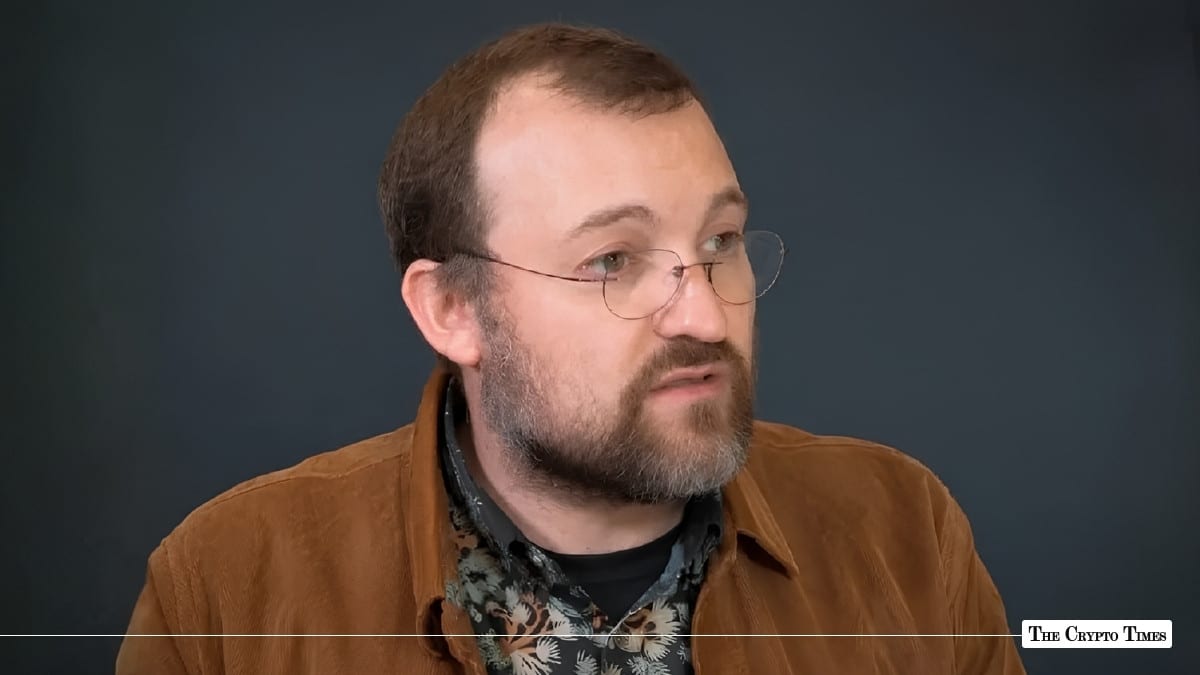
Cardano founder Charles Hoskinson has confirmed he is taking an indefinite break from public videos, interviews, and social media activity, while clarifying that he is not resigning from the project or stepping away from development work.
The video address, published on June 4, came after his brief June 3 post on X saying “I’m taking a break for a while, see you later” triggered widespread speculation about a potential departure and sent ADA below $0.20 for the first time in over five years.
At the time of writing, ADA is trading around $0.16, down roughly 14% over the past 24 hours. The token’s market cap has sunk to approximately $5.9 billion, with 24-hour trading volume surging past $1.1 billion as selling pressure intensified.
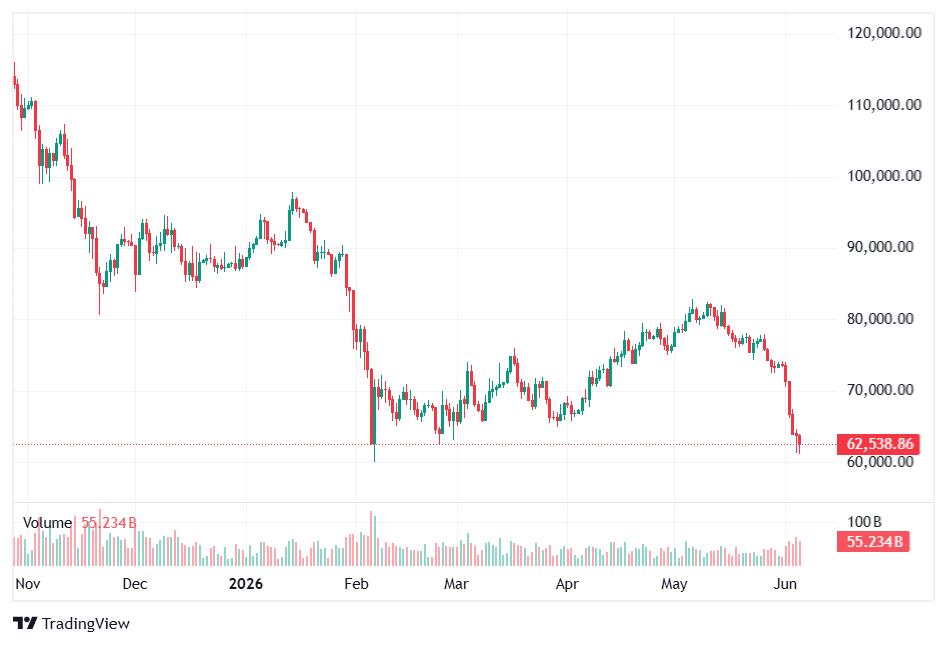
ADA is now sitting about 94% below its all-time high of $3.10, hit in September 2021. The Vol/Mkt Cap ratio has climbed to nearly 19%, a sign of extreme volatility and heavy turnover relative to the token’s shrinking valuation.
Hoskinson addresses the speculation directly
The first thing Hoskinson did in the video was shut down the rumors. “I am okay. I’m not suicidal. I’m not leaving the ecosystem or resigning from Cardano,” he said, noting that journalists from outlets as far-reaching as Bloomberg had reached out asking about his status.
He confirmed he will continue working on Midnight, the privacy-focused sidechain project, but will stop making public videos, cancel scheduled interviews, and go silent on X and other social platforms. “I’m going to take some time to reflect and recover and read and enjoy life,” he said. He did not specify how long the break will last.
His reasoning centered on two things: the personal toll of sustained online abuse and a growing disagreement within the community about what Cardano should prioritize.
The toxicity report
Hoskinson referenced an analysis conducted by community member Christian Taylor, who examined roughly 130 replies to Hoskinson’s recent posts on X. The findings, which Hoskinson read on camera, were stark. Nearly one in three replies was classified as hostile, abusive, or profanity-laden.
The report identified six distinct categories of attack: personal insults, failed-project accusations, unprompted profanity, financial accusations, mockery, and legal threats.
Hoskinson read several of the replies aloud during the video. They ranged from weight-based insults and accusations of narcissism to calls for imprisonment and death-related language.
He also pointed to what the analysis described as evidence of coordination, including identical language patterns, thin anonymous accounts, and cross-chain references suggesting organized amplification.
“I just don’t want to be in a communication medium where one-third of the time things like that are said,” he said. “It’s just not productive for anybody. And it does have a toll on your psychology and it does have a toll on you as a person.”
He added that the abuse extends beyond him personally: “I can’t tell you how many people ask why do they hate you so much and wow how do you stand it?”
Hoskinson on ADA’s price: “I’ve never accepted that role”
Perhaps the most significant portion of the address was Hoskinson’s blunt rejection of any responsibility for ADA’s market performance. This was not new, but the forcefulness of it was.
“What I’m not passionate about is making the price of ADA go up so that speculators can dump it and go on to the next thing,” he said. “I’ve never accepted that role. I’ve never once told you that that is my job. And I’ve never taken any accountability for that.”
He extended this argument into what he framed as a broader problem across the entire cryptocurrency industry. He pointed to Ethereum co-founder Vitalik Buterin as an example, noting that Buterin brought Ethereum to a quarter-trillion-dollar valuation and is still treated as a failure by parts of the crypto community because the network has not reached $500 billion.
“If you play the game of token go up, you’ll never win because there’s always a new person to demand the token go up even more,” Hoskinson said. “And when it goes down, you get blamed for the free fall.”
He described the current moment as “the tale of two Cardanos.” On the engineering and protocol side, he argued the project is “massively ahead” of where it was in 2021, pointing to progress that was once only theoretical. But on the price side, with ADA sitting at 18 cents at the time of his recording, the project is widely dismissed as dead.
“How can we live in a world where on one hand we’ve done an incredible job and on the other hand we’re all failures?” he asked. “It’s a cognitive dissonance and it’s irreconcilable.”
Ecosystem setbacks that led to this moment
Hoskinson’s address did not happen in isolation. The past six weeks have seen a rapid sequence of setbacks across the Cardano ecosystem.
TapTools, the ecosystem’s most widely used analytics platform, announced on June 2 that it would wind down operations within two weeks after losing its fifth senior executive this year, including both co-founders, the COO, and the CTO. The platform had served as the default reference tool for ADA traders tracking token prices, DeFi metrics, NFT floor prices, and liquidity data since its founding in 2022.
That closure came just days after JPG Store, Cardano’s dominant NFT marketplace since 2021, permanently ceased operations on May 23 after entering restricted mode a month earlier.
Meanwhile, the Cardano Summit 2026 was cancelled after a treasury proposal requesting 7.8 million ADA failed to reach the required two-thirds supermajority under the Voltaire governance framework. The proposal received 65.21% support from Delegated Representatives, falling just short of the 66.67% threshold.
Hoskinson directly referenced these failures in the video, saying the ecosystem “is willing to watch JPEG store fail, TapTools fail, and many more to come soon.” He singled out what he described as the Cardano Foundation’s community lead, who he said responded to these closures with indifference.
“Some of the leadership in this ecosystem say, ‘Oh well, is what it is. This is what happens. People have to be economically sustainable. Move on. Nothing to see here.'”
Cardano’s total value locked has dropped to roughly $118 million, putting the network behind newer competitors like Aptos and Mantle. Short positions now make up approximately 75% of ADA derivatives exposure, according to recent market data.
Hoskinson calls the Cardano Foundation “the worst mistake of my entire career”
One of the sharpest portions of the address was directed at the Cardano Foundation, the Swiss-based nonprofit entity that Hoskinson himself helped establish.
His grievance is structural. Under the current setup, ADA holders have no voting power over the Foundation’s board, staffing decisions, or strategic direction. “They’re completely above and immune to any accountability,” he said. “Inadvertently creating a structure that has such low levels of accountability” is something he said he will always regret.
He contrasted this with Input Output, his own company, where community members can at least vote against proposals. “At least with Input Output, you can vote against our proposals. There, there’s no accountability.”
He argued that without the ability to hold leadership accountable, the ecosystem will produce “at best mediocrity and at worst ego and malice instead of actual execution.”
Three conditions for moving forward
Hoskinson laid out three principles he believes must guide any path forward, regardless of the specific strategy chosen.
First, the community needs a singular vision that everyone agrees to follow. Second, the incentives behind that vision must be properly aligned, particularly around who receives funding. Third, there must be structures in place that can remove people who fail to execute.
He also called for what he described as a series of “exoduses.” The first is leaving X, which he called “a toxic hellscape that has become irredeemably bad,” not just for himself but for the entire community. The second is reforming leadership and bringing in “new blood, new ideas and new people that have a lot more respect for the people who are building right now.”
The third is a new roadmap, something he said has been missing since the earlier era of named development phases like Byron, Shelley, and Basho.
“That’s what’s causing the primary dissonance,” he said. “When we had things like Byron and Basho and Shelley to look forward to, we were rallied and unified. What’s the next roadmap?”
Development work that continues
Despite the break from public activity, Hoskinson outlined several areas where active development continues.
He mentioned RealFi, a financial inclusion initiative he said is launching within two months. He spoke about making Bitcoin programmable, a goal he has pursued since the Bitcoin Education Project. He expressed deep interest in proofs and privacy research and said he was about to join a workshop with the Midnight ambassadors immediately after the video.
He also pointed to the Leios testnet, the high-throughput consensus upgrade scheduled to launch on June 23. The Leios proposal passed governance with 84% support, and Input Output has described it as the mechanism that will scale Cardano from roughly 800,000 monthly transactions to over 27 million, targeting throughput above 1,000 transactions per second. Mainnet deployment is targeted for late 2026.
“Cardano was at 2.5 cents and a year later is at $3. Things can change very rapidly,” he said.
Not a resignation, but a test for the community
Hoskinson was clear that this is not a departure. But it is a conditional pause. He told the community that the summer is theirs to do “some fact-finding and soul-searching” and to decide where they want to take the project. He said he could be part of that future, but set clear conditions for his continued public involvement.
“I have to be treated with respect and dignity and I am only going to live in channels that enforce that,” he said. “No longer going to tolerate being called fat, a narcissistic sociopath, a cancer, evil, should be imprisoned by anonymous people who are cowards. I think that’s basic human decency.”
He promised to return with proposals, some radical and some incremental, but made no promises about price recovery. What he did commit to is giving the project a reason to exist beyond speculation.
“Cardano is not a protocol. It’s the people behind the protocol. Cardano is not a token. It’s the people behind the token.”
This is not the first time Hoskinson has stepped back. He took a break from X in May 2025, entered what he called “silence mode” in January 2026, and briefly paused in July 2023 over platform-related issues. Each time he returned. Whether this break follows the same pattern or marks something more permanent will depend largely on what the community does with the time he has given them.
Also Read: Zcash Tumbles on Orchard Vulnerability Fear While Monero Trends as Top Privacy Competitor